

Colorado packs four national parks, fifty-eight peaks above fourteen thousand feet, and everything from the desert cliffs of Mesa Verde to the alpine tundra of the Rockies into one state. The hard part isn’t finding somewhere beautiful, it’s knowing where each place sits, when to go, and what you need to book ahead. These 25 best places to visit in Colorado below are grouped by region, each with the practical detail that shapes a visit: rough cost, the season that suits it, and whether a reservation is required.
The 25 Best Places to Visit in Colorado
Costs and reservation rules below reflect official sources at the time of writing. Park fees and permit systems change from year to year, so the National Park Service and recreation.gov are the authorities to check before you go.
Front Range: Denver and the Eastern Foothills
The Front Range is where almost every Colorado trip begins. The major airport and the biggest cities sit here, and the eastern wall of the Rockies rises close enough that you can be among the peaks within an hour of leaving the city.
1. Rocky Mountain National Park

If there’s one place that defines a Colorado trip, this is it. The park covers more than four hundred square miles of alpine tundra, glacial valleys, and peaks above fourteen thousand feet, and Trail Ridge Road climbs right through the middle of it, cresting higher than any other continuous paved road in the country. Most people come for the easy classics: the three-mile walk up to Emerald Lake, the slow drive over the tundra with the windows down, and the elk that drift into Horseshoe Park and the Kawuneeche Valley at dawn and dusk.
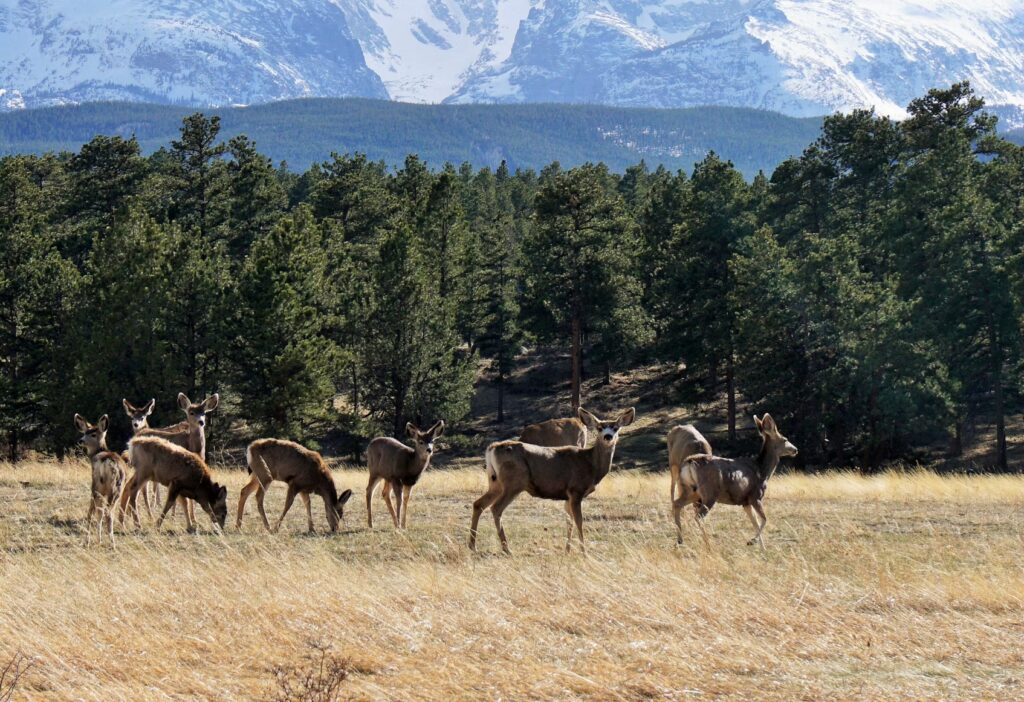
The catch is the reservation system. From May 22 through mid-October 2026, you’ll need a timed-entry permit, and there are two kinds: one that covers the Bear Lake Road corridor and one for the rest of the park. The permit itself is only a $2 booking fee on recreation.gov, on top of the $35 vehicle pass, though non-U.S. residents now pay an extra $100 per person in 2026. Estes Park makes the natural base on the east side, Grand Lake on the west. Just know that Trail Ridge closes under snow from late October until May, so a winter visit is about snowshoes rather than the high road.

2. Denver

Most itineraries start in Denver, partly because the international airport is here and partly because the city is worth a day in its own right before you disappear into the mountains. It sits at exactly a mile above sea level, which is where the nickname comes from, and it makes a nice counterweight to the wilderness ahead: a walkable downtown, a genuinely strong museum district, and a craft-beer scene as dense as any in the country. The Denver Art Museum, the old brick blocks of Larimer Square and LoDo, and the breweries clustered in RiNo can fill a relaxed day or two.

There’s a practical reason to linger, too. Denver is the gentlest place to let your body adjust to elevation before you head higher, and it’s the one city in the state where you can get by comfortably without a car. Give yourself that first day here rather than driving straight up to ten thousand feet.
3. Boulder
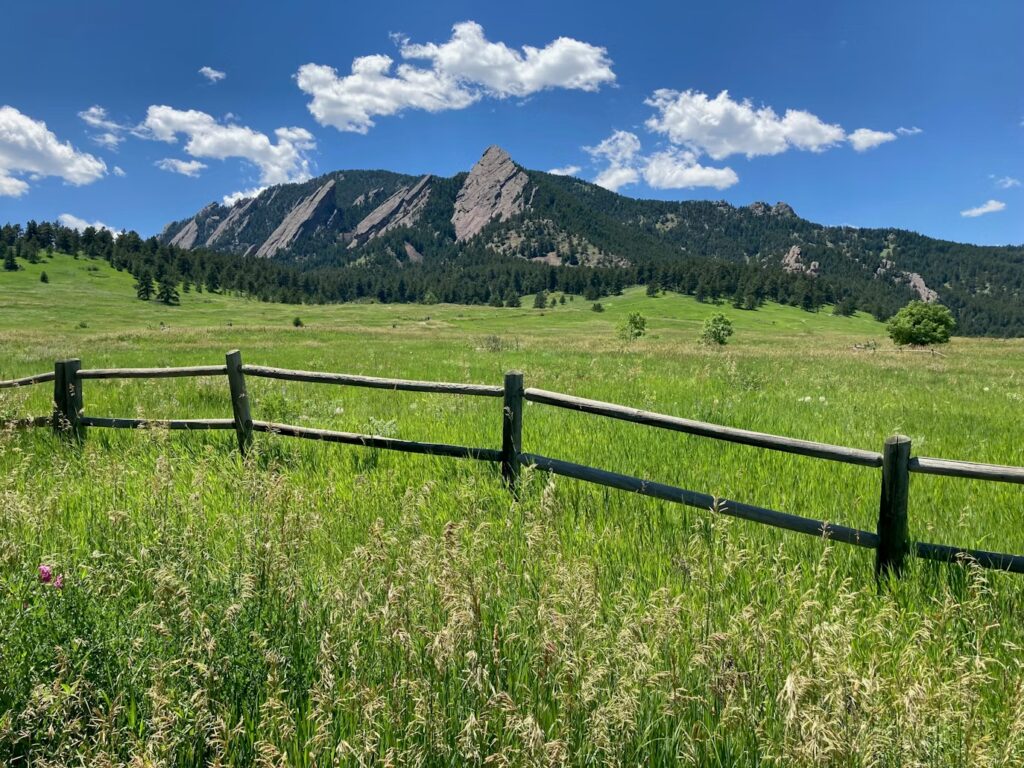
Boulder sits right where the plains run into the foothills, tucked beneath the tilted sandstone slabs known as the Flatirons. It’s a university town with an outdoor streak that runs deep, and the nicest thing about it is how close the wild gets to the everyday: you can walk from a pedestrian downtown to a trailhead in a few minutes. The paths through Chautauqua Park lead straight up toward the Flatirons, and Pearl Street, a four-block car-free stretch, is where the town gathers to eat and watch the world go by.
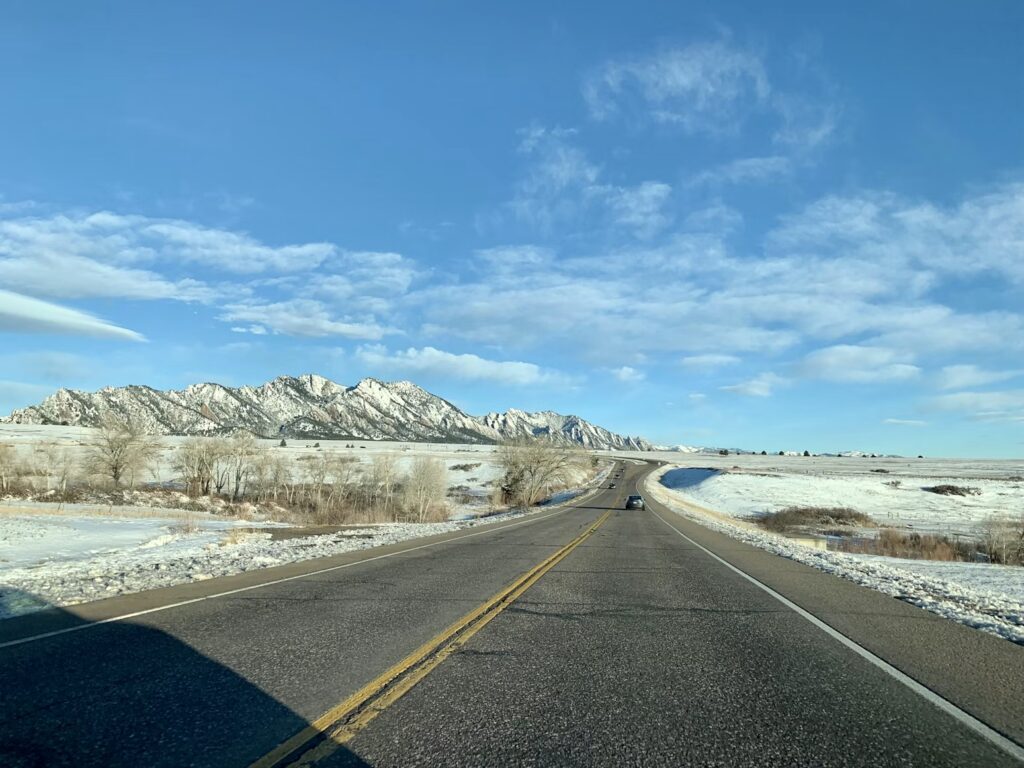
It pairs easily with Denver, which is only forty-five minutes away, or with a drive up the Peak to Peak Highway into the mountains. One small tip: the popular trailheads fill up fast on summer weekends, so an early start or a weekday visit makes a real difference.
4. Colorado Springs
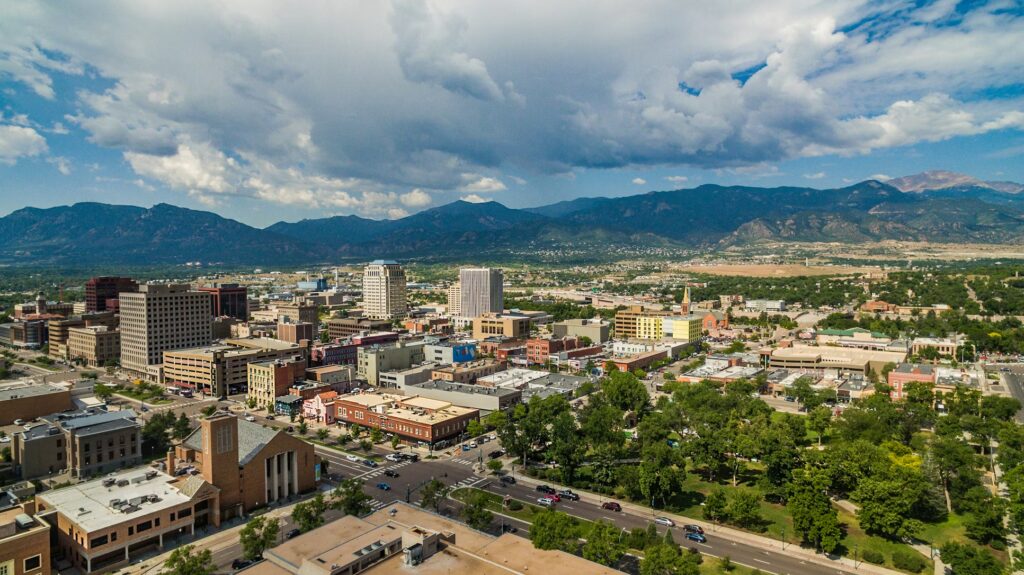
Spread out at the foot of Pikes Peak, Colorado Springs is the practical hub for the southern Front Range. It’s more sprawling than Boulder and quieter than Denver, but its real value is its location, sitting within easy reach of several of the state’s headline sights. Travelers use it as a launching pad for Pikes Peak, for Garden of the Gods just on its edge, and for the Air Force Academy north of town, with the slightly bohemian district of Manitou Springs tucked at the base of the mountain.
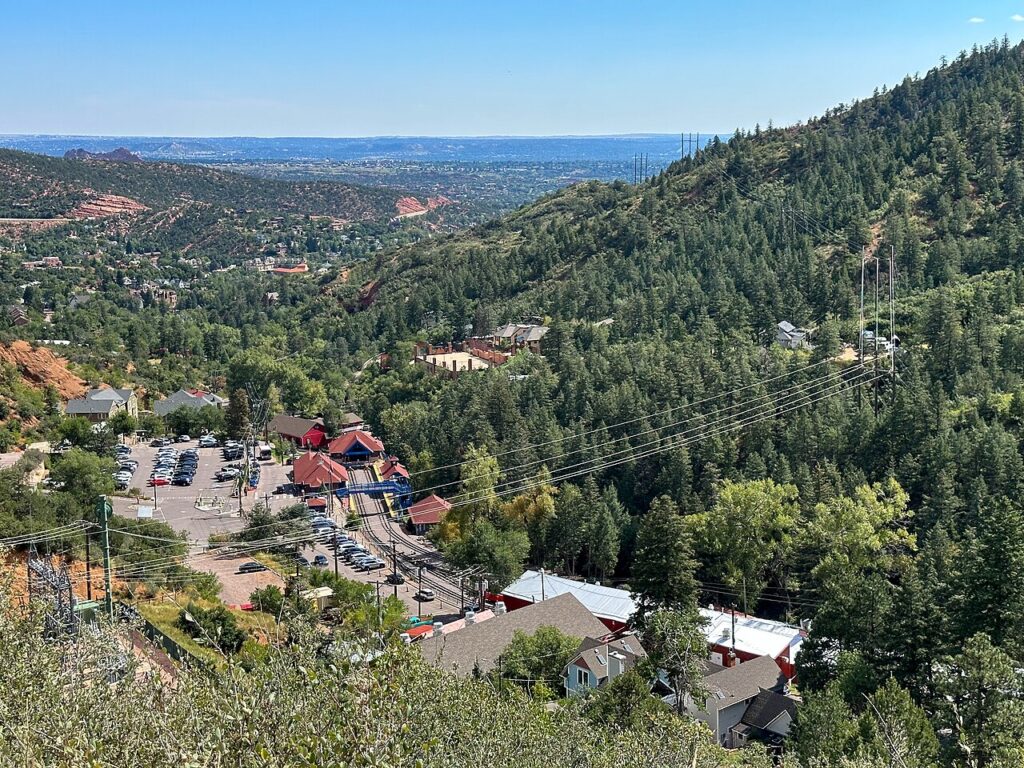
What sets it apart as a base is the practical stuff that mountain towns can’t always offer: a wide range of lodging and the kind of family infrastructure that makes traveling with kids easy. The drives between the major sights are short, which is part of why this corner of the state tends to suit families so well.
5. Garden of the Gods
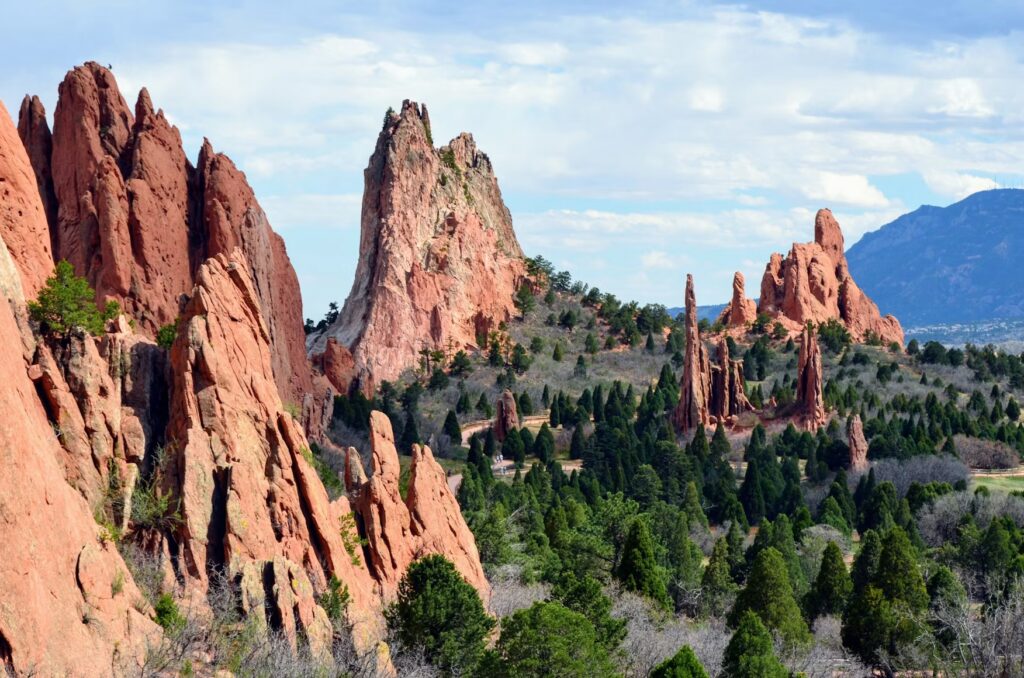
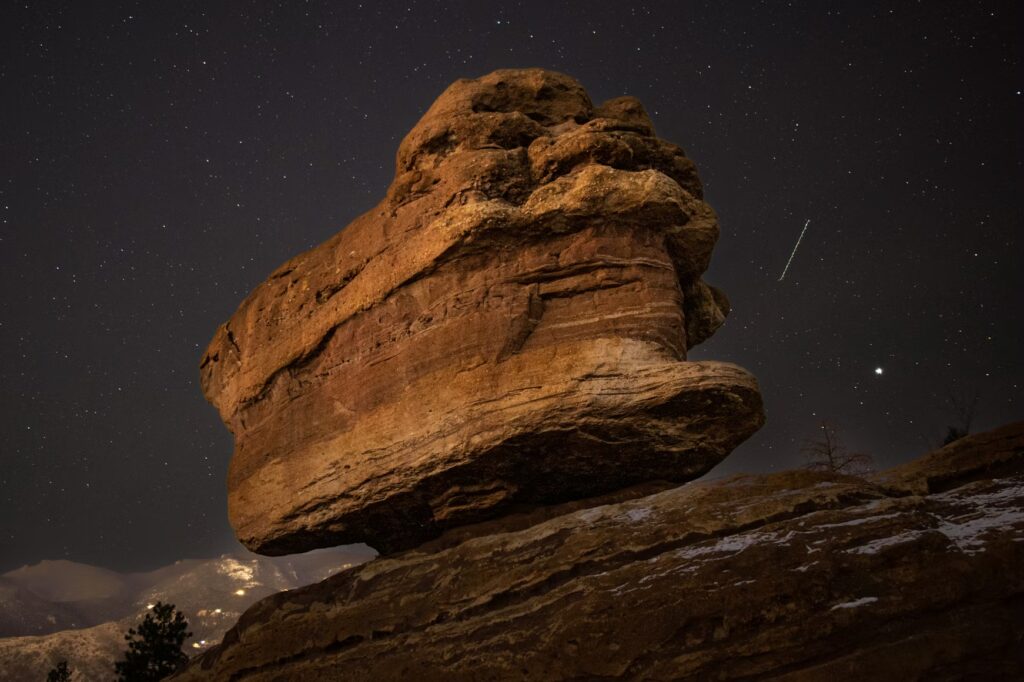
It’s hard to overstate how striking this place is at first sight: a cluster of towering red sandstone fins rising out of the ground on the edge of Colorado Springs, with Pikes Peak floating behind them. Part of what makes it one of the most beloved Colorado landmarks is how open it is. There’s no entrance fee, the paved Perkins Central Garden Trail loops an easy 1.5 miles through the biggest formations, and you’ll often spot climbers working their way up the named towers on permits.
You can take it in over an hour or stretch it into a half day, and it slots neatly alongside Pikes Peak and Manitou Springs. Come early if you can; the park gets busy around midday in summer, and the morning light on the red rock is the best you’ll see all day.
6. Pikes Peak

This is the fourteen-thousand-foot mountain that inspired “America the Beautiful,” and unlike most of the state’s high peaks, you don’t have to earn the summit on foot. A toll highway winds nineteen miles up to the visitor complex at the top, and the Broadmoor Manitou and Pikes Peak Cog Railway carries you up from Manitou Springs if you’d rather not drive the switchbacks yourself. Serious hikers can still take the Barr Trail, a long and demanding climb, but most visitors are happy to let the road or the rails do the work.
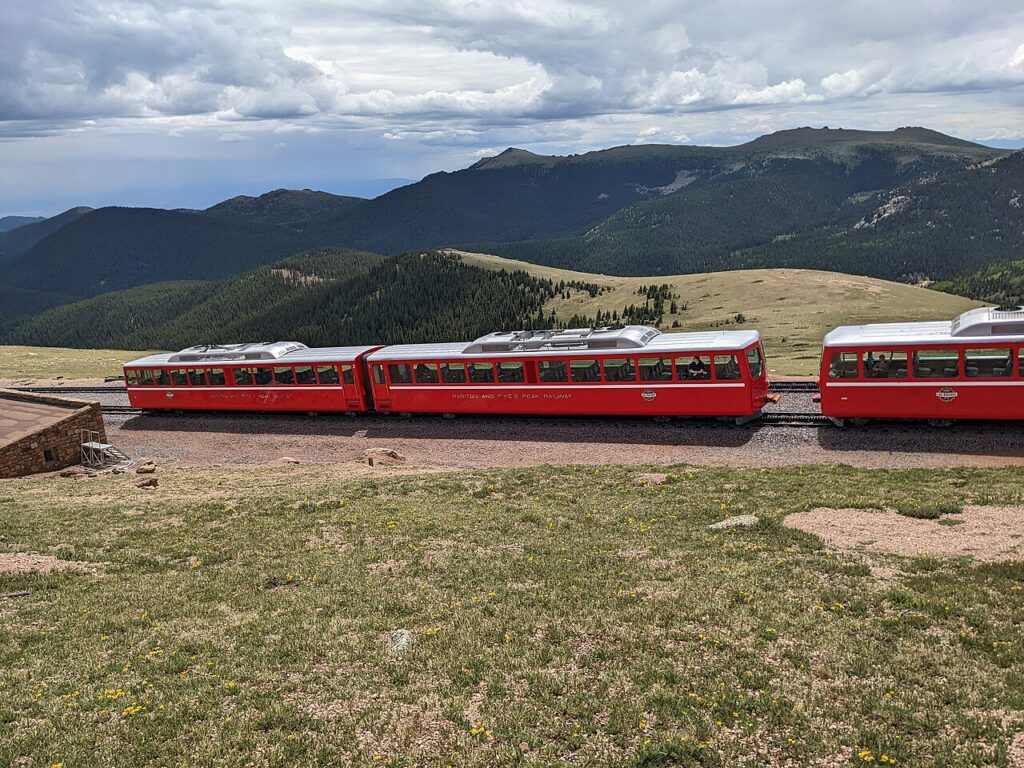
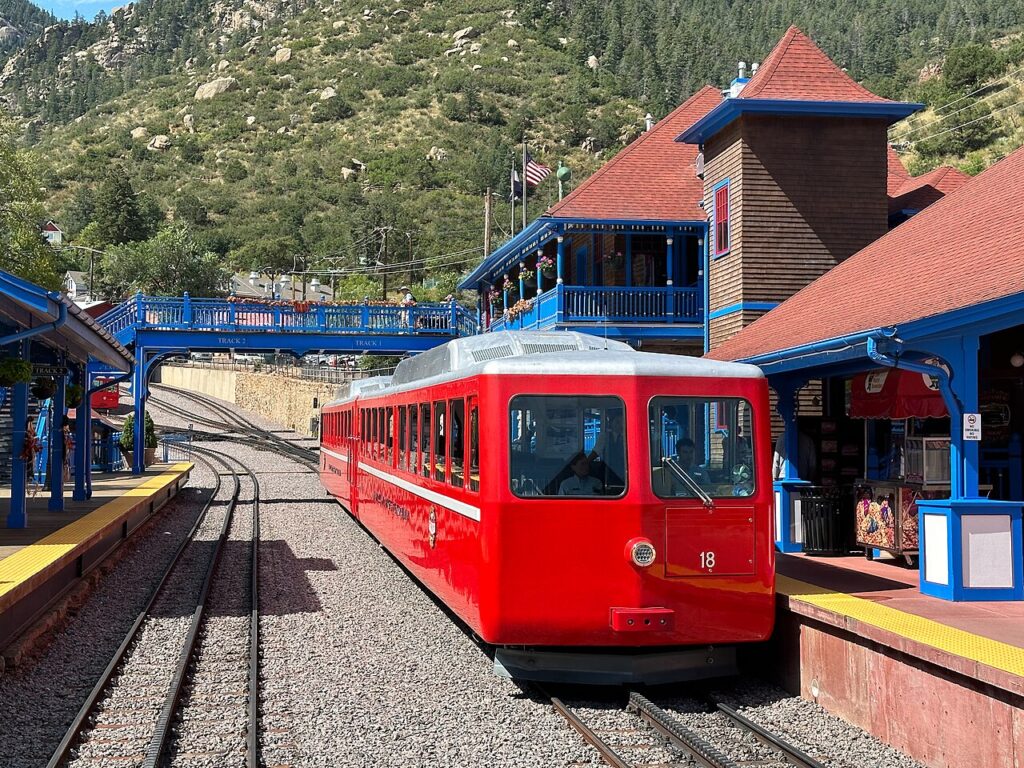
Both the highway and the railway run timed reservations in the busy months, so it pays to book ahead. And remember where you’re standing: above fourteen thousand feet, the altitude catches most people out, so move slowly and bring a layer, because it’s a good deal colder up there than in the city below.
I-70 Mountain Corridor: Ski Towns and Hot Springs
Head west out of Denver on I-70 and the road climbs fast into the high country, stringing together a run of ski resorts, old mining towns, and hot springs all within a few hours of the city.
7. Breckenridge

Breckenridge manages a nice balance: a major ski resort on one hand, and one of the best-preserved Victorian main streets in the Rockies on the other, which means there’s a reason to come long after the snow melts. Winter brings terrain spread across several peaks for every level of skier, while summer opens up the surrounding trails and the old mining district, and the downtown fills with festivals.
It sits at over nine thousand feet and is close enough to Denver for a long day trip, though it really rewards an overnight, and it makes a good pairing with Georgetown on the way up. The one thing to plan around is traffic: I-70 gets heavy on weekends, so travel midweek or set out early.
8. Vail
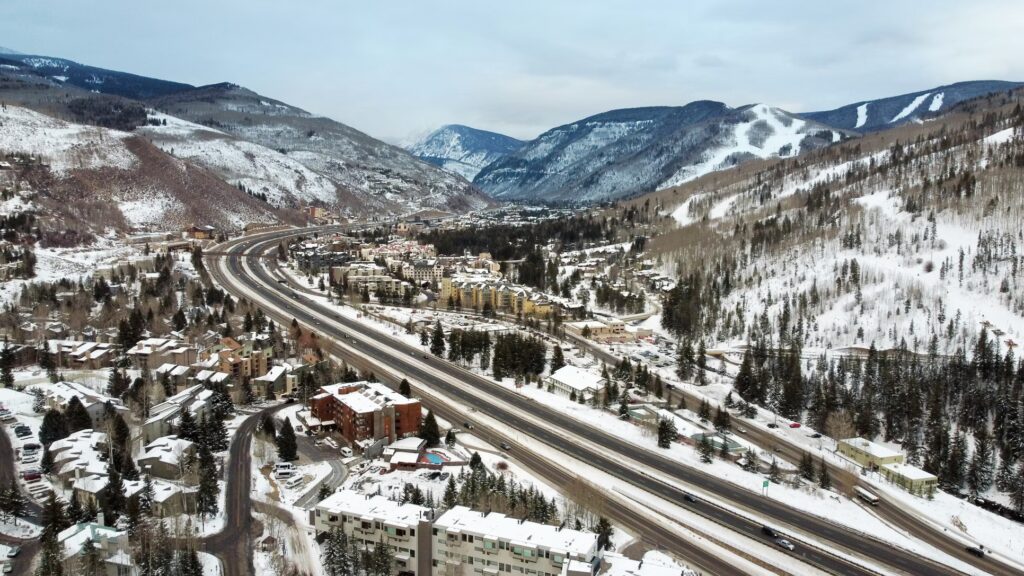
Vail is the polished, upscale end of the corridor, built around a pedestrian village modeled on an Alpine town. Its ski mountain is one of the largest in North America, and the legendary Back Bowls are what draw skiers from around the world. Come summer, the gondola lifts hikers up to alpine trails, and the village hosts concerts and a well-regarded dance festival.

It’s worth being honest about cost: Vail sits at the expensive end of Colorado vacation spots, with lodging among the priciest anywhere in the state. That’s exactly why a lot of travelers base themselves somewhere cheaper nearby and come to Vail just for a day on the mountain.
9. Aspen and the Maroon Bells
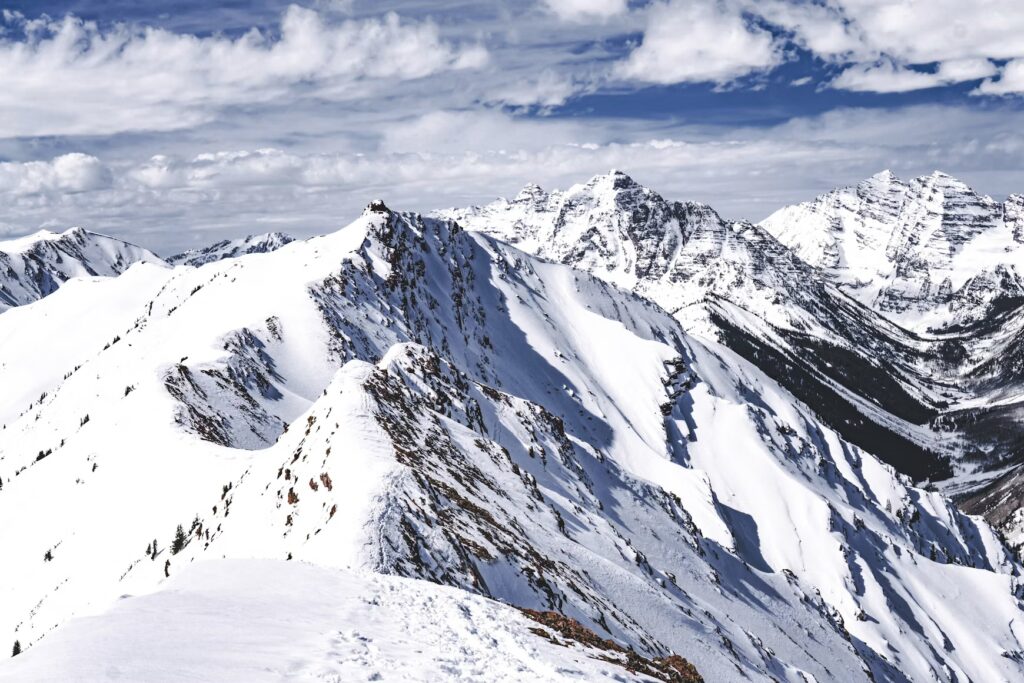
Aspen is the most famous of Colorado’s resort towns, but for many people the real reason to come lies just outside it. The Maroon Bells, a pair of fourteen-thousand-foot peaks mirrored in a glacial lake, are widely considered the most photographed mountains in the state, and standing in front of them at first light explains why. The easy Maroon Lake Scenic Trail leads to the classic reflection, and longer routes climb on toward Crater Lake for those who want more.
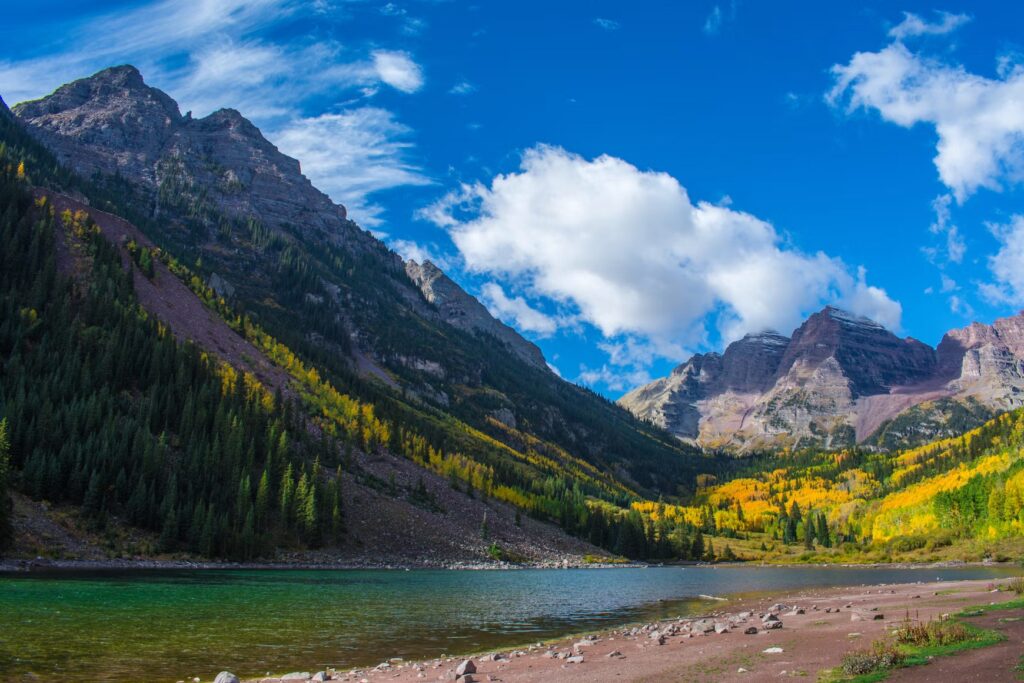
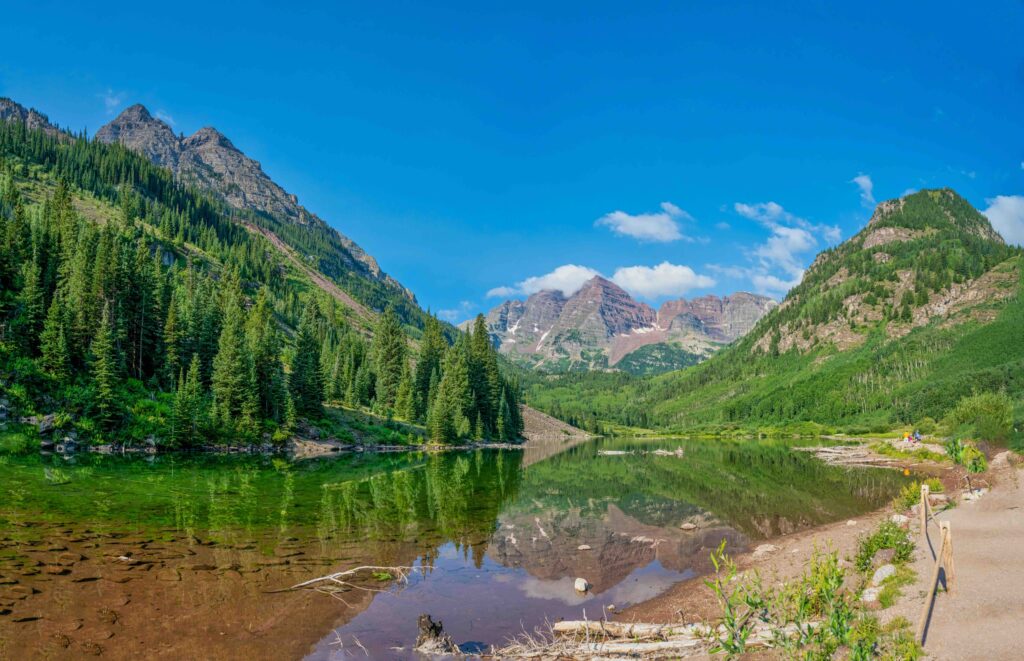
Getting to the Bells takes a little planning, since access runs on a reservation system in season and most visitors take a shuttle from Aspen rather than driving in. The late-September window, when the aspens turn gold, is the most beautiful and the most crowded, so book early if that’s when you’re hoping to go.
10. Glenwood Springs
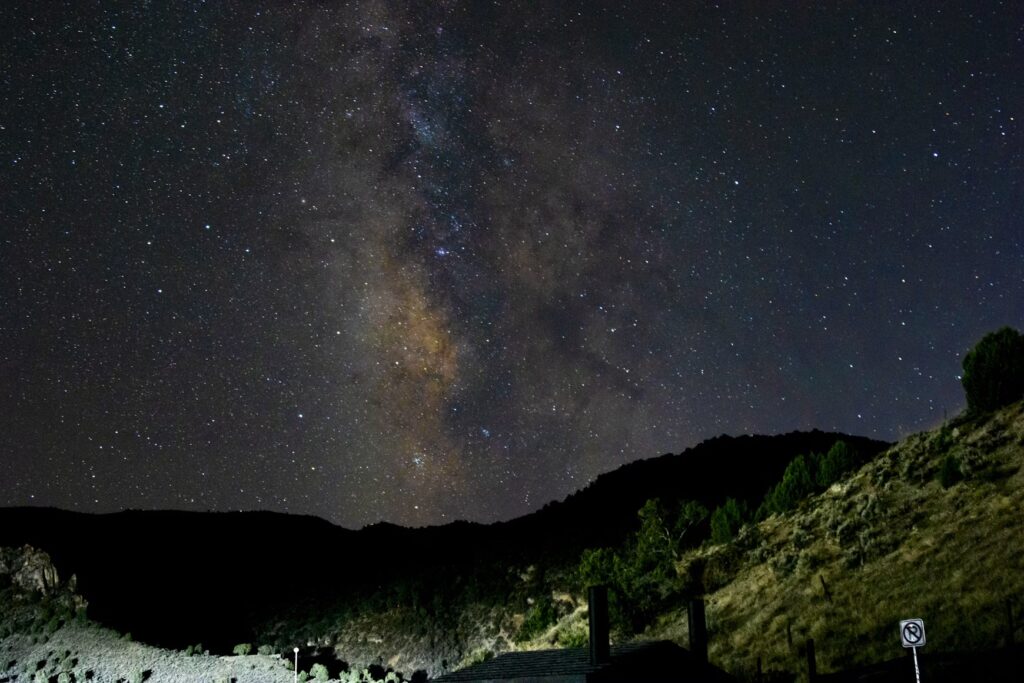
Glenwood Springs grew up around its water. It’s home to one of the largest hot springs pools in the world, and the soaking tradition here goes back well before the railroads arrived. Sitting at the meeting point of the Colorado and Roaring Fork rivers, it works as both a place to unwind and a base for adventure, with the historic hot springs pool, a set of vapor caves nearby, and the gondola-accessed Glenwood Caverns Adventure Park that keeps families busy.
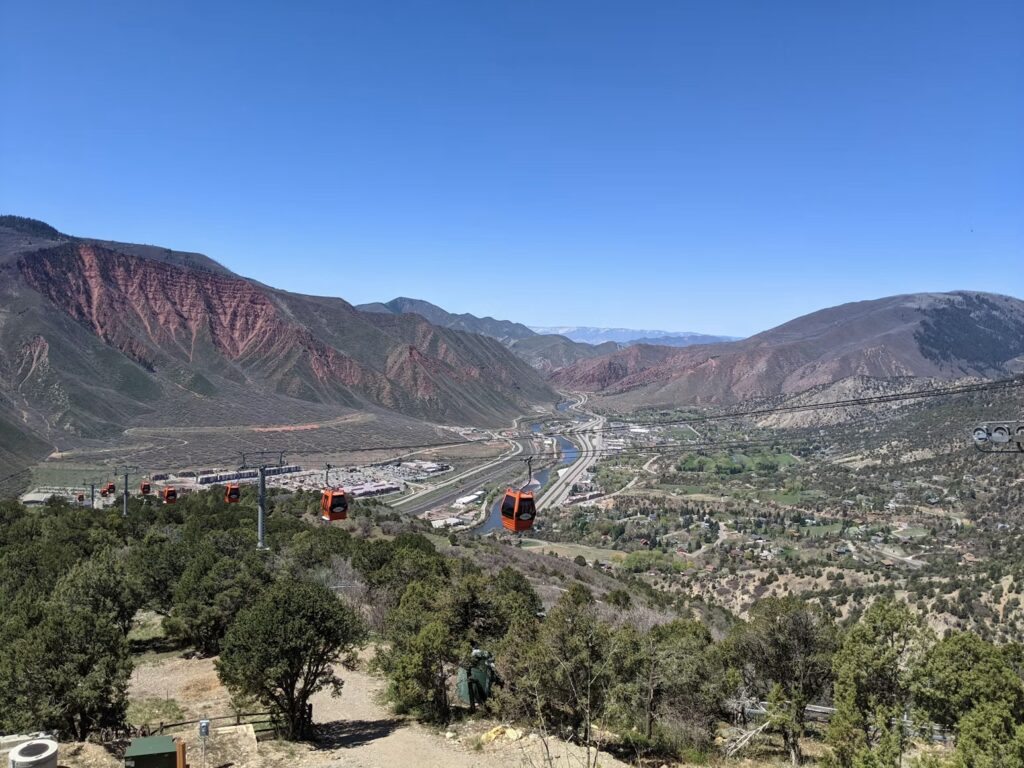
It’s a comfortable midpoint on a drive west and the usual launching point for the Hanging Lake hike, with Aspen about forty minutes south. The hot springs are just as inviting under winter snow as in summer heat, which makes this one of the few genuinely year-round stops on the corridor.
11. Georgetown
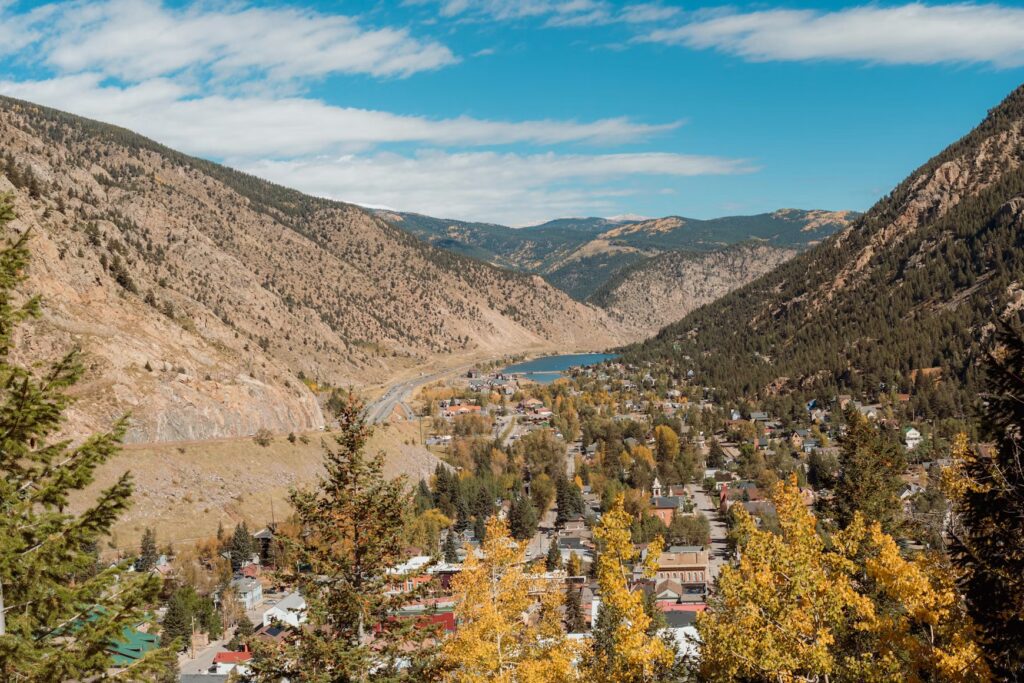
Georgetown is a small, beautifully preserved silver-mining town close enough to Denver to visit on a whim. Its centerpiece is the Georgetown Loop Railroad, a narrow-gauge line that spirals and climbs between Georgetown and Silver Plume, crossing a high trestle bridge along the way, and many riders pair it with a tour of one of the historic mines on the route.
Beyond the train, the Victorian streets and the nearby Guanella Pass scenic drive round out an easy half day. The railroad runs on a seasonal schedule, though, so it’s worth checking the operating dates before you build a trip around it.
12. Leadville

Leadville holds the title of highest incorporated town in North America, perched above ten thousand feet in a wide mountain valley, and it carries one of the richest mining histories anywhere in the state. The National Mining Hall of Fame and Museum tells that story, and in summer the Leadville Colorado and Southern Railroad runs scenic trips out through the high valley.
It’s quieter and less polished than the resort towns, which is exactly the appeal for travelers who want a more authentic side of Colorado. In summer you can connect to Aspen over Independence Pass, though that road closes in winter, and the thin air at this elevation does take some getting used to, so it suits people who’ve already spent a few days higher up.
San Juan Mountains and the Southwest
The far southwestern corner is home to the most dramatic mountain scenery in the state and its deepest archaeological history. It’s a long way from Denver, far enough that it really deserves a trip of its own rather than a quick detour.
13. Durango

Durango is the biggest town in the southwestern corner and the natural base for exploring the San Juans and Mesa Verde. It grew up around the railroad, and the Durango and Silverton Narrow Gauge Railroad still runs steam trains north through the Animas River canyon, a full-day round trip that ranks among the most celebrated rail journeys in the country.
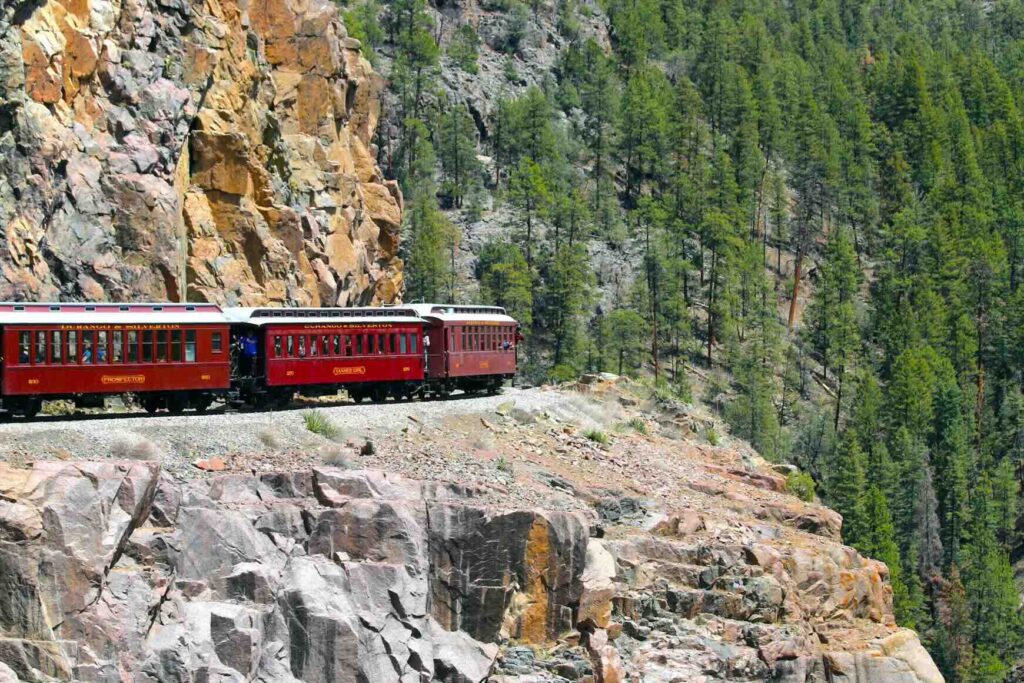
The historic main avenue is where you’ll find the restaurants and hotels, with mountain biking and river trips close by. Because it’s so far from Denver, most travelers either fly into the regional airport or fold Durango into a longer loop, picking up Mesa Verde, less than an hour to the west, along the way.
14. Silverton
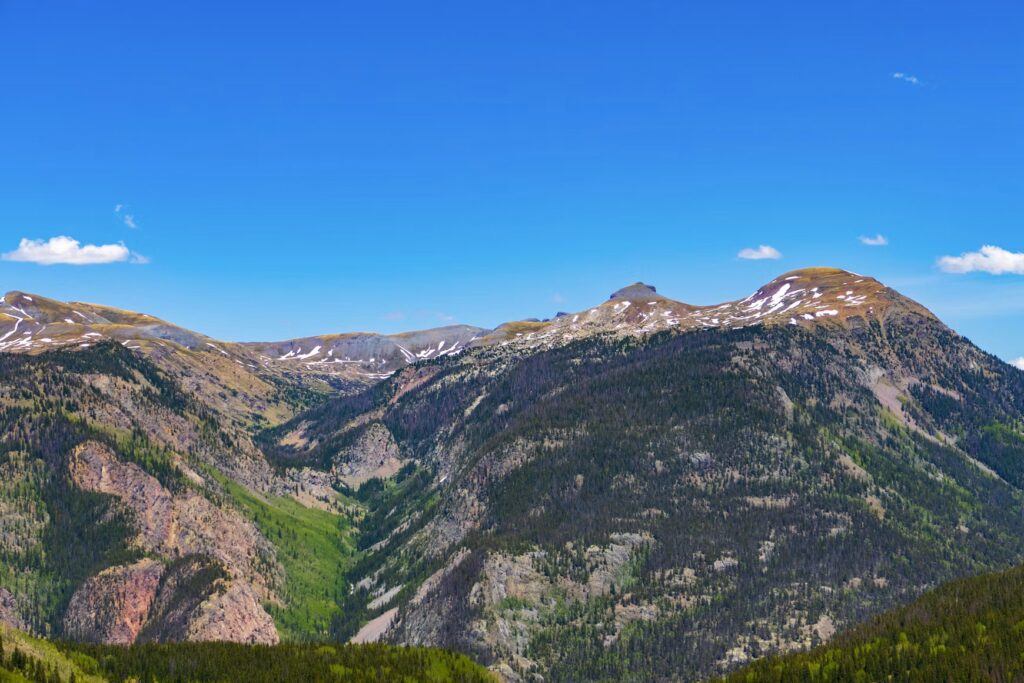
Silverton sits high in the mountains at the northern end of the Durango railroad, a former silver-mining town that has barely changed in a century. Its unpaved side streets and the tight ring of peaks around it give the whole place a frozen-in-time feeling, and the surrounding mountains are laced with four-wheel-drive routes out to old mining sites.
Most people arrive either by the historic train from Durango or by driving the Million Dollar Highway down from Ouray. At over nine thousand feet and hemmed in by mountain passes, it’s really a summer town, with services thinning out considerably in the depths of winter.
15. Ouray

They call Ouray the Switzerland of America, and the nickname fits: the town sits in a tight box of mountains that climb steeply on nearly every side. The Ouray Hot Springs Pool draws people year-round, the Perimeter Trail loops the town for elevated views in summer, and come winter the Ouray Ice Park transforms a natural gorge into a vertical playground that pulls in climbers from all over the world.

It anchors the northern end of the San Juan loop and connects to Silverton by the Million Dollar Highway, with Telluride about an hour away. The town’s appeal really does split by season, so the right time to come depends on whether you’re here to soak and hike or to climb ice.
16. Telluride

Telluride sits in a box canyon so steep that the only road in is the same road out, which gives it a tucked-away feeling rare even among Colorado’s mountain towns. It’s a serious ski resort and a summer festival town in equal measure, and the free gondola up to Mountain Village offers some of the best canyon views you’ll get without lacing up your boots, with Bridal Veil Falls spilling down at the head of the valley.

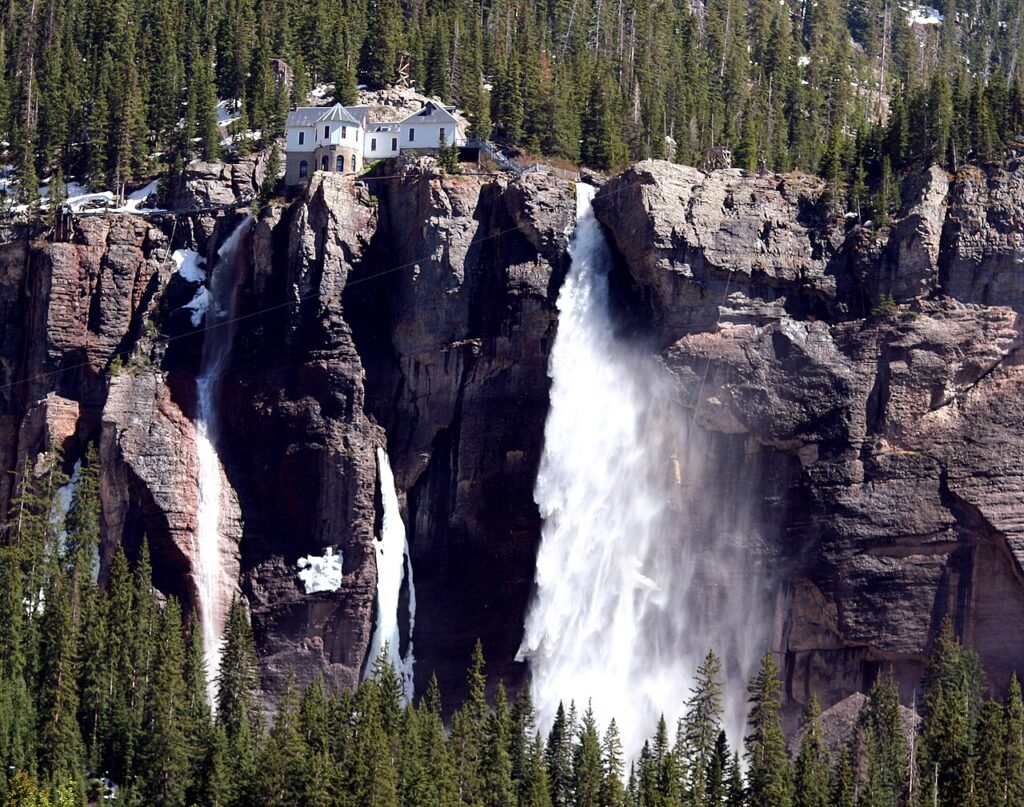
It does sit at the upper end of Colorado places to visit when it comes to price, so plenty of people come for a single festival or a day on the mountain rather than an extended stay. And because there’s only one way in, the canyon gets busy during festival weekends, so book your lodging well ahead if that’s when you’re going.
17. Mesa Verde National Park
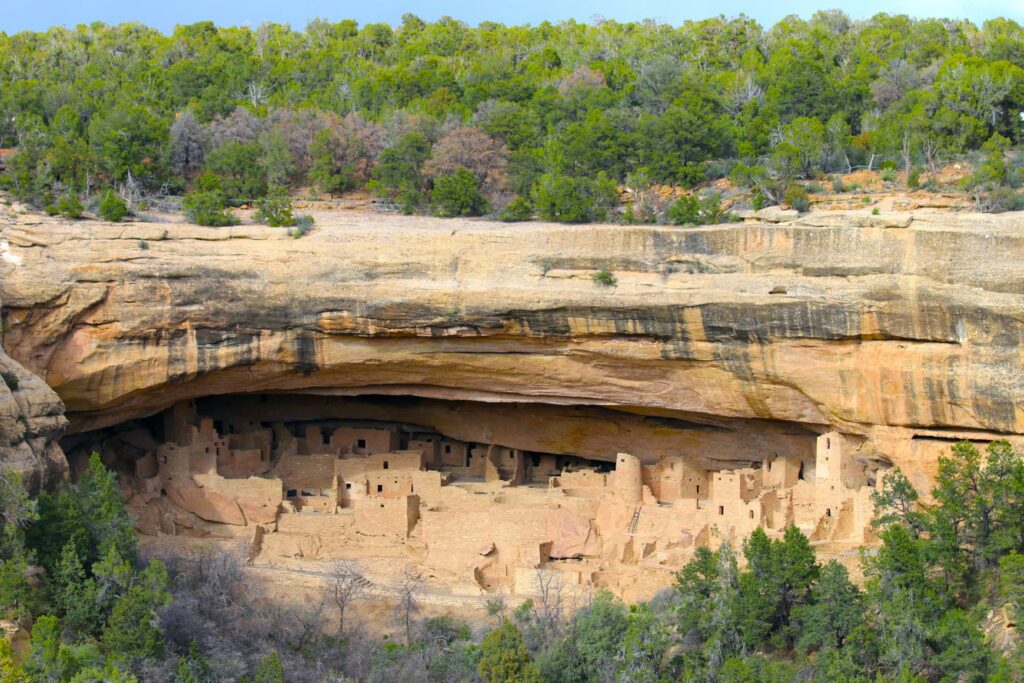
Mesa Verde is the great cultural landmark of the Southwest, a UNESCO World Heritage Site that protects more than seven centuries of Ancestral Puebloan history. The cliff dwellings tucked into the canyon walls are what draw people across the long miles to get here, above all Cliff Palace, the largest dwelling in North America, and Balcony House, reached by a thirty-two-foot ladder and a narrow stone tunnel that turns the visit into a small adventure.
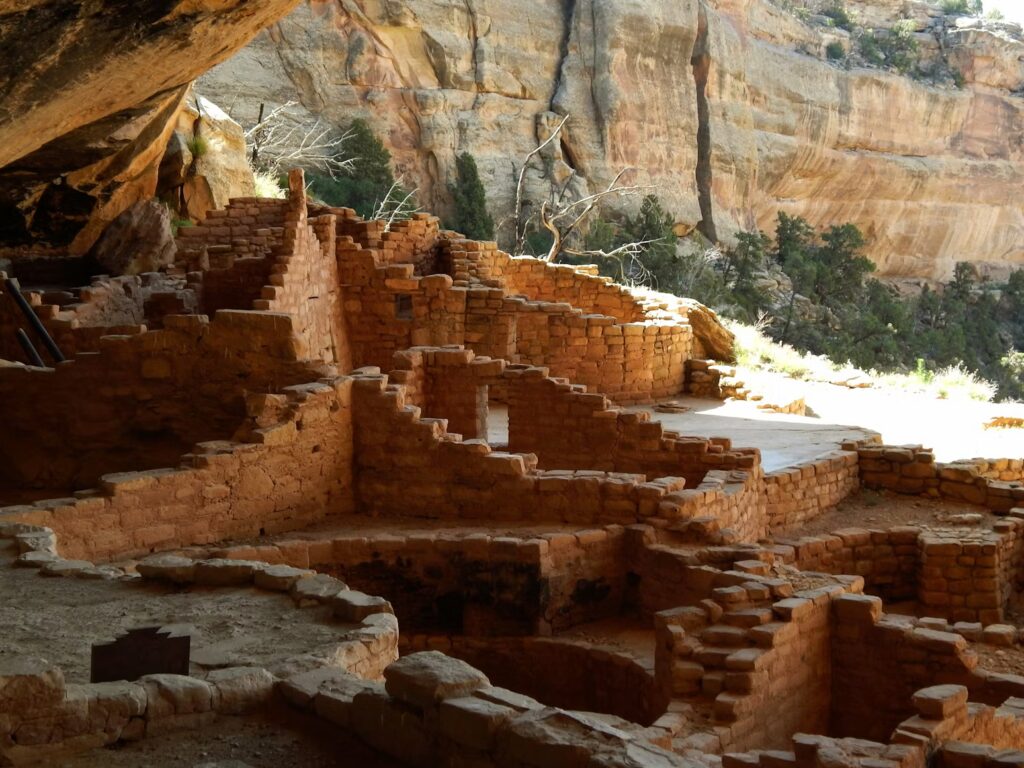
To step inside the major dwellings you’ll need a ranger-led tour reservation, released exactly fourteen days ahead at 8 a.m. Mountain Time on recreation.gov, and they can sell out within minutes, so set a reminder. The tour season runs roughly May through October. Cortez and Mancos are the nearest towns to stay, with Durango under an hour east. In winter the tours pause, but the overlooks and mesa-top sites stay open year-round.
18. Million Dollar Highway

The Million Dollar Highway is the stretch of U.S. 550 between Ouray and Silverton, a narrow mountain road with few guardrails that climbs over high passes with sheer drops falling away to one side. It turns up again and again on lists of the most scenic drives in the country, and the way to enjoy it is slowly, stopping at the pullouts above Red Mountain Pass and taking in the old mining structures scattered along the route.
Since it links two of the region’s best towns, it rarely stands as a destination on its own; it’s the connective tissue between them. Just be aware that the road closes or turns dangerous under winter snow and tends to unnerve nervous drivers even in good weather, so save it for clear daylight.
19. Pagosa Springs

Pagosa Springs is built around what’s recognized as one of the deepest geothermal hot springs in the world, and the town has grown a relaxed soaking culture to match. The terraced pools step down toward the San Juan River at a range of temperatures, and the surrounding national forest offers plenty of hiking, plus winter access to Wolf Creek, a ski area famous for getting buried in snow.

It’s a less dramatic setting than Ouray, but quieter and easier on the wallet, which makes it a good choice for travelers steering clear of the busier resorts. It also sits conveniently on the route between the Front Range and the southwestern corner, about an hour east of Durango.
20. Crested Butte

Crested Butte bills itself as the wildflower capital of Colorado, and come July the surrounding meadows make a strong case, with dense blooms carpeting the trails out toward Gothic and the old townsite. The rest of the year it settles into life as a ski town, with a brightly painted historic main street and a reputation for steep, demanding terrain.
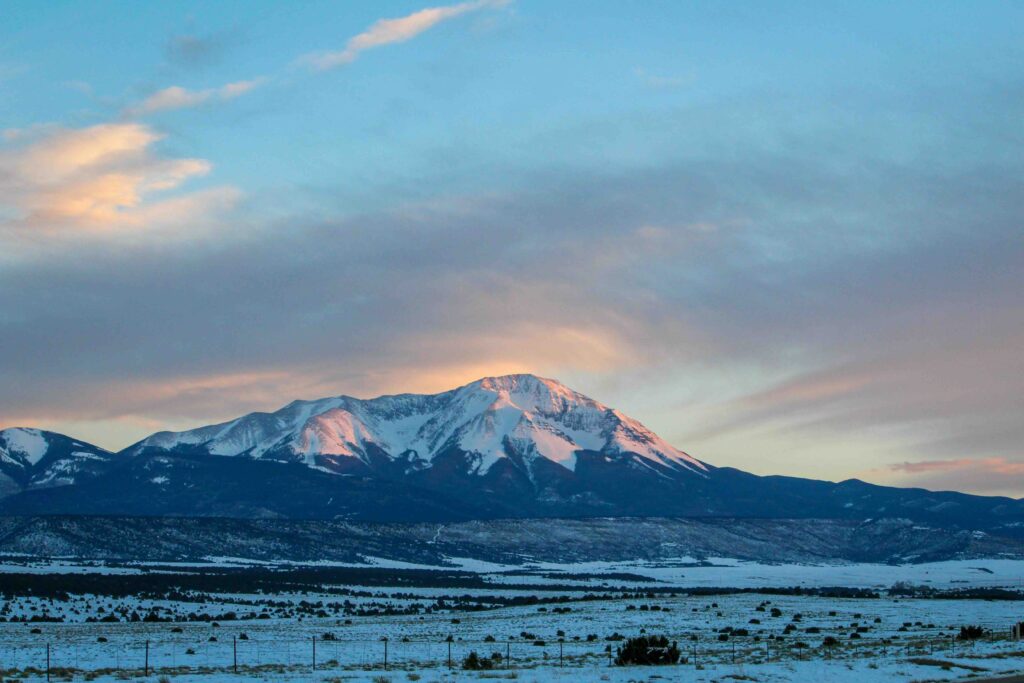
Getting here means a long approach off the main highways, which is exactly why it stays quieter than the I-70 resorts, and it pairs naturally with the Gunnison area. The wildflower window is short and very weather-dependent, so timing a July visit to catch the bloom at its peak takes a little luck.
Southern Colorado and the San Luis Valley
The southern reaches of the state hold two more national parks and a handful of distinct draws scattered across high desert and mountain valleys.
21. Great Sand Dunes National Park

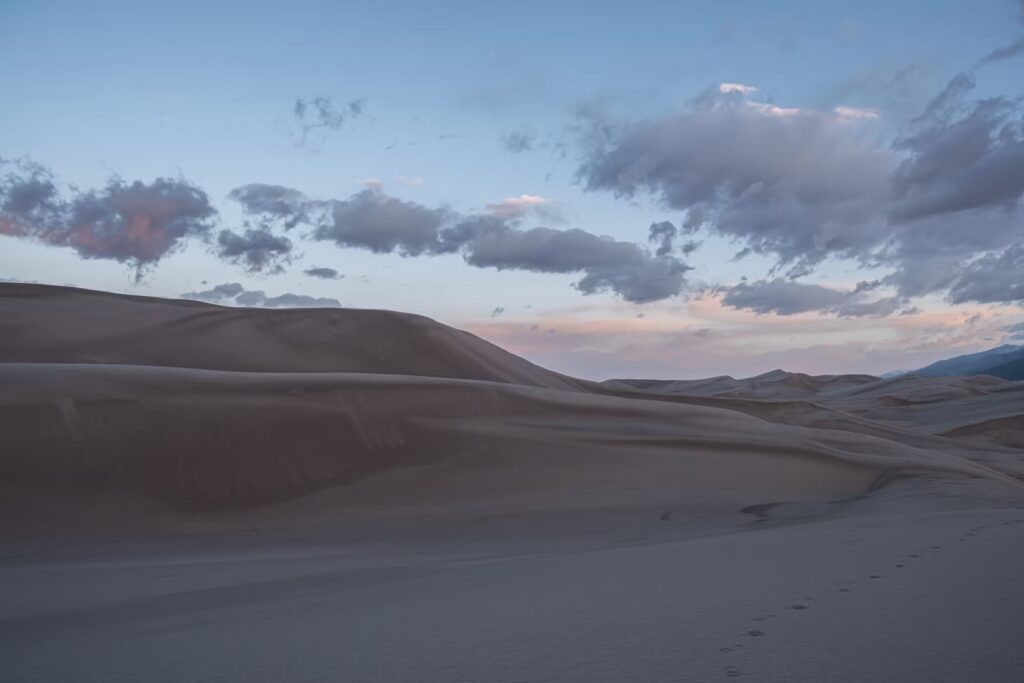
There’s nothing else in the state quite like Great Sand Dunes. It protects the tallest dunes in North America, rising more than seven hundred feet, and the sight of a desert dunefield sitting at the foot of the snow-capped Sangre de Cristo Mountains is genuinely surreal. Climbing the High Dune is hard work over shifting sand but unforgettable, and you can rent a board and sled back down; in late spring, Medano Creek flows along the base of the dunes and turns into a kind of seasonal beach that families love.
Go early or late in the day during summer, because the sand surface gets dangerously hot by midday. The nearest services are in Alamosa, about forty minutes off. And if it’s the creek you’re after, aim for late spring or early summer, which is the only stretch it reliably runs.
22. Black Canyon of the Gunnison National Park
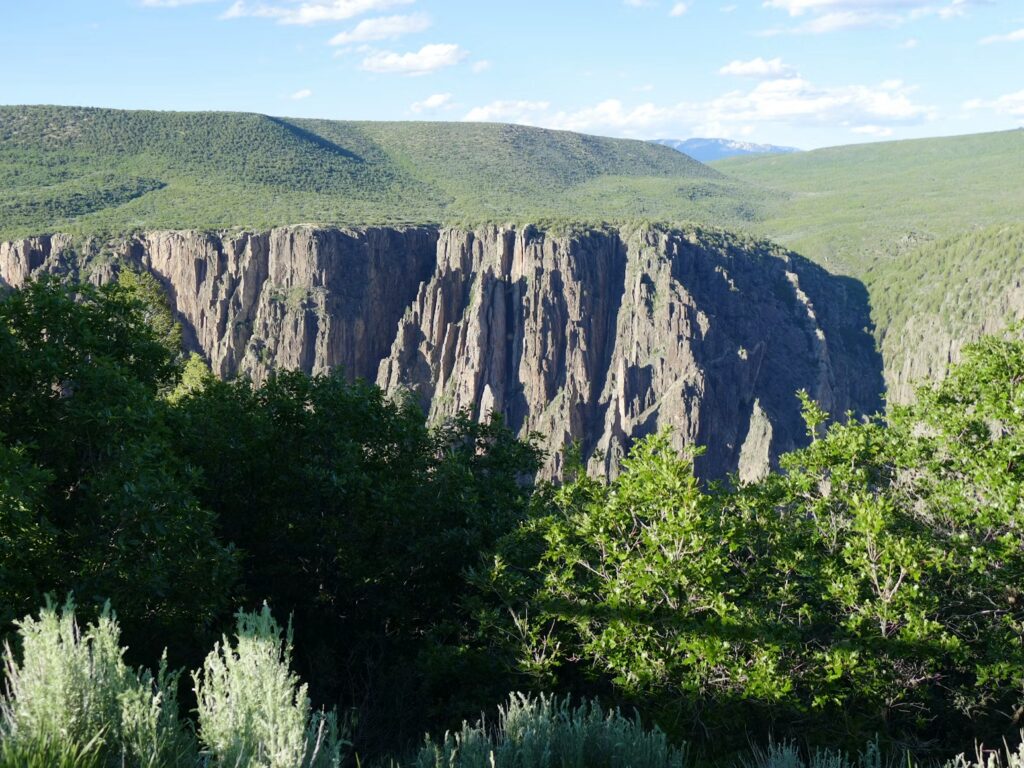
Black Canyon of the Gunnison is one of the steepest, narrowest gorges on the continent, so deep and sheer that parts of the canyon floor see only a few minutes of direct sun all day. The usual way to take it in is to drive the South Rim Road, stopping at viewpoints like Painted Wall, the tallest cliff in Colorado, with short rim trails linking several of the overlooks.
As one of the least-visited national parks in the state, it’s a quiet reward for travelers who want dramatic scenery without the crowds. The South Rim is the developed, accessible side and stays open spring through fall, with Montrose the nearest town. The routes down into the inner canyon are genuinely tough and unmarked, so casual visitors are better off staying on the rim, where the views are just as good.
23. Steamboat Springs

Steamboat Springs earned its nickname, Ski Town USA, the honest way. The resort is known for the light, dry snow locals call champagne powder, and the town pairs that with a real ranching heritage and a scattering of natural hot springs. Strawberry Park Hot Springs, set in a wooded canyon outside town, is the soak everyone remembers, and summer brings trails and lazy afternoons tubing the Yampa River.
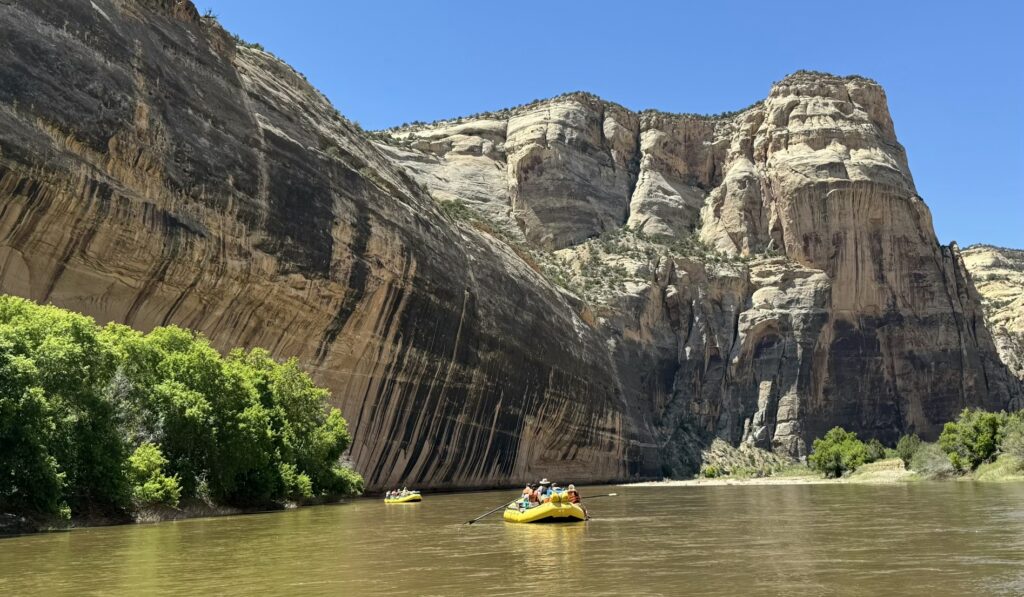
Sitting off in the northwestern mountains, away from the I-70 crowd, it feels more easygoing than some of its rivals, and it works in any season. Just know that the best hot springs sit at the end of a rough road, so check on access before you set out, especially in winter.
24. Royal Gorge

The Royal Gorge is a deep canyon cut by the Arkansas River near Cañon City, crossed by one of the highest suspension bridges in the country. Walking out across it, more than nine hundred feet above the water, is the heart of the experience, and the park has added a gondola and a zip line over the years; down at river level, outfitters run rafting trips that range from gentle family floats to serious whitewater.
Both the park and the rafting are summer affairs, with the river running highest on the early-summer snowmelt and Cañon City the nearest base. It’s a place that leans toward families and thrill-seekers, so if you’re after quiet scenery, the national parks nearby will probably suit you better.
25. Hanging Lake
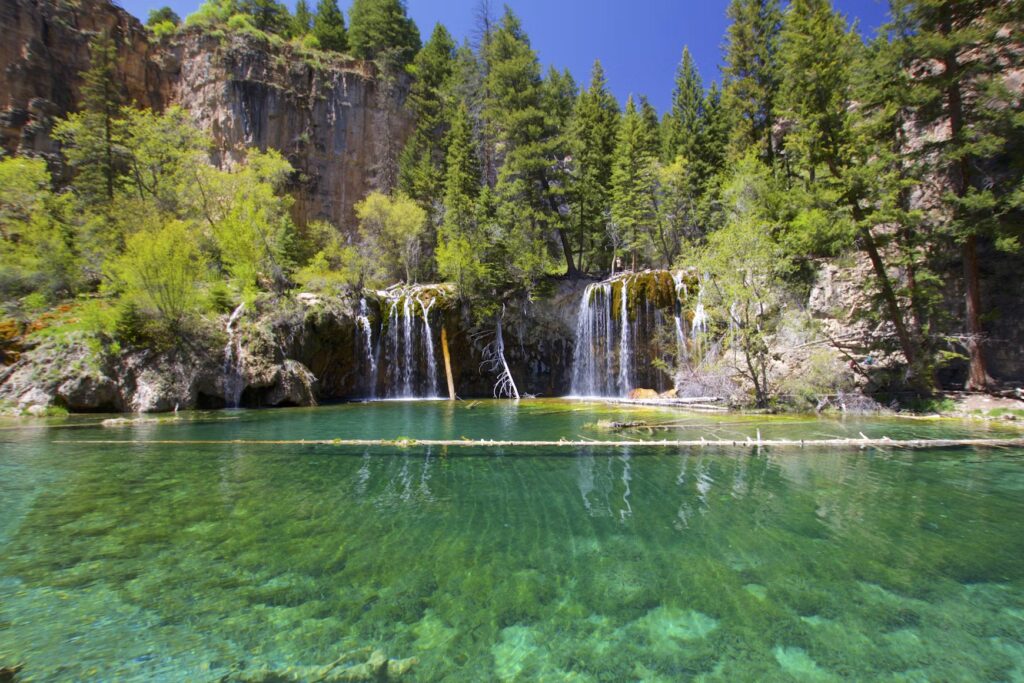
Hanging Lake is a small, almost impossibly turquoise pool perched on a cliff shelf above Glenwood Canyon, fed by waterfalls and tinted by dissolved minerals. The trail up is short but steep, gaining real elevation over 1.2 rocky miles before ending at a boardwalk that loops the water; to keep the lake intact, swimming and even touching the water are off-limits.
Because the place is so fragile and so popular, it runs on a permit system that’s worth confirming before you go, since access has bounced between shuttle-based and self-drive setups in recent years. Glenwood Springs is right there as a base, just minutes away, and while the hike is short, its steepness means it suits anyone comfortable with a steady climb rather than a casual stroll.
Frequently Asked Questions
What is the prettiest place in Colorado?
There is no single answer, but a few places appear on nearly every shortlist. The Maroon Bells near Aspen are often called the most photographed mountains in the state for their twin peaks mirrored in a glacial lake. Telluride’s box-canyon setting and the surreal contrast of Great Sand Dunes against the Sangre de Cristo Mountains are equally strong contenders. Each represents a different kind of beauty: alpine, dramatic, and otherworldly.
What is the best time of year to visit Colorado?
In short, summer brings reliable access to the high country and open mountain roads, fall offers golden aspens in late September, winter centers on skiing and snow, and spring is mixed as the snow melts unevenly. The right season depends entirely on what you want to do, which a dedicated guide to the best time to visit Colorado breaks down month by month.
How many days do you need to see Colorado?
It depends on how much ground you want to cover. The Front Range alone, including Rocky Mountain National Park, fills a comfortable three to four days. Adding the I-70 mountain towns pushes a trip toward five to seven days. A full loop through the San Juan Mountains and the southwestern parks, given the driving distances involved, realistically needs seven days or more to avoid feeling rushed.
Do you need a reservation for Rocky Mountain National Park?
Yes, during the busy season. A timed-entry reservation is required from May 22 through mid-October 2026, with two permit types: one for the Bear Lake Road corridor and one for the rest of the park, each covering a set window of hours. The reservation itself costs a $2 processing fee on recreation.gov and is separate from the park entrance pass. Verify the current schedule on recreation.gov before your trip, since dates shift slightly each year.
What is the best small town in Colorado?
The strongest candidates tend to be Telluride for its setting, Ouray for its hot springs and surrounding peaks, and Crested Butte for its wildflowers and color. Each has a distinct character, and the best fit depends on your interests, which a separate guide to the best small towns in Colorado compares side by side.
Is Colorado expensive to visit?
It varies enormously by where you go. The resort towns, particularly Aspen, Vail, and Telluride, are among the priciest destinations in the country for lodging and dining. Budget-friendly towns like Leadville and Pagosa Springs cost a fraction of that. National park entrance fees are modest by comparison, typically a set vehicle pass per park, though a non-U.S. resident surcharge now applies at Rocky Mountain National Park. Building a trip around the more affordable bases keeps costs reasonable.
What are the must-see national parks in Colorado?
The state has four. Rocky Mountain National Park offers alpine peaks and tundra and requires timed entry in season. Mesa Verde protects Ancestral Puebloan cliff dwellings and requires tour reservations to enter them. Great Sand Dunes holds the tallest dunes in North America, and Black Canyon of the Gunnison preserves one of the steepest gorges on the continent. Together they span nearly the full range of Colorado’s landscapes.
Do I need to worry about altitude sickness in Colorado?
It is worth taking seriously. Denver sits at 5,280 feet and many destinations climb well above ten thousand. The common precautions are to spend your first day or two at a lower elevation before going higher, drink more water than usual, and limit alcohol in the first days. Most visitors adjust within a couple of days, but the early symptoms of headache and fatigue are common enough to plan around.
What is the best base town for exploring Colorado?
It depends on the region. Denver is the natural base for the Front Range and the easiest place to arrive. Durango anchors the southwestern corner and Mesa Verde. Along the I-70 corridor, Glenwood Springs or Breckenridge work well as central bases for the mountain towns and hot springs. Choosing a base by region cuts down on backtracking across long mountain distances.
Can you visit Colorado without a car?
Partly. Denver and Boulder are manageable using light rail, buses, and walkable cores, and a few scenic railroads like the Durango and Silverton and the Georgetown Loop offer car-free experiences. But the majority of the places in this guide, especially the national parks and mountain towns, are difficult or impossible to reach without a vehicle, so most trips beyond the Front Range require one.
Planning Your Colorado Trip
The right itinerary depends on what you are after. First-time visitors are best served concentrating on the Front Range and Rocky Mountain National Park, where the most striking scenery is also the most accessible. Travelers chasing dramatic landscapes should plan the San Juan loop through Durango, Silverton, Ouray, Telluride, and Mesa Verde. Families tend to do well in the Colorado Springs region, with Garden of the Gods, Pikes Peak, and the cluster of nearby attractions. Anyone drawn to hot springs and rest will find them in Glenwood, Pagosa, Ouray, and Steamboat.
Whatever shape your trip takes, three practical reminders carry the most weight. Book the timed-entry and tour reservations for Rocky Mountain and Mesa Verde well ahead, since they sell out fast. Check seasonal road and pass closures before you set out, because winter shuts several of the most scenic drives. And give your body time to adjust to the altitude rather than racing straight to the highest points. For deeper planning, the companion guides on the best time to visit and the best small towns in the state pick up where this overview leaves off.