
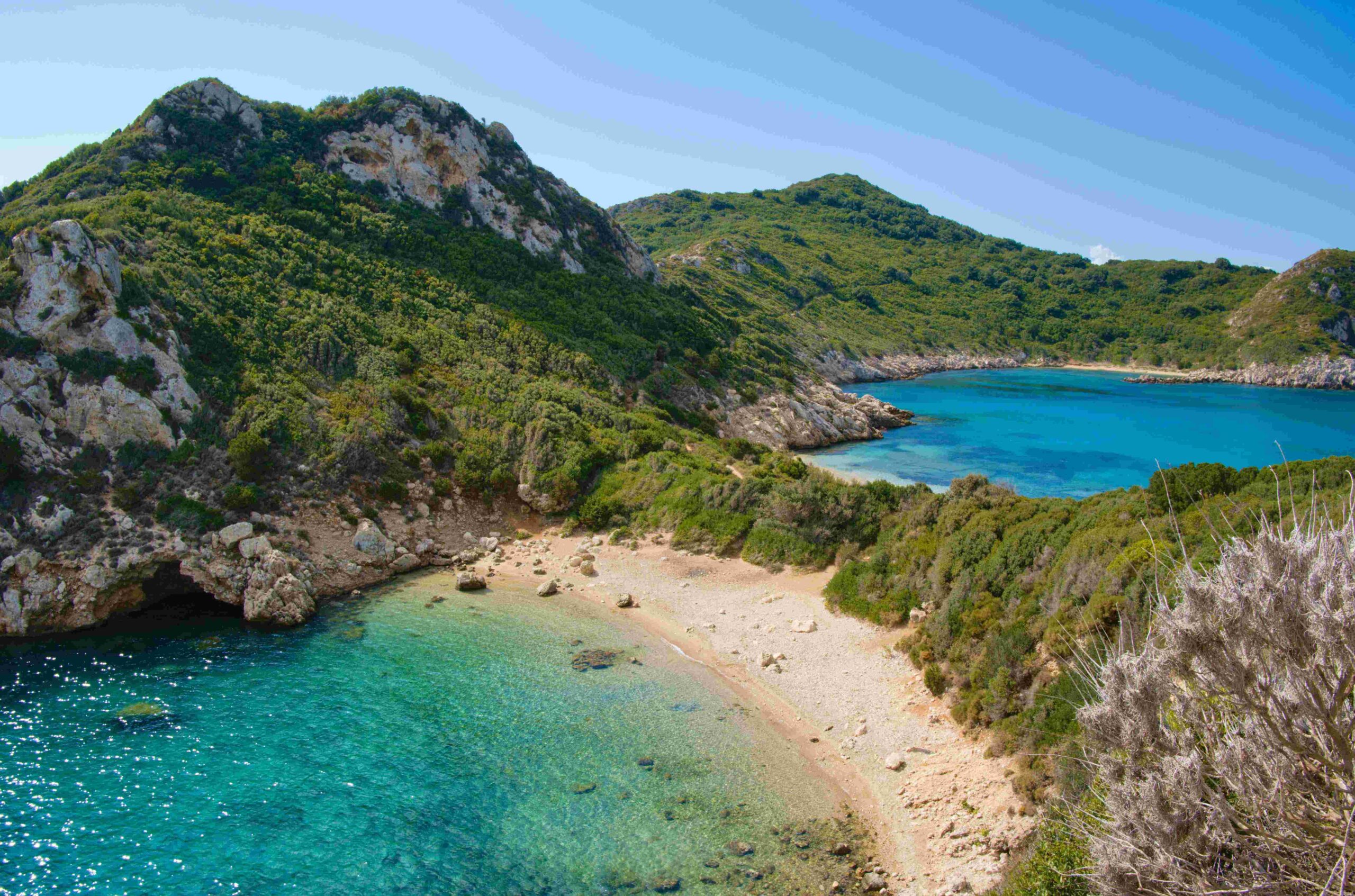
Greek coastline stretches across two distinct seas, encompassing thousands of islands and miles of mainland shorelines that vary dramatically in topography, access, and atmosphere. Choosing which coastal spots to include in a travel itinerary requires understanding these regional characteristics, balancing visual appeal with practical factors like sea conditions, accessibility, and local service costs.
Understanding the Diversity of Greece Beaches Before You Book
Greece has over 6,000 islands, though only around 200 are inhabited, making the coastal variety almost overwhelming. The western Ionian coast is known for steep cliffs and deep waters, while the central Cyclades feature volcanic rocks and gold sand, alongside strong summer winds. Further south, Crete offers shallow turquoise lagoons, whereas the Dodecanese and Northern Aegean islands lean toward quiet coves framed by pine forests.
Knowing what you want out of a trip makes narrowing down these options easier. Some spots feature full-service beach clubs with sunbed rentals and tavernas, while others remain wild and require a boat ride or a hike to access. Matching a beach to your preferred travel style comes down to checking entry difficulty, local terrain, and the time of day you plan to visit.
Iconic White Sands and Cliffs: The Ionian Coastline
The Ionian Sea along the western coast of mainland Greece is renowned for its dramatic vertical landscapes and striking water hues. Higher annual rainfall here creates lush green vegetation that extends directly to the edge of white pebble and sand shores.
Navagio Beach (Shipwreck Beach), Zakynthos
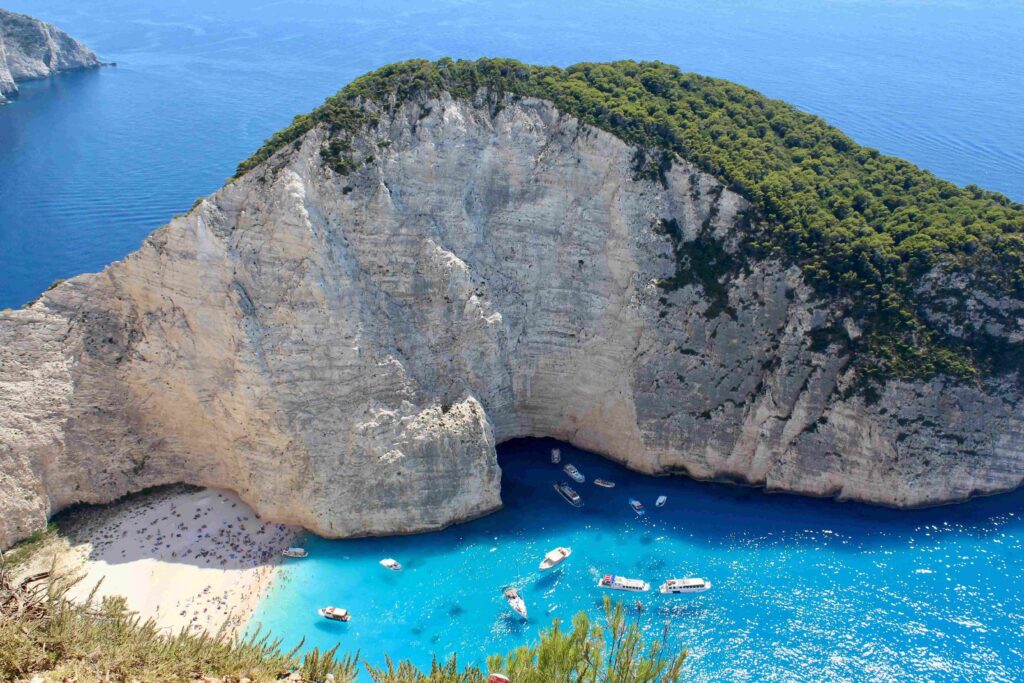
Navagio Beach is famous worldwide for the rusted hull of the MV Panagiotis resting on a crescent of bright white pebbles, enclosed by soaring 600-foot limestone cliffs. Direct access to the sand and swimming within the cove remain prohibited by official safety decrees due to ongoing landslide risks. Travelers can still admire the landmark from the clifftop viewing platform near Anafonitria village or via licensed boat tours operating from Porto Vromi and Agios Nikolaos that maintain a safe 50-meter distance offshore.
Parking near the clifftop viewpoint costs around $3, while excursion boat tickets range between $22 and $33 per person. The best lighting for viewing the cove occurs between late morning and early afternoon.
Porto Katsiki, Lefkada
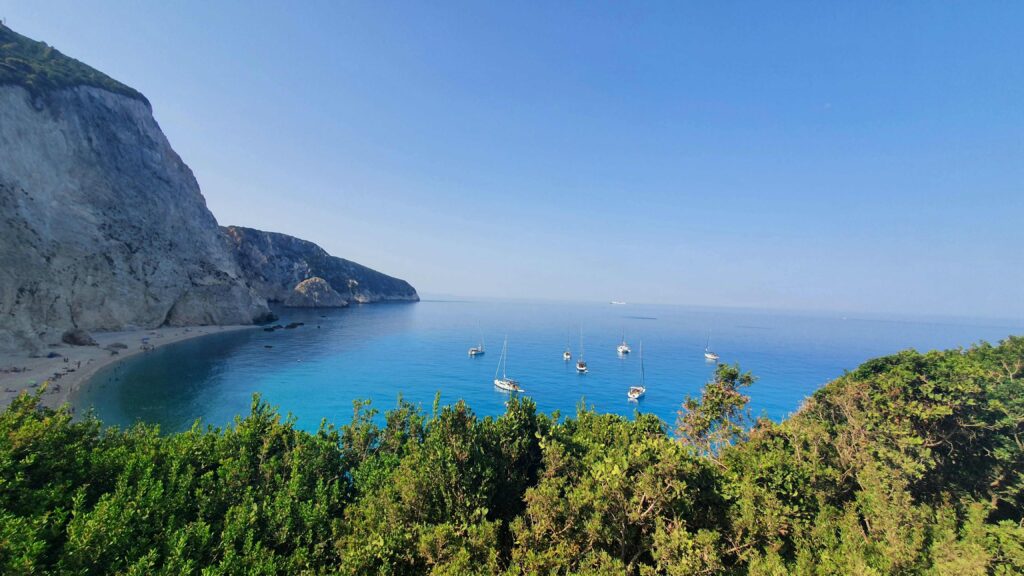
Located on the southwestern tip of Lefkada, Porto Katsiki features a narrow strip of white pebbles backed by a massive, concave cliff face. The sea displays an intense shade of opaque blue caused by dissolved limestone in the water. Visitors descend approximately 80 concrete steps cut into the cliffside to reach the beach, passing vendor stalls selling cold drinks at the top.
Upper parking charges roughly $9 per day, and sunbed sets at the base of the stairs generally cost $27 when available. Because space narrows significantly at high tide, arriving before 10 AM is essential for securing a spot away from the cliff base.
Myrtos Beach, Kefalonia
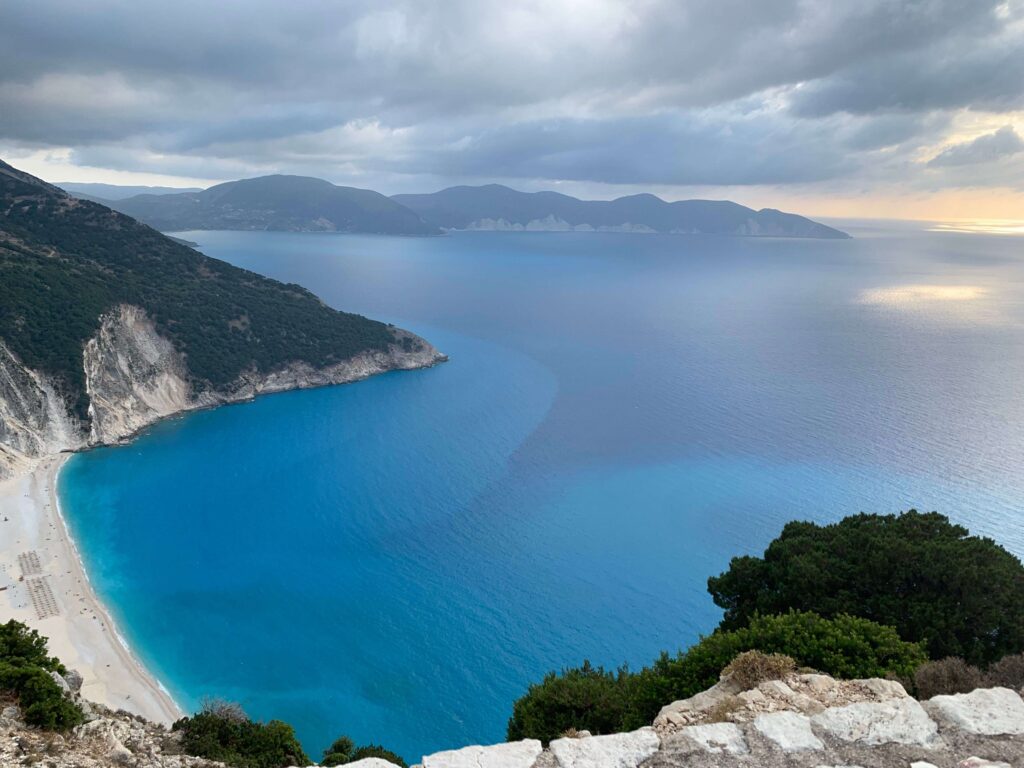
Myrtos Beach lies in a sweeping bay between the bases of 2 mountains, Agia Dynati and Kalon Oros, on the northwest coast of Kefalonia. The shore consists of smooth white cobbles that transition into fine sand underwater, creating a vivid turquoise contrast against the deep blue horizon. A winding paved road leads down from Divarata village to a spacious, free parking lot at sea level.
The beach features a municipal snack bar and organized sunbed rentals priced around $22 per pair, though vast stretches remain open for public use. Afternoon onshore waves are common, making early morning ideal for calm swimming.
Egremni Beach, Lefkada
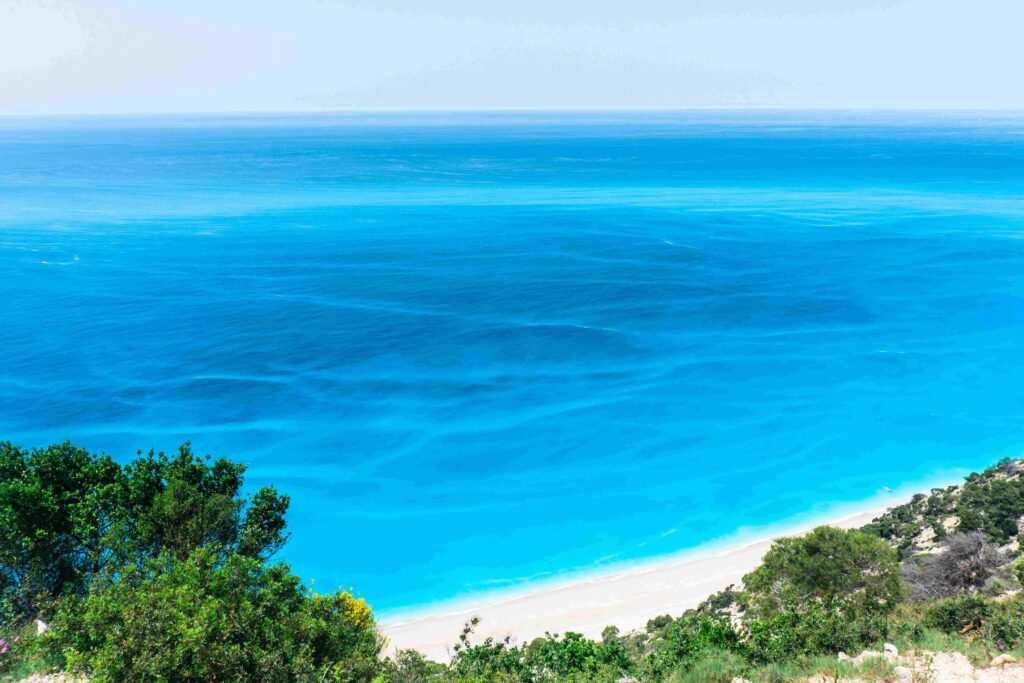
Egremni Beach offers over 2 kilometers of uncrowded shoreline backed by steep bluffs that isolate it from commercial development. Following structural repairs after a major earthquake, the site is accessible either by descending more than 300 wooden stairs or via commercial boat tours departing from Nydri and Vasiliki. Boat transfers cost approximately $22 per passenger, offering a more accessible option for avoiding the steep climb back up. The beach lacks permanent commercial facilities, so packing adequate water, shade, and supplies is necessary for a full day.
Volcanic Formations and Sculpted Coastlines: The Cyclades
The Cycladic archipelago presents some of the most geologically unique coastal landscapes in the Aegean, characterized by volcanic rock, stark whitewashed architecture, and open sea views.
Sarakiniko Beach, Milos
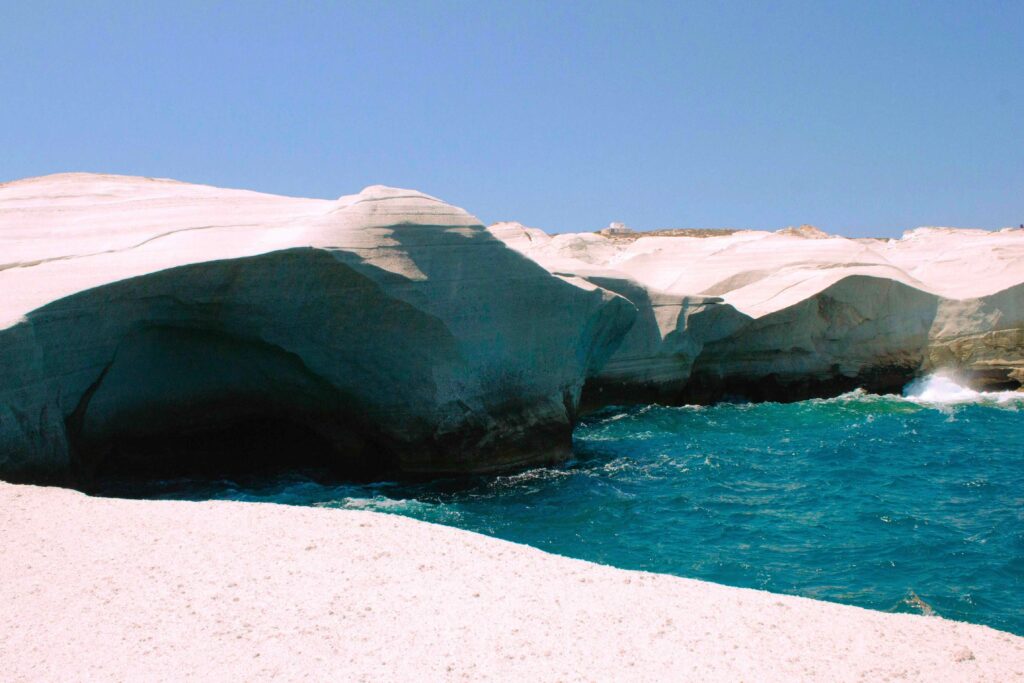
Sarakiniko Beach on the northern coast of Milos is defined by smooth, bone-white volcanic stone carved by wind and waves into deep ravines and natural arches. The landscape resembles a surreal lunar surface, with a small inlet of calm, shallow water cutting into the white rock formations. There are no sunbeds, trees, or permanent beach bars here, keeping entry free and preserving the pristine environment.
Visitors park along the main road and walk 5 minutes down a gravel path to reach the water. Sturdy footwear is recommended for walking along the polished ledges, as shade is practically non-existent.
Kleftiko Caves, Milos
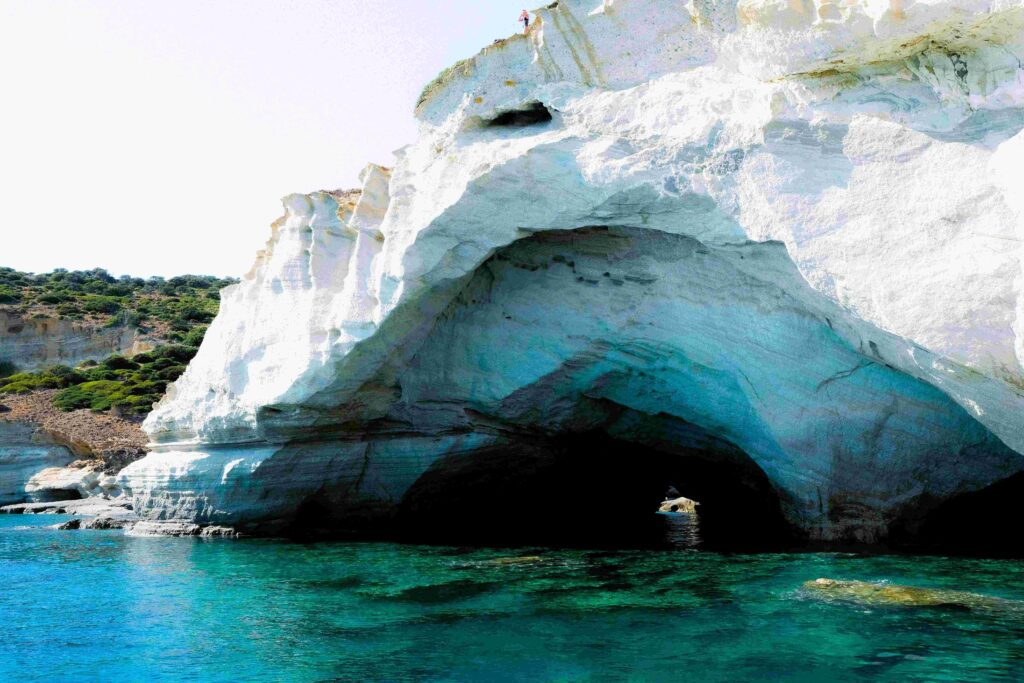
Kleftiko consists of an isolated complex of white rock towers, natural sea arches, and underwater caves on the southwestern tip of Milos. Historically used as a pirate hideout, the area lacks a traditional sandy shore, functioning as an open-water swimming and snorkeling destination. Reaching Kleftiko requires joining a boat excursion from the port of Adamas or Provatas, with prices ranging from $75 to $130 per person including snorkeling gear and lunch. The crystal-clear sea surrounding the white pillars provides exceptional underwater visibility, it’s one of the reasons Milos keeps turning up on lists of the best places to snorkel in the world.
Red Beach (Kokkini Ammos), Santorini
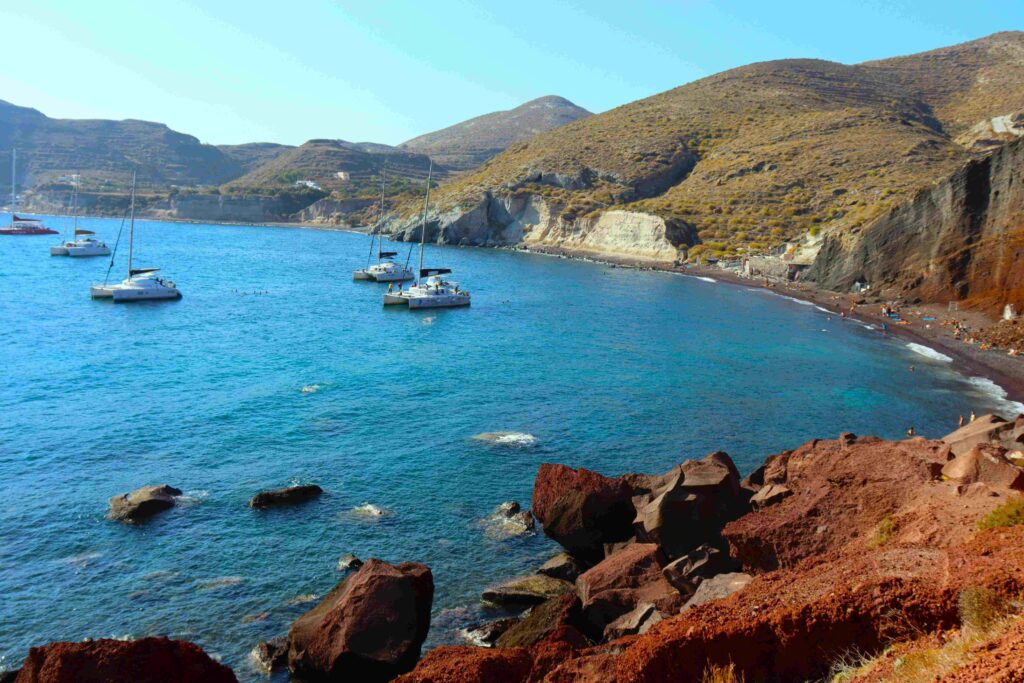
Red Beach sits near the ancient village of Akrotiri, defined by towering cliffs of dark red volcanic cinder dropping into deep turquoise water. Due to ongoing seismic activity and cliff instability, walking along the trail or sitting directly under the bluffs is restricted for safety. The safest way to experience the striking visual contrast is from the designated viewpoint near the Church of Agios Nikolaos or from the water via catamaran cruises. Public parking near the trailhead is free, and small water taxis operate from Akrotiri port for roughly $11 round trip. If these beaches have you leaning toward a Santorini stay, our guide to the best Santorini hotels covers which villages put you closest to the coast.
Perissa and Perivolos Beach, Santorini
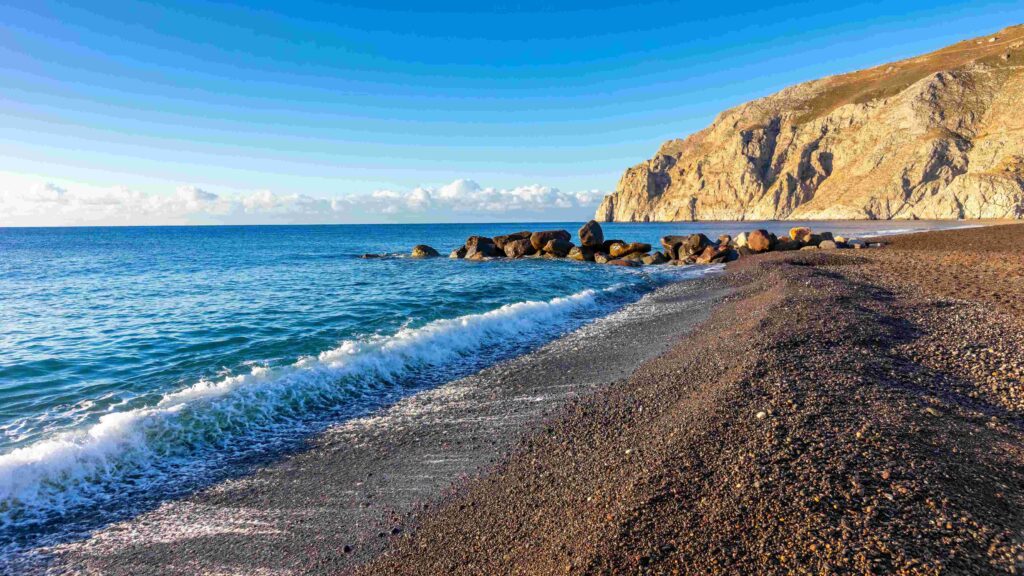
Extending along the southeastern coast of Santorini, Perissa and Perivolos form a continuous 6-kilometer stretch of deep black volcanic sand and gray pebbles. The seafloor drops off quickly into deep water, while the mesa of Profitis Ilias provides a backdrop to the northern end.
This area hosts the highest concentration of organized beach amenities on the island, with seaside tavernas and lounge bars offering sunbed sets ranging from $16 to $44 per pair depending on proximity to the water. The flat terrain makes it easily accessible via local public buses from Fira.
Golden Sand Expanses for Relaxation and Watersports
For travelers prioritizing soft golden sand, shallow entry, and space to spread out, central Aegean islands offer some of the most accommodating shores.
Plaka Beach, Naxos
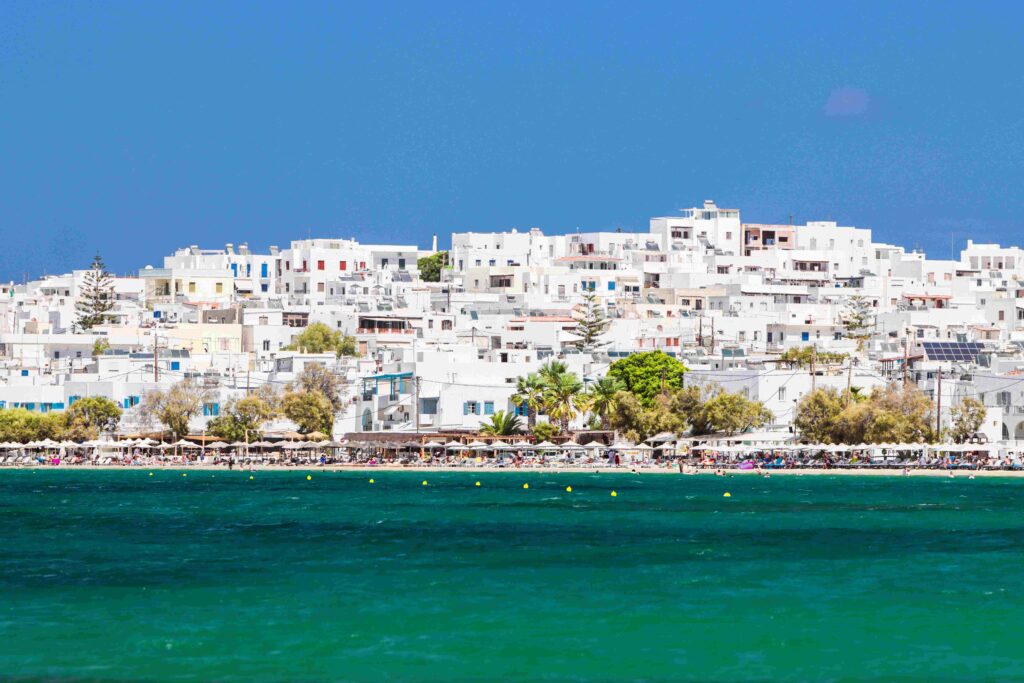
Plaka Beach stretches for nearly 4 kilometers along the western coast of Naxos, featuring wide dunes of soft golden sand and calm sea conditions. The northern end near Agia Anna contains quiet seaside accommodations and casual tavernas renting sunbeds for roughly $16 to $22 per set.
Moving further south, the beach becomes wide open and unorganized, providing endless space for long walks and peaceful swimming away from commercial setups. The dirt road running parallel to the coast offers ample free parking along its entire length.
Agios Prokopios, Naxos
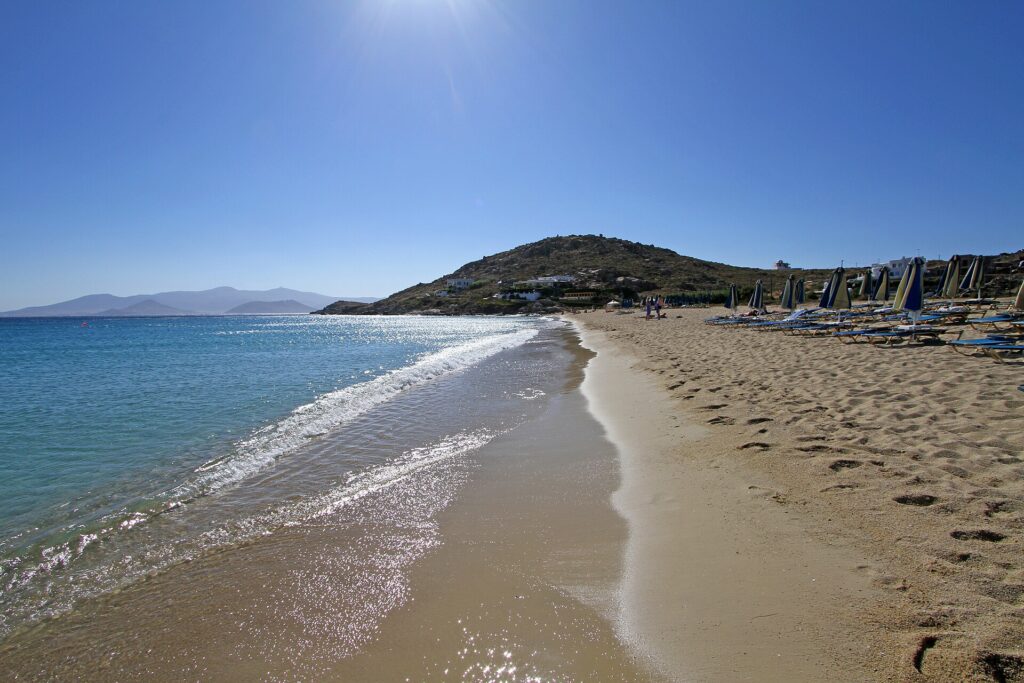
Protected from northern meltemi winds by a high headland, Agios Prokopios is a broad bay composed of heavy, bright yellow coarse sand that does not blow around easily. The water here is exceptionally clear and deepens gradually, making it a favorite for families and casual swimmers.
Organized sections occupy the central portion of the strand with sunbed prices averaging $22 per set, while the northern end remains open near the salt pan lagoon. Local buses run frequently between Naxos Town and Agios Prokopios throughout the summer season for under $2.50 per ticket.
Golden Beach (Chrissi Akti), Paros
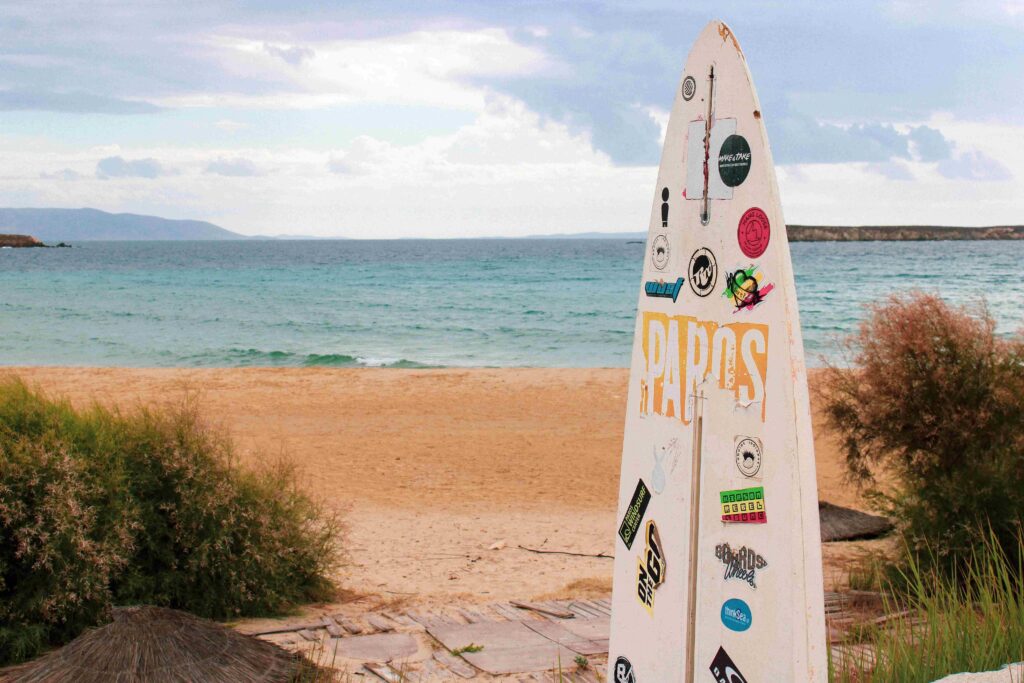
Golden Beach on the southeastern coast of Paros spans a wide, curved bay of fine golden sand known for its steady thermal winds. These wind conditions make it a premier windsurfing and kitesurfing destination in the Mediterranean. Rental centers along the shore offer equipment rentals and lessons starting at $38 per hour. For non-sailors, comfortable beach clubs provide sunbeds priced between $22 and $38 per set, with calm shorelines ideal for morning swimming before afternoon winds pick up.
Super Paradise Beach, Mykonos
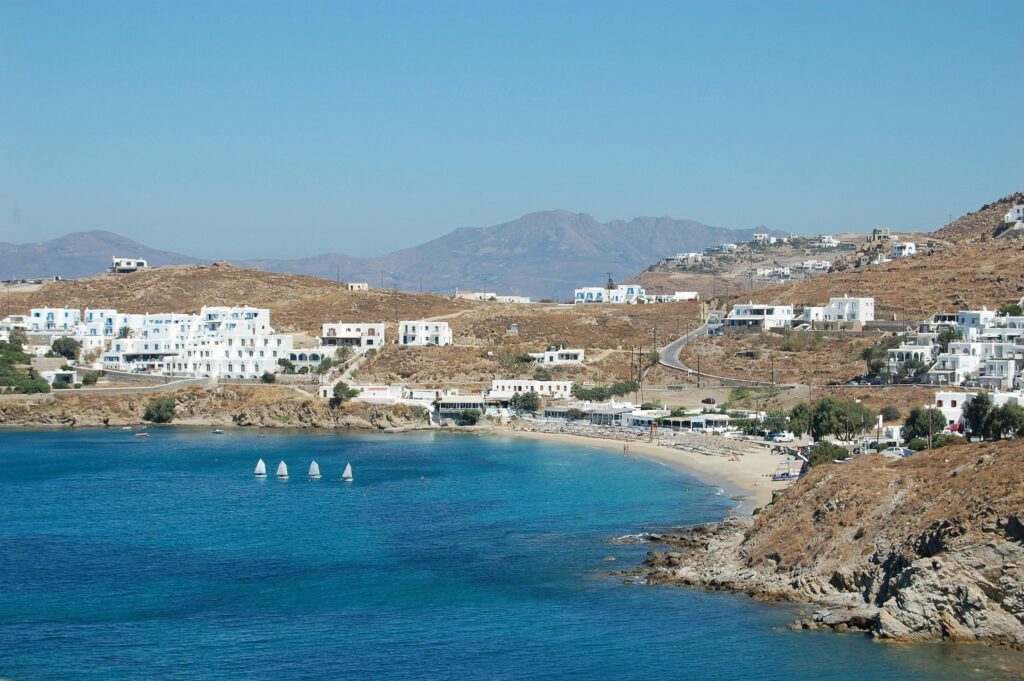
Super Paradise Beach occupies a deep, sheltered cove on the southern coast of Mykonos, characterized by fine gold sand and emerald-green waters. During morning hours, the bay offers a serene environment suitable for swimming, but by mid-afternoon, upscale beach clubs transition into high-energy music venues.
Facilities here represent the premium tier of Cycladic coastal service, with sunbed rentals ranging from $55 to well over $110 per pair depending on the venue and row position. A dedicated water taxi connects Super Paradise with neighboring southern beaches such as Platis Gialos and Ornos.
Exotic Lagoons and Natural Reserves of Crete and the South
Crete, the largest Greek island, features distinct ecosystems ranging from expansive shallow lagoons with pink-hued sand to protected palm forests along its eastern coast.
Balos Lagoon, Crete
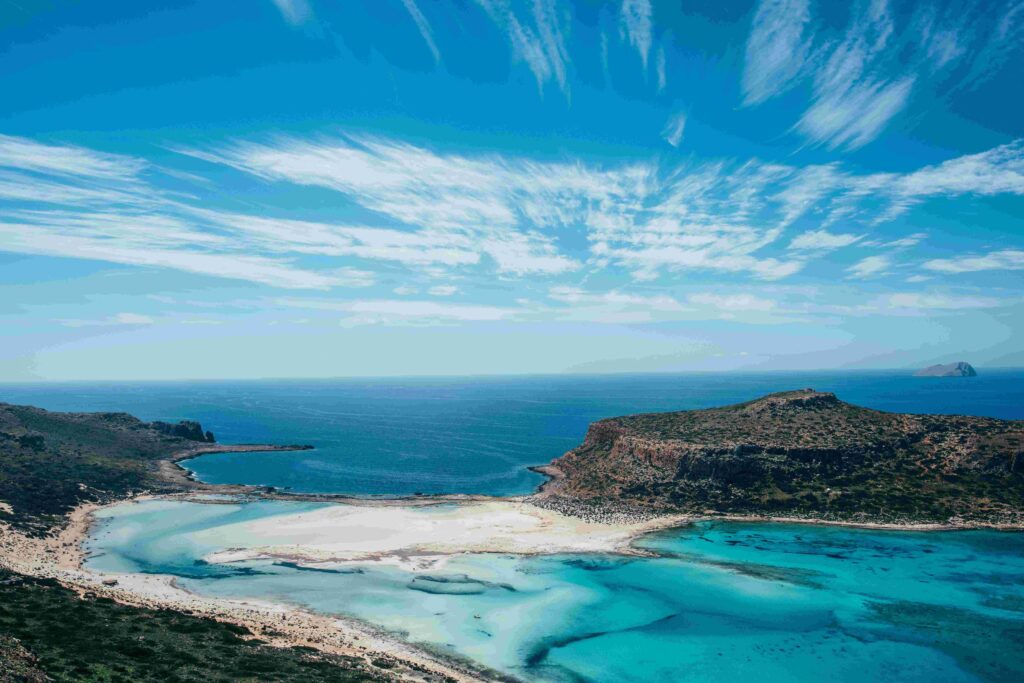
Balos Lagoon sits on the remote Gramvousa Peninsula in northwestern Crete, where a vast natural sandbar creates a shallow basin of warm, turquoise, and pink-tinted water framed by rugged hills. The unique pink coloration stems from crushed shells of microscopic marine organisms mixed into the white sand.
Visitors reach Balos via a scenic 1-hour ferry ride from Kissamos port costing around $33 per person, or by driving a rugged dirt road followed by a 20-minute steep hike down a stone trail. An environmental entry fee of $1.10 applies, and shade facilities on site are extremely limited.
Elafonisi Beach, Crete
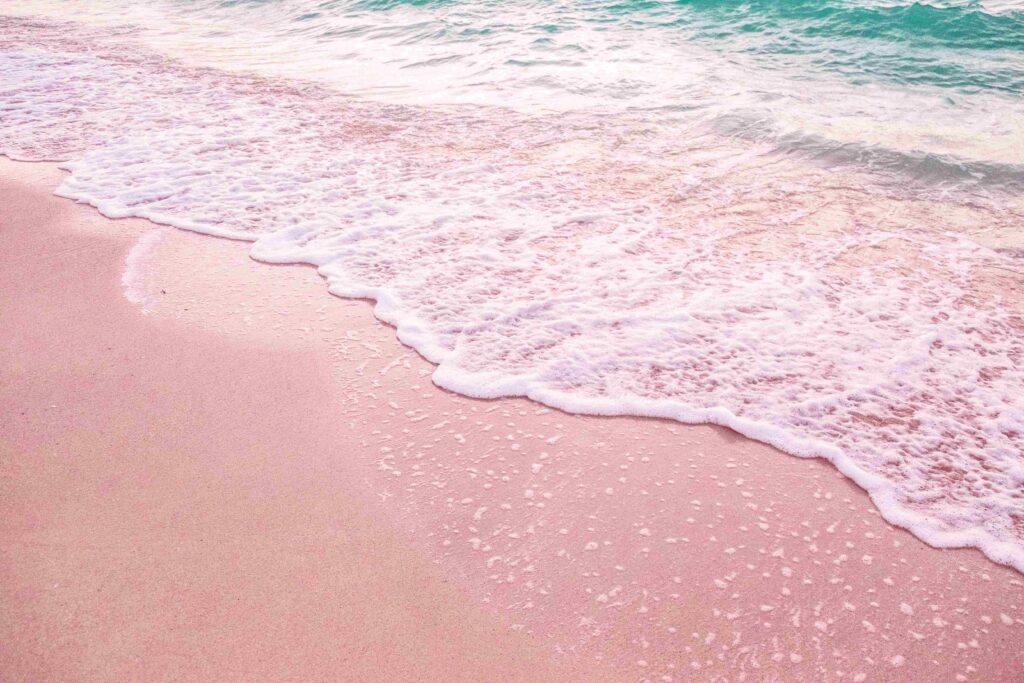
Located on the far southwestern corner of Crete, Elafonisi is a protected nature reserve featuring a low-lying island connected to the mainland by a wide, shallow sandbar that can be waded across at knee height. The quiet lagoons created by this formation feature calm water ideal for wading and swimming.
Sunbeds are restricted to specific zones to protect local dune vegetation, costing roughly $16 per set when available. Driving from Chania takes roughly 90 minutes along narrow mountain roads, so visiting during off-peak hours helps avoid heavy midday tour bus traffic.
Vai Beach (Palm Beach), Crete
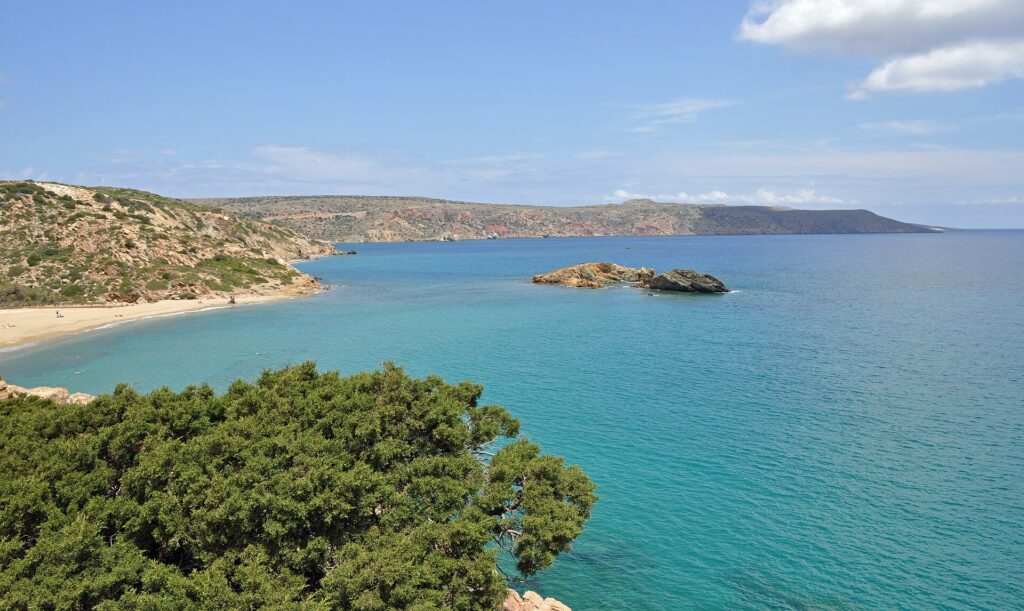
Vai Beach, located on the remote northeastern coast of Crete, backs directly into the largest natural date palm forest in Europe, comprising over 5,000 trees. The golden sand beach opens into a sheltered bay with clear water framed by rocky islets just offshore.
Facilities include a well-managed parking area charging $5.50, clean showers, and an elevated wooden viewing platform overlooking the palm canopy. Sunbed sets along the main strand cost $16, while small walking paths lead over the southern headland to quieter coves.
Falassarna Beach, Crete
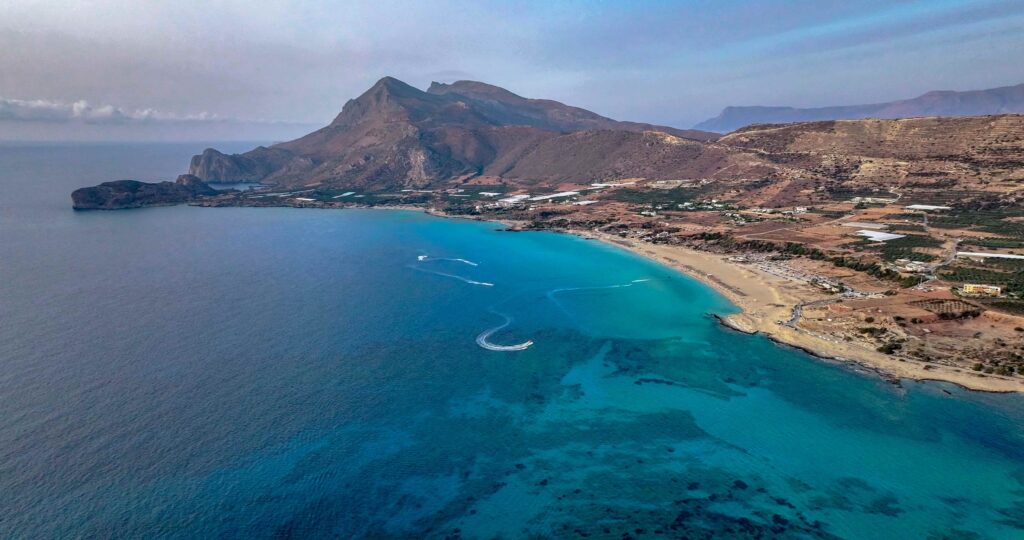
Falassarna consists of 5 consecutive wide sandy bays along the western edge of Crete, famous for its broad shoreline, turquoise sea, and unobstructed sunset views over the Mediterranean. The main beach, Pachia Ammos, is wide enough to accommodate multiple organized sunbed zones charging $16 to $22 per set without feeling overcrowded.
Strong western winds can create large surf waves in the late afternoon, attracting bodyboarders. Ample free parking is situated directly above the sand, supported by several traditional seafood tavernas operating along the ridge.
Emerald Waters and Lush Pine Forests: The Aegean & Dodecanese
The islands of the Northern Aegean and the Dodecanese offer dense pine forests that extend directly to the water’s edge, creating shade-filled pebble beaches with cool sea conditions.
St. Paul’s Bay, Lindos, Rhodes
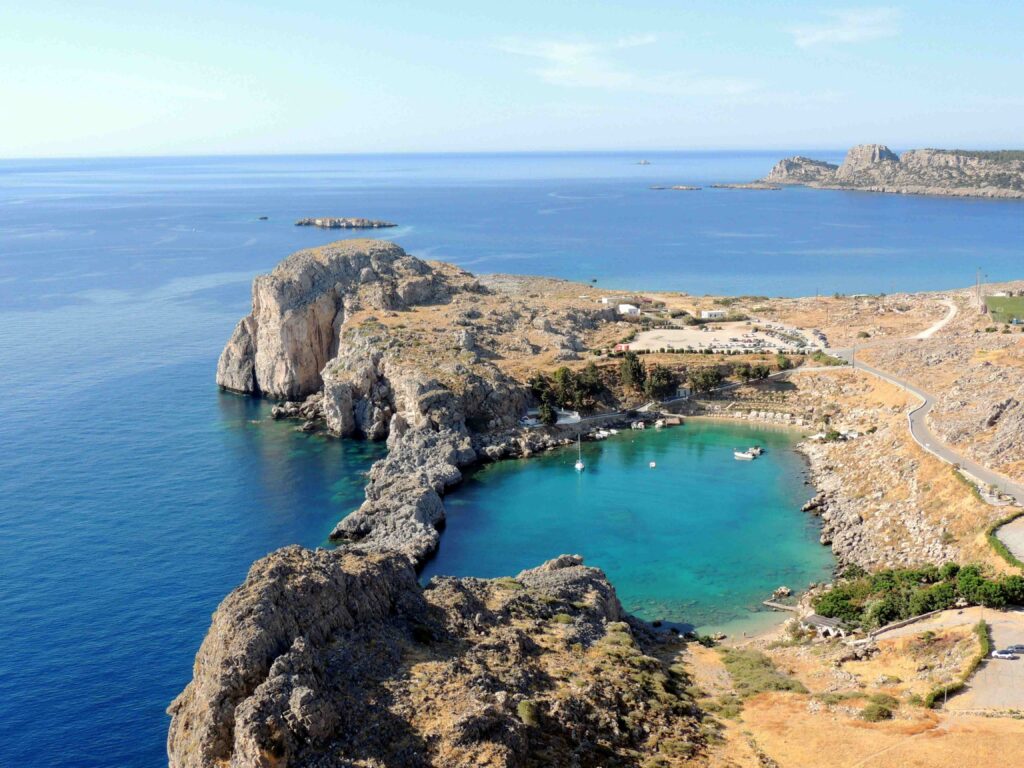
St. Paul’s Bay is a nearly enclosed circular cove situated just beneath the ancient Acropolis of Lindos on the eastern side of Rhodes. The bay is shielded from open sea swells by 2 rocky headlands, leaving only a small channel for boats to pass through, resulting in warm, lake-like swimming conditions. Two small sandy beaches sit on opposite sides of the cove, both fully organized with sunbeds priced between $22 and $33 per pair. Due to the limited size of the bay, available sunbeds fill up completely by 9 AM during midsummer.
Anthony Quinn Bay, Rhodes
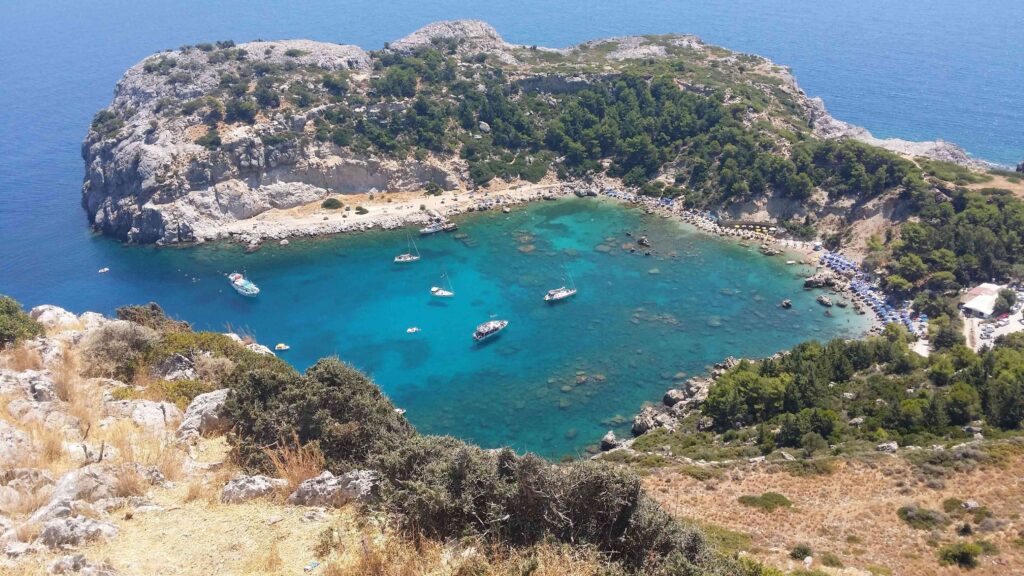
Named after the actor who fell in love with the island while filming The Guns of Navarone, this narrow inlet on the eastern coast of Rhodes features pine-covered rock outcroppings dipping into vibrant emerald-green water. The shore consists primarily of sharp rock ledges and small pebble patches, making water shoes essential for entry. The underwater topography makes
Anthony Quinn Bay is one of the island’s best locations for snorkeling and scuba diving. Sunbed platforms built onto the surrounding rocks rent for $16 to $22 per set, supported by a single restaurant at the top of the stairs.
Koukounaries Beach, Skiathos
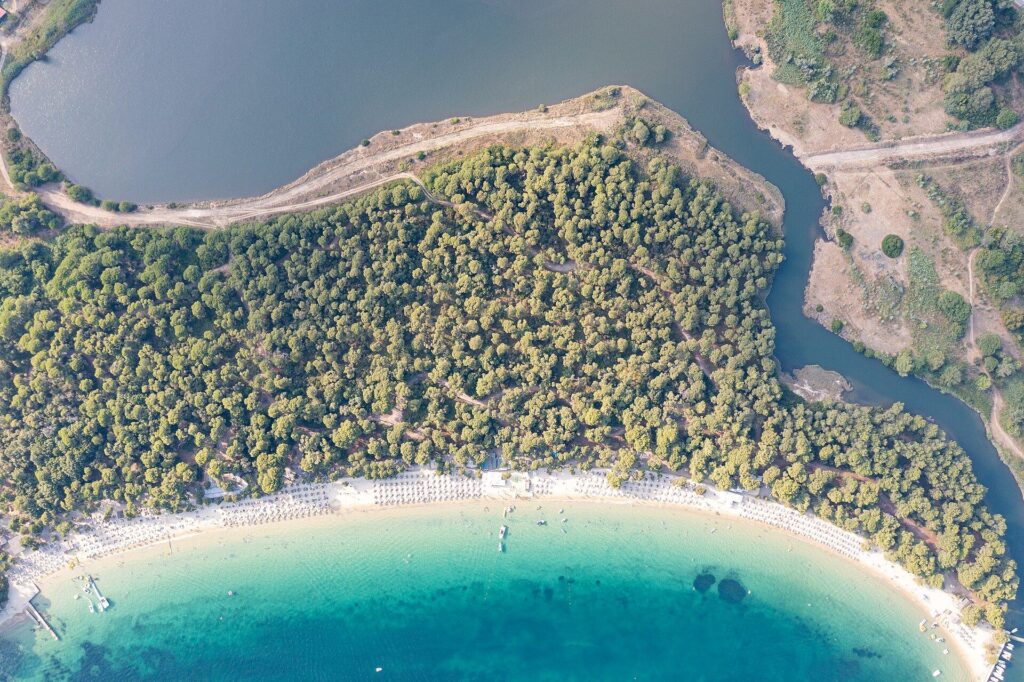
Koukounaries Beach on the island of Skiathos is widely regarded for its fine, shimmering quartz sand bordered by a protected coastal pine forest known as Strofilia. The forest separates the beach from a freshwater lagoon, creating a unique ecological sanctuary with flat, calm water extending far from the shore.
The entire length of the strand features modern beach kiosks, water sports rentals, and organized umbrella rows priced around $16 to $22 per set. Local island buses run every 15 minutes from Skiathos Town, dropping passengers off directly at the forest entrance for under $3.50.
Lalaria Beach, Skiathos
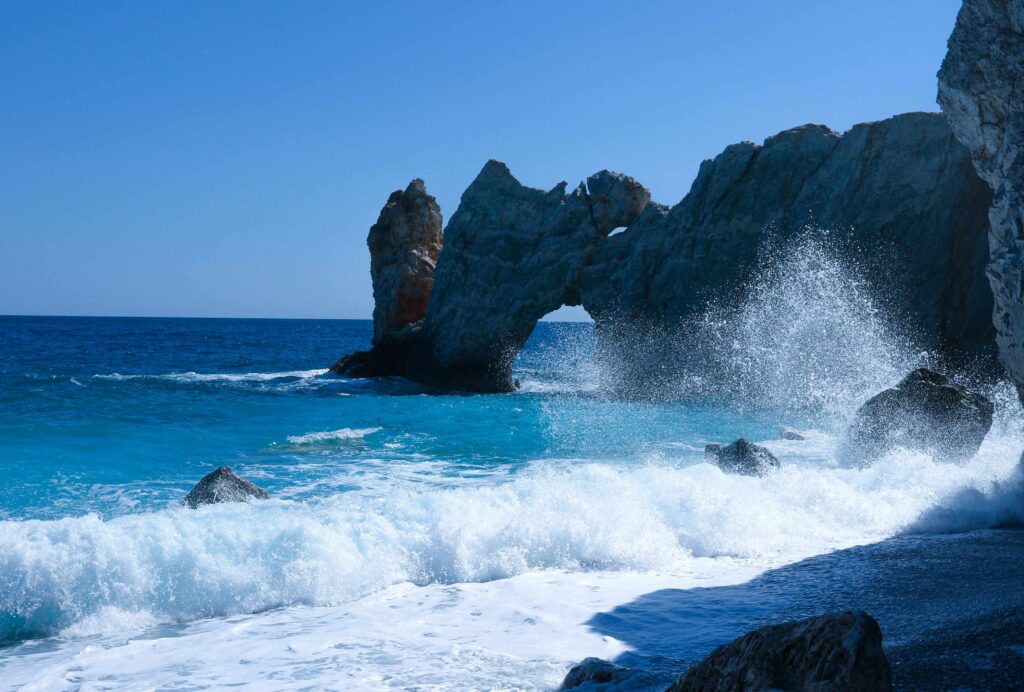
Lalaria Beach lies isolated on the northeastern tip of Skiathos, accessible exclusively by sea due to the sheer white cliffs that enclose it from behind. The beach is composed of perfectly round, smooth gray marble pebbles known locally as lalaria, framed by a natural rock arch jutting into the clear sea. Taking any pebbles from the beach is forbidden by local marine law to preserve the natural landscape. Excursion boats leave daily from the old port of Skiathos, charging between $16 and $27 per passenger depending on the coastal itinerary.
Seychelles Beach, Ikaria
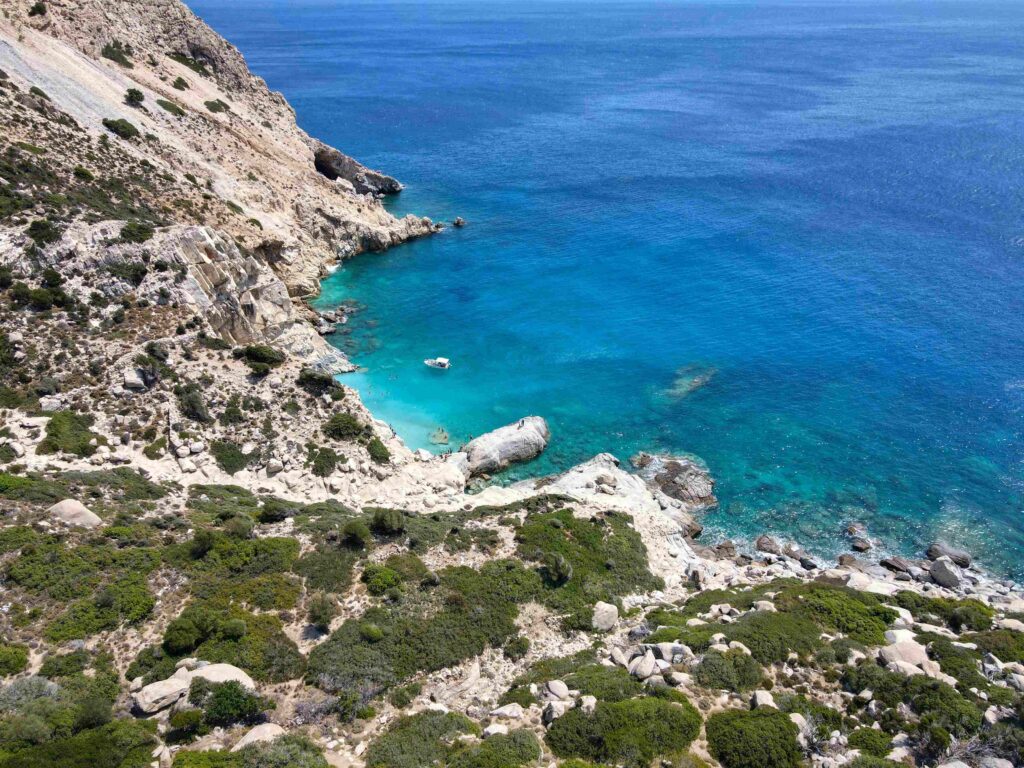
Seychelles Beach was formed accidentally during the blasting of a road tunnel on the southern coast of Ikaria, revealing a hidden cove framed by polished granite boulders and bright white pebbles. The water exhibits an intense turquoise hue reminiscent of tropical regions, contrasting sharply with the surrounding granite.
Access requires either a 20-minute scramble down a rough ravine from the main road or a short water taxi ride from Manganitis harbor for $11 round trip. There are no commercial services on the beach, preserving its wild character.
Practical Decision-Making Guide for Your Greek Beach Itinerary
When deciding where to go in Greece, structural planning should account for regional variations in terrain, transport requirements, and seasonal costs.
Region | Primary Landscape | Accessibility | Average Sunbed Cost |
|---|---|---|---|
Ionian Islands | White pebbles, dramatic limestone cliffs | Steep staircases or local water taxis | $16 to $27 per set |
Cyclades | Volcanic formations, golden sand dunes | Paved roads, local buses, and water taxis | $16 to $110+ per set |
Crete | Shallow lagoons, wide sandy stretches | Car rental strongly recommended | $16 to $22 per set |
Dodecanese & Aegean | Sheltered coves, pine forests | Road access, short walks, or boat trips | $16 to $33 per set |
Seasonality dictates coastal comfort across all regions. The ideal time to explore the best Greek islands to visit is during the shoulder months of June, September, and early October.
During these periods, sea temperatures remain warm, sunbed rates drop, and crowd levels at major landmarks like Elafonisi or Porto Katsiki are significantly lower. July and August bring peak summer heat and high tourist volume, alongside strong meltemi winds in the Aegean that make southern-facing bays far more favorable than exposed northern shores. For a closer look at how that trade-off plays out, our comparison of peak season vs. off-season travel breaks down what changes either way.
Transportation logistics should also align with your chosen destinations when selecting the best islands to visit in Greece. Island networks vary from expansive landmasses like Crete or Kefalonia, where renting a car is essential for reaching remote coves, to smaller islands like Skiathos or Paros, where reliable public transit connects main towns directly to top beaches.
FAQs
What are the best beaches in Greece for families with small children?
Beaches with shallow entry, fine sand, and calm waters are safest for young children. Top choices include Plaka and Agios Prokopios on Naxos, Elafonisi in Crete, and Koukounaries Beach on Skiathos. These locations offer gentle slope conditions and convenient access to nearby services and facilities.
Are public beaches in Greece free to access?
Under Greek law, all coastlines are public property, and free access to the shore must be maintained. While private operators rent sunbeds and umbrellas on designated portions of many popular beaches, visitors are always permitted to lay down their own towels and equipment on the unorganized sections of any beach without paying a fee.
Do I need water shoes for Greek beaches?
Water shoes are recommended for pebble, cobble, and volcanic rock shores, including Anthony Quinn Bay in Rhodes, Myrtos in Kefalonia, and Porto Katsiki in Lefkada. Smooth stones can become hot under midsummer heat, and rocky entries often feature sea urchins or sharp seabed limestone.
How much should I budget for sunbed rentals in Greece?
On most islands, a standard set containing 2 sunbeds and 1 umbrella costs between $16 and $33 per day. However, high-end commercial beach clubs on luxury islands like Mykonos or select premium rows in Santorini can charge anywhere from $55 to over $110 per set, occasionally requiring a minimum food and beverage spend. If you’re trying to keep these extras from blowing up your overall trip cost, our guide on how to set a travel budget without ruining the experience has a practical framework for planning around costs like these.
Conclusion
Greece’s coastal landscapes offer an incredible diversity of experiences, from the dramatic limestone drop-offs of the Ionian Sea to the smooth volcanic curves of the Cyclades and the expansive, shallow lagoons of Crete. Navigating this vast selection successfully comes down to matching your personal travel style with the practical realities of each shore. Whether seeking high-end beach club comfort, protected waters for family swimming, or wild coves reachable only by boat, analyzing access routes, seasonal wind patterns, and local infrastructure ensures a memorable and stress-free journey along the Greek shoreline.