



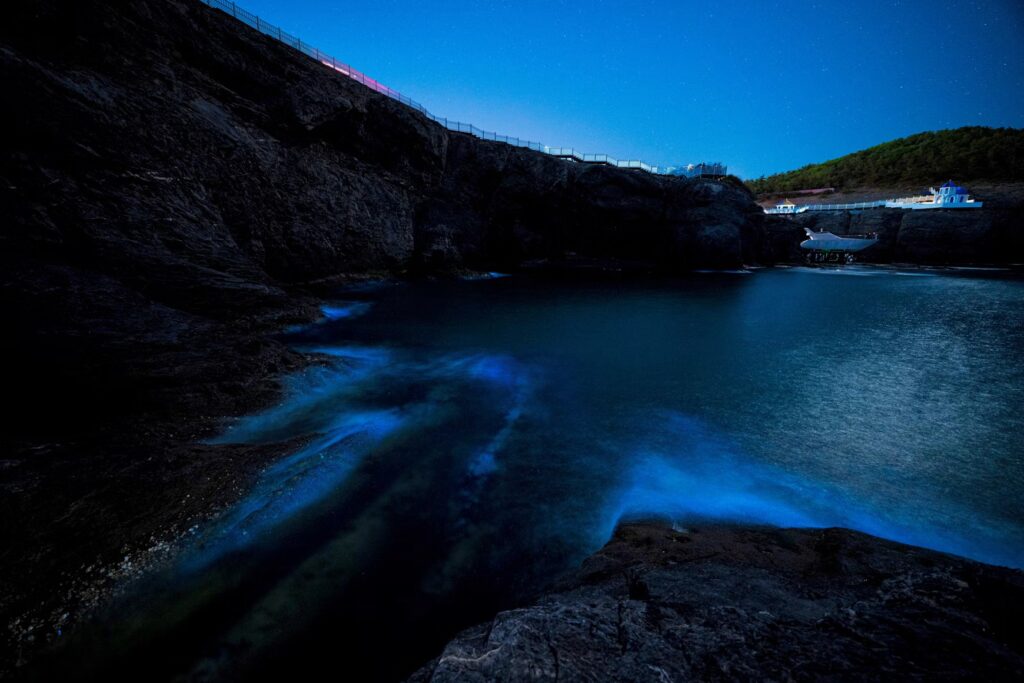
Paddling across dark water that lights up under your blade is one of those experiences people keep describing long after the trip ends. Each stroke stirs the microscopic organisms suspended in the water, and for 1 or 2 seconds the surface flares a pale blue-green, sometimes bright enough to trace the outline of a fish slipping beneath the hull. From the shore it reads like something staged. On the water, at night, in salt spray, it can also go wrong quickly if you arrive unprepared. Cold, soaked, and faintly seasick isn’t the memory anyone books for.
If this is your first time trying bioluminescent kayaking, this guide answers the 3 questions that actually decide the night: how to stay safe in the dark, whether a clear-bottom boat is worth the upgrade, and exactly what to bring.
What Night Paddling Actually Feels Like
You Will Get Wet
Water runs off the paddle shaft into the cockpit with every stroke, so anything that cannot survive a little moisture belongs in the car, not on the boat. Plan around being damp rather than hoping to stay dry.
The Moon Phase Matters More Than You Think
A full moon washes the glow out almost entirely, and you can spend an hour on beautiful water and see very little. The darkest nights, near the new moon, produce the strongest display, so booking within a few days of a new moon gives you the best odds of seeing what you came for.
The Truth About Photos
Most phone photos taken from a rocking boat at night come back as dark, grainy noise. Long exposures need a stable platform, and a kayak is the opposite of stable. If you want an image, there are 3 realistic paths:
- Outfitter photo add-on: Many tour companies offer a package where a guide shoots with a proper camera on a fixed exposure, usually about $15–$20. This is often the only reliable way to leave with a usable still.
- Action camera on night mode: A chest-mounted or head-mounted GoPro-style camera can capture the paddle trails hands-free. It works better for short video clips than for still photos.
- Phone with a long-exposure app: A manual long-exposure app paired with a mount clamped to the boat is the only phone setup with a chance, and even then the odds are low. Keep expectations modest so you can enjoy the water instead of fighting your screen.
Choosing Your Vessel: Clear Kayak vs. Regular Kayak vs. SUP
2026 estimates reflect publicly listed guided-tour rates at the time of writing. Verify directly with each operator before booking, since prices shift by location, season, and demand.
The boat you choose shapes most of the experience, and each option trades something away to gain something else. The table below sums up how the 3 compare.
| Factor | Regular Kayak | Clear Kayak | SUP (Stand-Up Paddleboard) |
|---|---|---|---|
| Typical tour price | $50–$70 | $70–$95 | $55–$75 |
| View | Limited to the sides of the hull | Best available (near 360°); see the algae light and fish move directly below | Very good, looking straight down from a standing height |
| Stability | Very stable, easy to steer, handles chop well | Heavier and bulkier, harder to steer in wind | Hardest to balance, especially for beginners |
| Best for | Nervous swimmers, families with young kids, easy and quick paddling | Couples and anyone who wants maximum visibility | Paddlers already comfortable balancing on a board |
| Main downside | Less dramatic; the hull blocks the view straight down | Hull scuffs and clouds over time, and it is often tandem-only | High risk of falling into dark water at night |
A regular boat is the most forgiving of the 3 and suits anyone nervous about deep water or paddling with kids. The transparent hull is the visual payoff, giving you a view straight down that a solid hull simply can’t, at the cost of weight and easy handling. A SUP offers a strong overhead vantage but demands real balance, since a fall into black water in the dark is a genuine risk rather than a minor inconvenience.
For a first outing, a clear tandem kayak usually strikes the most workable balance between stability and view, which is why it tends to be the safer starting point for someone who has never done this before.
The Gear Checklist: What to Wear and Bring
What to Wear
- Water-friendly footwear: Sport sandals or water shoes with a heel strap that stay on when wet. Skip closed sneakers, which soak through and hold water.
- Quick-dry layers: Quick-dry shorts or a swimsuit rather than cotton, which stays cold and heavy once damp.
- A light windbreaker: Temperatures drop noticeably on open water after dark, and a breeze off the surface can turn a pleasant paddle uncomfortable.
- Insect repellent: Especially important at mangrove or lagoon launches, which are common in Florida.
Safety and Tech Gear
- A 10-liter or 20-liter dry bag: The one piece you should not skip. It keeps car keys, a towel, and your jacket usable at the end of the night.
- A floating waterproof phone pouch: Worth the few dollars if you bring a phone, since it keeps the phone from sinking if it slips.
- A red-light flashlight: Far better than white light, which wipes out your night vision within seconds and blinds everyone paddling near you. Red light on the water is a shared courtesy among night paddlers.
How to Pack Smart
- Arrive dressed for the water. Put on the swimsuit, quick-dry layer, water shoes, and repellent in the parking lot, not at the launch.
- Keep your phone in its floating pouch on a lanyard, tucked into your life vest and out of the way of your stroke.
- Load the dry bag with only 3 things: car keys, a thin microfiber towel, and the windbreaker. Roll the top down, press the air out, and clip it to a bungee cord on the bow with a carabiner.
- Leave everything else in the car, including a bulky wallet, documents you won’t need, and the dry clothes you plan to change into afterward.
4 Safety Rules for Paddling After Dark
- Never paddle alone in the dark. If you’re in a single boat, stay within sight of the guide rather than drifting ahead or behind.
- Wear your personal flotation device the whole trip, regardless of how well you swim or how shallow the water looks. Falling into dark water is disorienting even for strong swimmers.
- Respect how darkness distorts distance. It’s easy to misjudge the gap between boats and clip another paddler’s bow, one of the more common ways a kayak flips at night, so give nearby boats extra space.
- Listen to the guide, who knows where the riptides run, which shallows will strand a boat, and which wind directions turn a calm night choppy.
Frequently Asked Questions
Is bioluminescent kayaking safe for kids?
It generally is, provided the child meets the operator’s minimum age, which is often around 6, and rides in a tandem boat with an experienced adult. Age limits and policies vary between companies, so confirm the specific rules when you book.
What is the best time of year to go?
It depends heavily on the location, but the warmer-water months, roughly spring through early fall in many places, tend to be most reliable. The moon phase matters even more than the season, so aim for the days around a new moon when the sky is darkest.
Will I get seasick?
It’s uncommon, but staring at swirling light in the dark can cause mild disorientation for some people. If you start to feel off, fix your eyes on the horizon or on lights along the shore to steady your balance.
What happens if it rains?
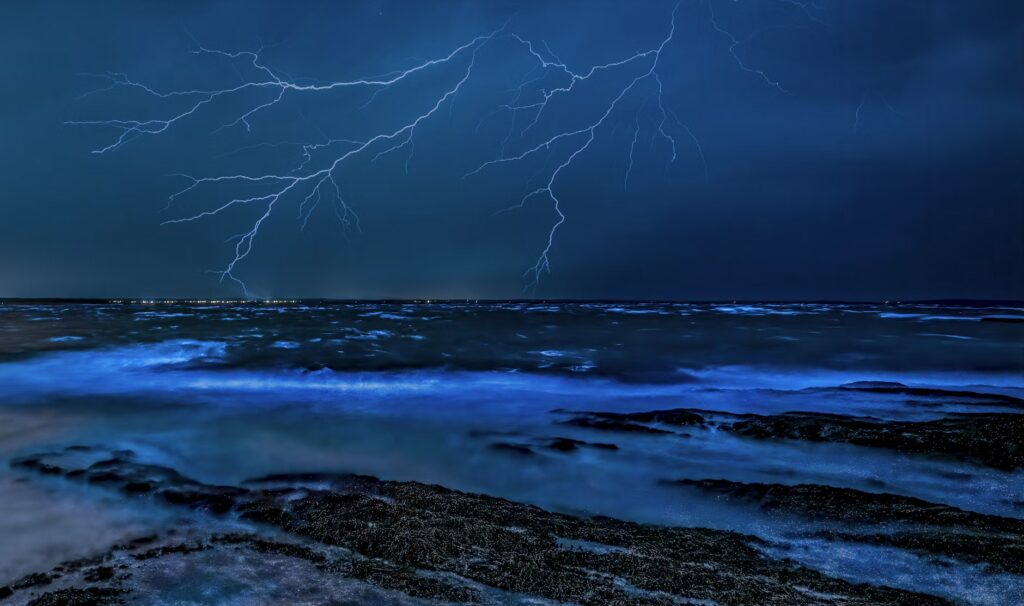
Light rain can actually improve the display, since each drop hitting the surface triggers another burst of tiny flashes. Thunder, lightning, or strong wind gusts are a different matter, and tours are canceled in those conditions for safety.
Can you swim during the tour?
Most operators prohibit swimming at night because of poor visibility and unpredictable currents. The exception is a tour built specifically around a supervised swim area, which some companies offer separately.
Is bioluminescence the same as a red tide?
Not exactly, though the two are connected. In some regions the same dinoflagellate can tint the water a reddish-brown by day and glow blue at night; along the Southern California coast, for example, blooms of Lingulodinium polyedra do both. But red tide is a broad term that also covers toxic algal blooms with no glow at all, such as Florida’s Karenia brevis. So a glowing bay often overlaps with a red tide, yet not every red tide glows, and not every glow comes from one.
What to Remember Before You Go
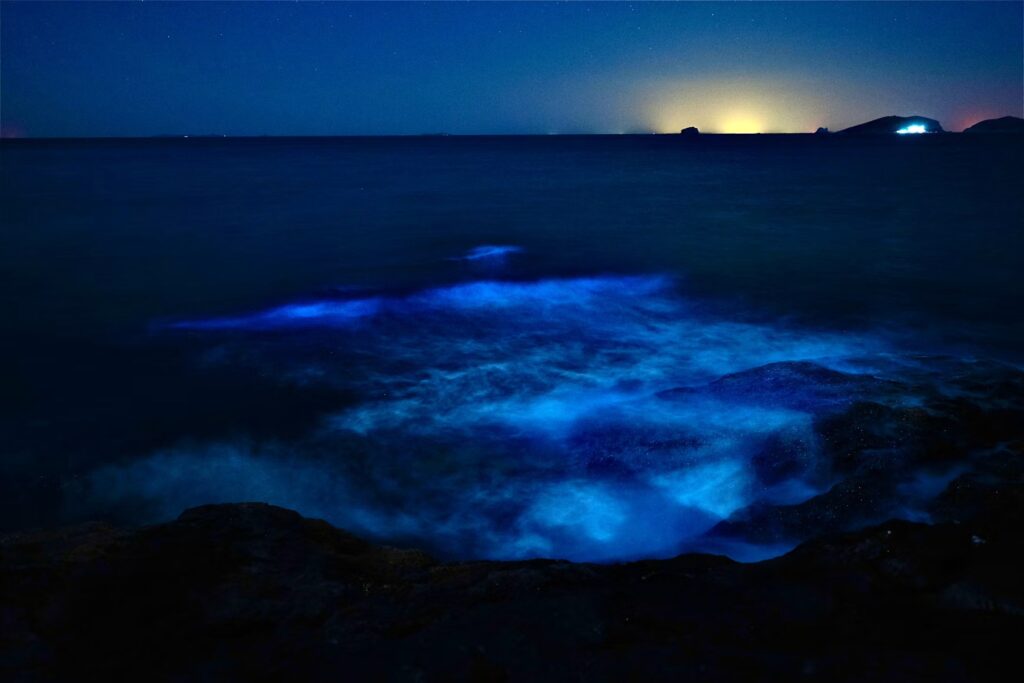
The glow is a natural event you’re visiting rather than a show arranged for you, which is why timing and conditions decide the night far more than any piece of equipment does. Choose a dark night near the new moon, pack light and waterproof, and keep the life vest on no matter how strong a swimmer you are. Between a clear-bottom boat and a standard one, first-timers usually get the most out of the clear kayak, since it delivers the view with fewer surprises.
If you’re planning a trip to Southern California, it’s worth checking local conditions before you commit, because blooms there come and go without much warning. The Scripps Institution of Oceanography tracks and reports red tide and bioluminescence activity along the San Diego coast, and that is a far more dependable signal than the timing of any single tour listing.
