
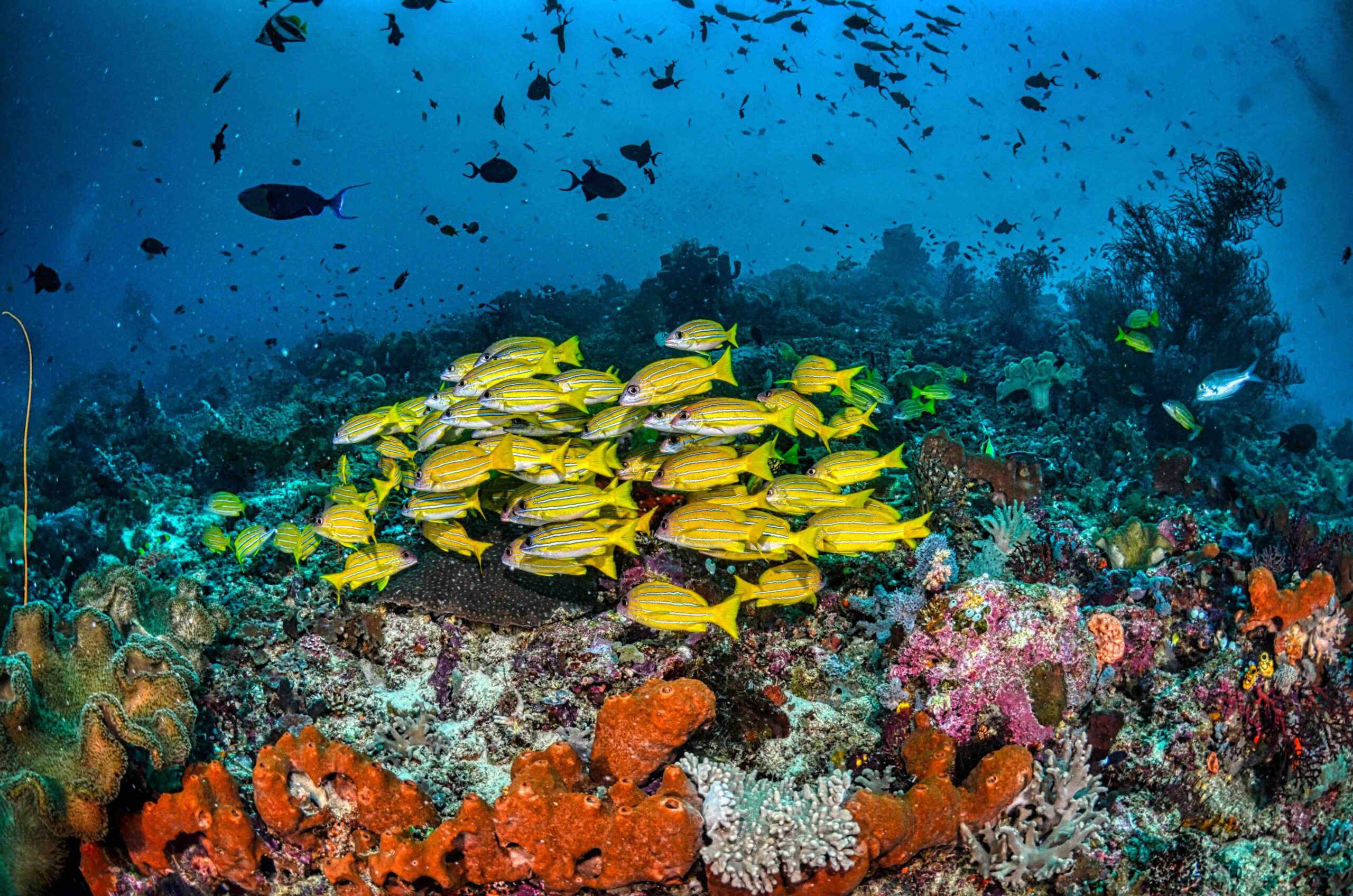
The ocean in 2026 isn’t what it was even five years ago. Reefs that used to rank among the world’s best have declined measurably, some species have shifted their migration windows, and the seasonal calendar that once told you where to dive each month has loosened in ways that catch even experienced divers off guard.
This guide pulls together 15 of the best places to scuba dive in the world right now, drawing on current NOAA coral health reports, the published itineraries of major liveaboard operators, and the seasonal windows that still hold. Each entry covers the certification level the site actually requires, the realistic 2026 cost, the nearest hyperbaric chamber, and honest reasons some divers should skip it.
The destinations split naturally into three groups: the pelagic-heavy sites built around large animals, the reef and biodiversity capitals, and the wrecks, caves, and cold-water destinations that sit further outside the mainstream. The Quick-Decision Matrix below lets you scan all 15 before reading deeper.
The 2026 Quick-Decision Matrix
| Destination | Best for | Min. certification | Best month | 2026 budget |
|---|---|---|---|---|
| Galápagos, Ecuador | Whale sharks & hammerheads | Advanced (50+ dives) | Jul–Nov | $5K–$10K+ |
| Socorro, Mexico | Giant manta rays | Advanced | Nov–Jun | $3.5K–$5.5K |
| Cocos Island, Costa Rica | Remote shark action | Advanced | Jun–Nov | $4K–$6K |
| Maldives | Luxury pelagics | Open Water | Dec–Apr | $1.8K–$4.5K |
| Sardine Run, South Africa | The greatest shoal | Advanced | Jun–Jul | $3K–$5K |
| Raja Ampat, Indonesia | Ultimate biodiversity | Advanced | Oct–Apr | $2.5K–$6K |
| Tubbataha, Philippines | Pristine atolls | Advanced | Mar–Jun (strictly) | $2.5K–$4.5K |
| Sipadan, Malaysia | Turtle tornadoes | Advanced | Apr–Dec | $150–$250/day |
| Lembeh, Indonesia | Muck & macro | Open Water | Sep–Oct | $1.2K–$3K |
| Great Barrier Reef, Australia | First-time internationals | Open Water | Jun–Nov | $250–$400/day |
| Red Sea, Egypt | Wrecks & budget liveaboards | Open Water | Mar–May, Sep–Nov | $800–$2.5K |
| Truk Lagoon, Micronesia | WWII wrecks | Wreck Cert / Advanced | Dec–Apr | $2.5K–$3.5K |
| Mexican Cenotes | Cavern & freshwater | Open Water (good buoyancy) | Year-round | $100–$200/day |
| Silfra, Iceland | Tectonic plates & ice | Drysuit Cert | Jun–Aug | $200–$400/day |
| Coiba, Panama | Off-the-grid hammerheads | Advanced | Apr–May | $120–$160/day |
How This Guide Is Organized
The best scuba diving in the world isn’t a single ranking. The right site depends on the certification you hold, the budget you’re working with, and what you actually want to see underwater. The 15 destinations below are grouped into three categories so you can read only the section that matches the trip you’re considering. Each entry covers the character of the diving, the practical details that shape a visit, and an honest note on safety and ecological conditions.
The Big Animal Pelagics
The first group is for divers chasing sharks, mantas, and the kind of large-animal encounters that justify long flights and demanding open-ocean conditions. Most of these sites require Advanced certification and at least 50 logged dives, and several are accessible only by liveaboard.
1. Galápagos Islands, Ecuador (Best for Hammerheads)
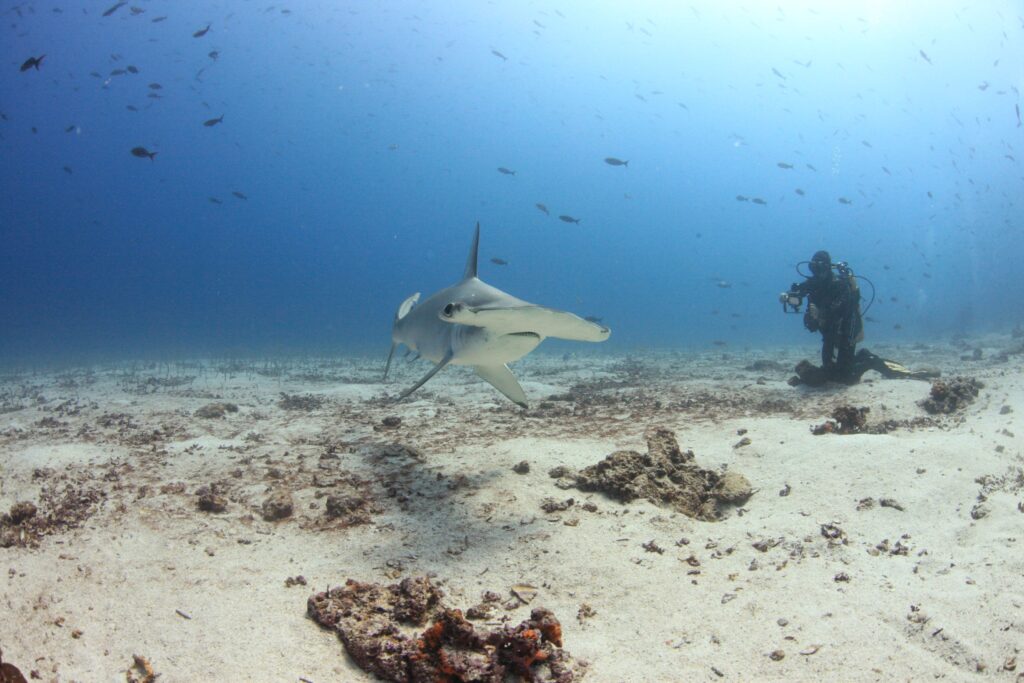
There is no other site on this list where the diving and the wildlife above the surface compete for attention quite the way they do in the Galápagos. Underwater, the headline is the schooling scalloped hammerheads at Darwin and Wolf Islands, often in groups of more than 100, alongside whale sharks during the dry season and resident populations of Galápagos sharks, sea lions, and marine iguanas that feed in the shallows.
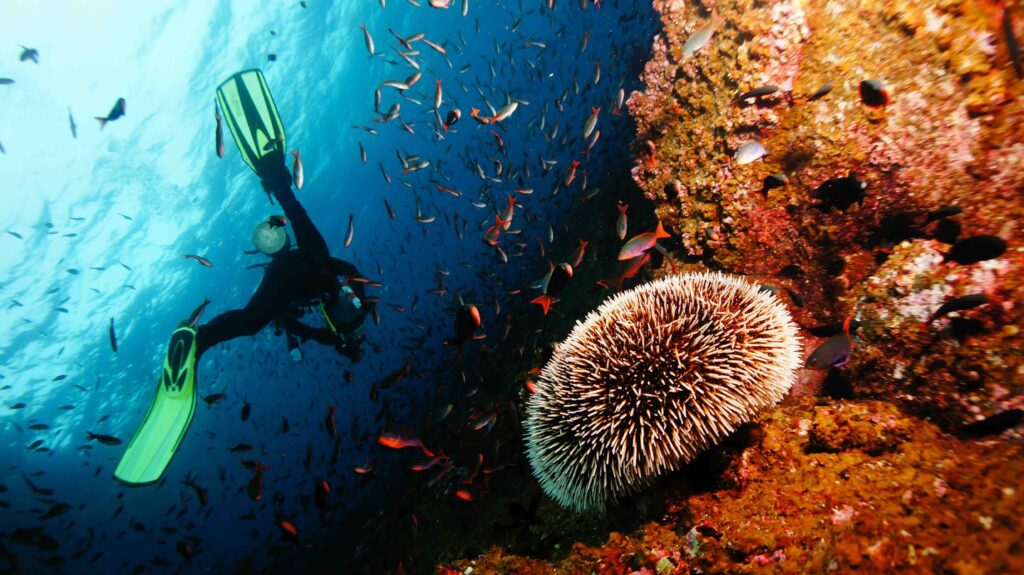
The best month to go is July through November, when whale shark sightings peak around Darwin Island, where the famous Darwin’s Arch collapsed in 2021 and now stands as two rock pillars. The diving is demanding, with strong currents, surge, and water temperatures that swing sharply between sites, so the 50-dive Advanced minimum is the floor, not a recommendation. Liveaboards run $5,000–$10,500 per week and the park fee is an additional $200.
The nearest hyperbaric chamber is on Santa Cruz Island, with a fallback option in Quito on the mainland. Aggregate diver feedback in 2026 still rates the marine life as world-class, though coral cover at some sites has thinned. Several established liveaboard fleets run weekly itineraries here at different price tiers; verify each operator’s safety record and current certifications before booking.
>>> 12 Best Cities in Japan to Visit (2026): Tokyo to Hakodate
2. Socorro (Revillagigedo), Mexico (Best for Giant Mantas)
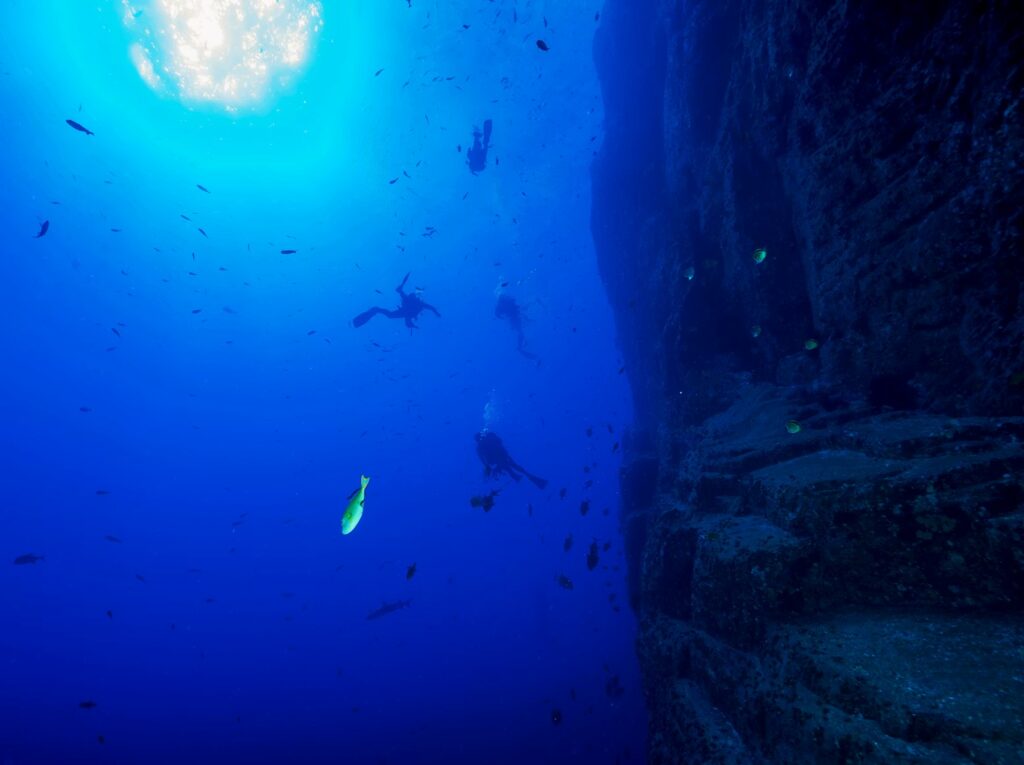
Socorro draws divers for one thing above all: encounters with giant oceanic manta rays that approach divers deliberately, often hovering in place as if curious about the visitors. The Revillagigedo Archipelago, 240 nautical miles southwest of Cabo San Lucas, also produces consistent hammerhead schools, dolphins that interact with divers, and occasional humpback whales between January and April.
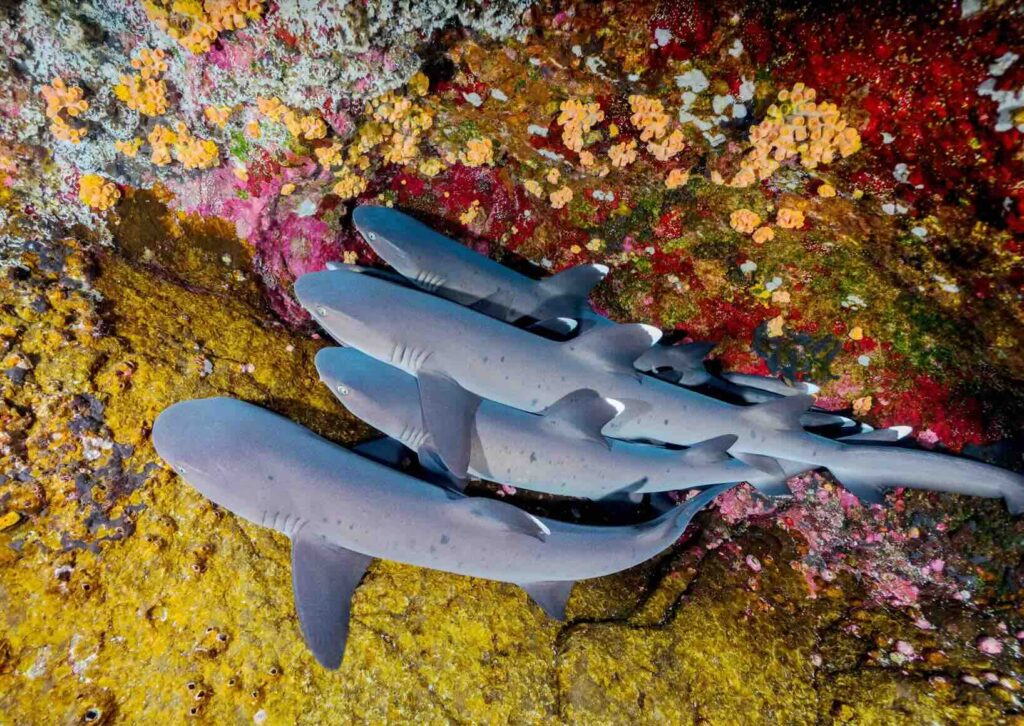
The season runs November through June, with manta sightings most reliable from January onward. Conditions can be rough during winter crossings, and most operators require Advanced certification with strong current experience. Liveaboard pricing runs $3,500–$5,500 for an 8-day trip. The nearest hyperbaric chamber is in Cabo San Lucas, which adds a meaningful evacuation timeline given the archipelago’s isolation. A small number of liveaboard operators run this route out of Cabo, each with different vessel classes and price points; verify safety records before committing.
3. Cocos Island, Costa Rica (Best for Remote Shark Action)
Cocos sits 340 miles off Costa Rica’s Pacific coast and is reachable only by liveaboard, with the crossing taking 32–36 hours each way. That isolation is the point: the schooling hammerheads, silky sharks, Galápagos sharks, and tiger sharks that congregate at Bajo Alcyone and Dirty Rock are present in numbers that simply don’t exist closer to shore.
The diving window runs June through November, when nutrient-rich currents bring the shark schools closest. The Advanced certification minimum is enforced strictly by operators, and the currents at the main pinnacles are not negotiable. Liveaboard prices run $4,000–$6,000 for the standard 10-day trip.
The nearest hyperbaric chamber is on the Costa Rican mainland, which means a serious incident at Cocos involves a multi-day journey home. Only a handful of vessels are licensed to run Cocos itineraries, and most have decades of regional experience; check current certifications and recent incident records before booking.
4. Maldives (Best for Luxury Pelagics and Whale Sharks)
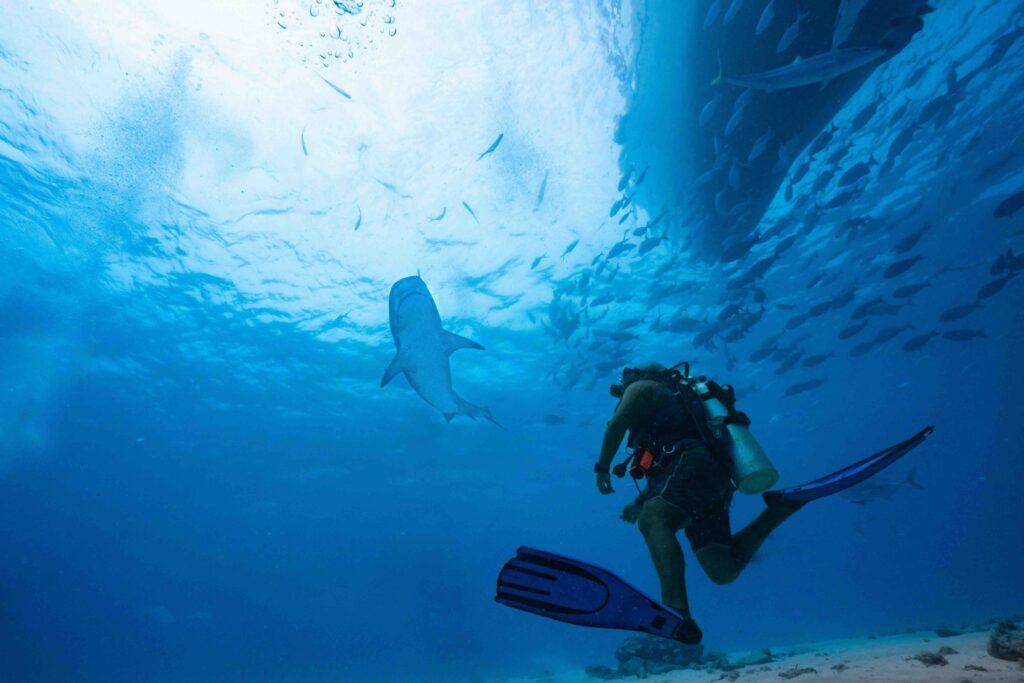
The Maldives is one of the few places where Open Water divers can encounter both giant manta rays and whale sharks without the demanding conditions of more remote pelagic sites. The South Ari Atoll holds resident whale sharks year-round, while Hanifaru Bay in Baa Atoll produces some of the largest manta aggregations on the planet during the southwest monsoon. Hanifaru is a protected, snorkel-only zone, so scuba divers see the same mantas at cleaning stations elsewhere in the atoll.
December through April is the dry season and the most reliable for general diving across the atolls, while June through November shifts the action toward Hanifaru and the eastern atolls. Liveaboards run $1,800–$4,500 per week, and the country also supports a strong dive-resort model for travelers who want above-water amenities. Hyperbaric chambers are located in Malé and Bandos. The market splits clearly between mid-priced liveaboards and luxury overwater-villa resorts, and both formats run year-round.
5. Sardine Run, South Africa (Best for the Greatest Shoal)
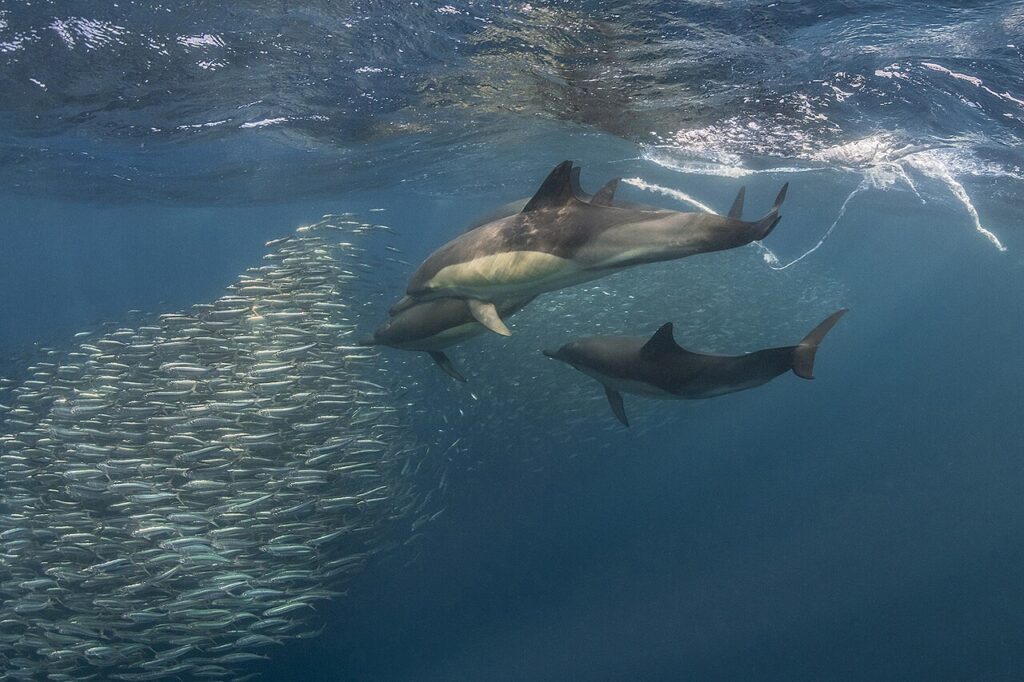
The Sardine Run is less a dive destination than a weather-dependent natural phenomenon: billions of sardines moving up the South African coast in June and July, pursued by dolphins, sharks, gannets, and whales in a feeding event with no real equivalent anywhere else. The diving is from RIB boats with snorkeling and free-diving as much as scuba, and the predator activity drives the experience.
The window is narrow, roughly June through mid-July, and weather cancels diving days regularly. Package tours run $3,000–$5,000 for a week, and Advanced certification with comfort in surface conditions is the practical minimum. The nearest hyperbaric chamber is in Durban or Cape Town. Most operators in the Wild Coast and around Port St. Johns book up six to eight months ahead for the season.
The Coral and Biodiversity Capitals
The second group is for divers who care less about a single headline species and more about the density and variety of life across a dive. These are the reef destinations where a single 90-minute dive can produce more species than a week at most other sites.
6. Raja Ampat, Indonesia (Best for Ultimate Biodiversity)
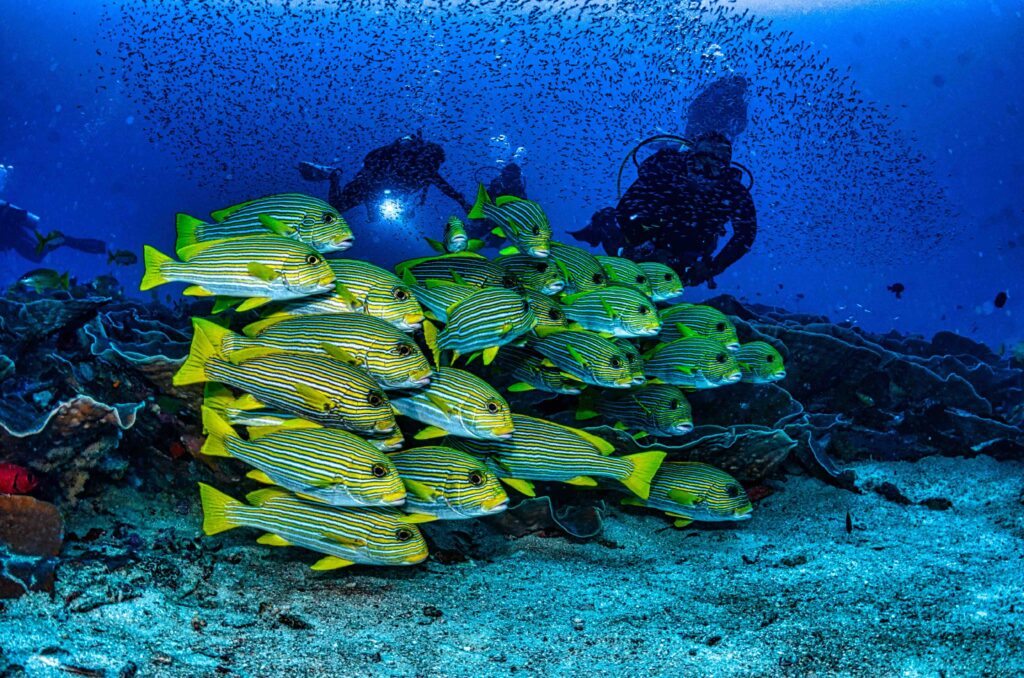
Raja Ampat, at the western tip of New Guinea, sits at the center of the Coral Triangle and holds the highest documented marine biodiversity on the planet. Conservation International surveys have logged more than 1,400 reef fish species and 600 coral species, and individual dives at sites like Cape Kri have produced over 370 species in a single 90-minute window.
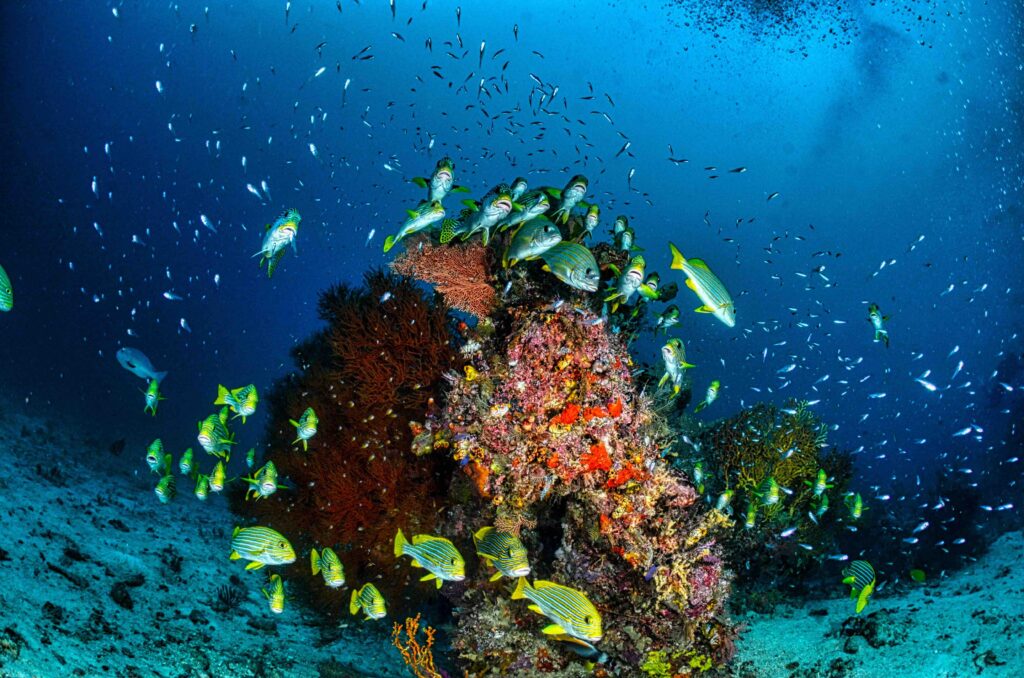
The dry season runs October through April. Entry fees for international visitors now total about IDR 1.7 million per person (a marine park permit plus a regency tourism levy), and the area requires Advanced certification because of strong currents at the marquee sites. Liveaboards run $2,500–$6,000 per week, with land-based resorts offering a slower alternative. Hyperbaric chambers are located in Manado and Bali, both of which involve a flight from Sorong. Aggregate 2026 reports still rate coral health as excellent across most of the park, with localized stress at shallow sites. Both phinisi-style liveaboards and conservation-focused eco-resorts operate in the region, each with a distinct feel.
7. Tubbataha Reefs Natural Park, Philippines (Best for Pristine Atolls)
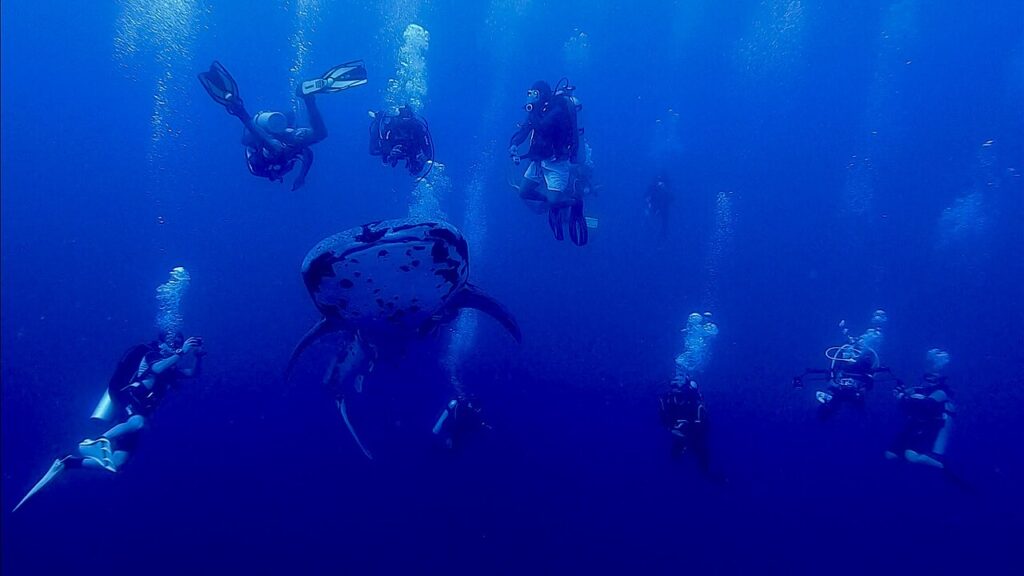
Tubbataha is open for a strictly defined window each year, mid-March through mid-June, and the controlled access has kept its two atolls in the Sulu Sea among the most pristine in Southeast Asia. The diving combines wall systems, sandy slopes that produce sharks and rays, and surface intervals on a single ranger station that doubles as a research outpost.
Advanced certification is required, and the liveaboard-only access runs $2,500–$4,500 per week. The nearest hyperbaric chamber is in Cebu, which means evacuation from Tubbataha is a multi-day process. Coral cover remains exceptional by regional standards. A small fleet of vessels holds the seasonal Tubbataha permits, and most fill 12 months ahead for the peak May window.
8. Sipadan, Malaysia (Best for Turtle Tornadoes)
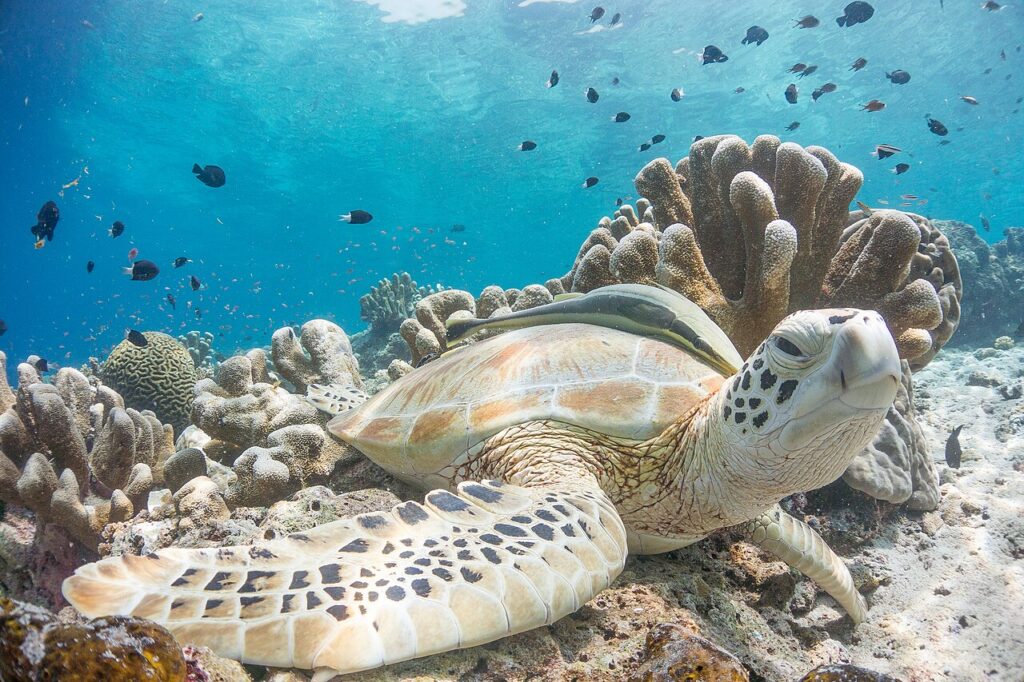
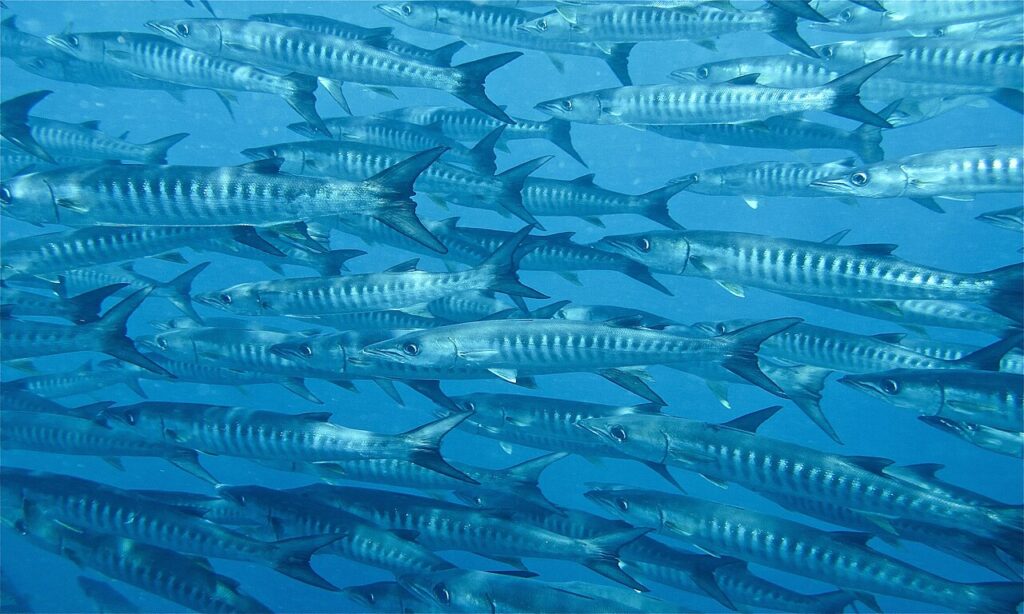
Daily diver permits are strictly limited, so booking through a resort that holds permit allocations months ahead is mandatory. A two-tank dive with permit runs $150–$250 per day, and most operators require Advanced certification or a minimum number of logged dives for Sipadan, since current control matters at Barracuda Point. The nearest hyperbaric chamber is in Kota Kinabalu. Mabul and Kapalai are the nearest land-based island bases, with a handful of resorts on each holding the permit allocations.
9. Lembeh Strait, Indonesia (Best for Muck and Macro)
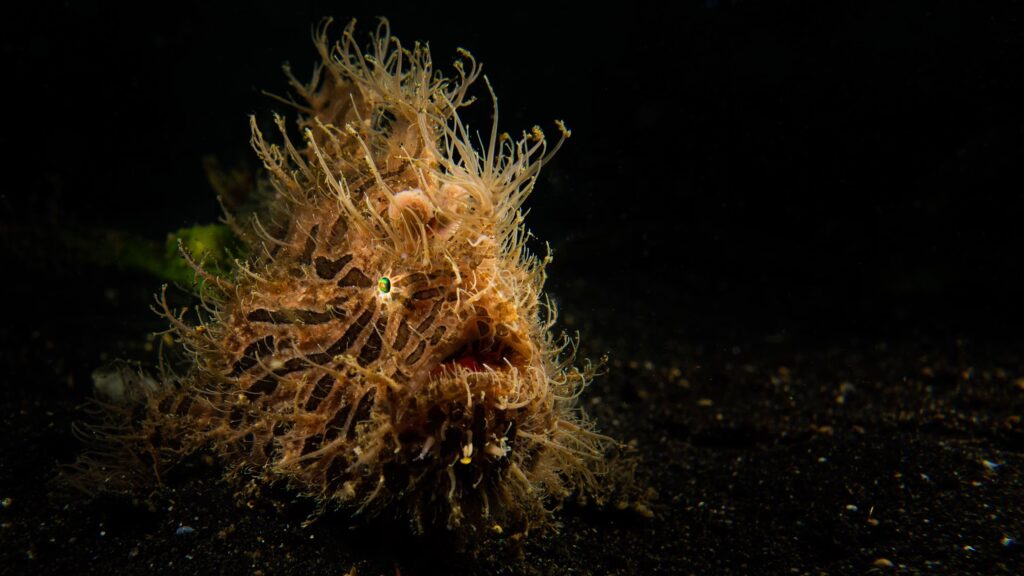
Lembeh is the opposite of most dive destinations. The seabed is black volcanic sand, visibility is moderate, and the appeal is the small, camouflaged, and strange creatures most divers spend their careers looking past. Mimic octopuses, mandarinfish, hairy frogfish, and dozens of other species rarely seen elsewhere make this the global headquarters for underwater macro photography.
September and October offer the most stable conditions, though diving runs year-round. Open Water certification is sufficient, and resort packages run $1,200–$3,000 per week including meals and most diving. The nearest hyperbaric chamber is in Manado, about an hour by car. Lembeh’s resorts cluster on the strait’s southern end and split roughly between photography-focused properties and more general dive resorts.
10. Great Barrier Reef, Australia (Best for First-Time Internationals)
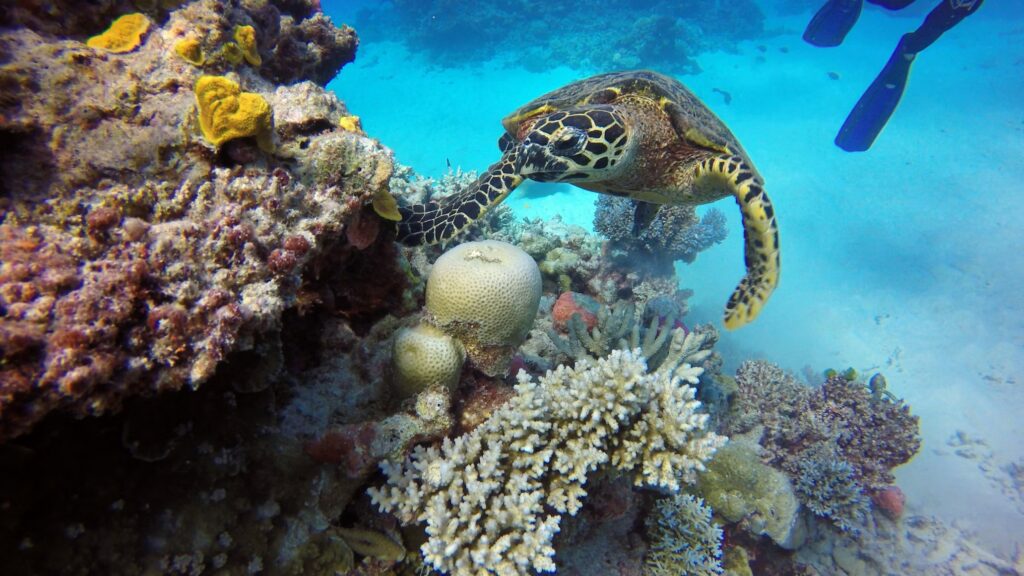
The Great Barrier Reef remains the most accessible major dive destination on this list, with departures from Cairns and Port Douglas reaching the outer reef in 90 minutes and the diving open to Open Water certification holders without surge or current complications. June through November is the dry season and the best visibility window.
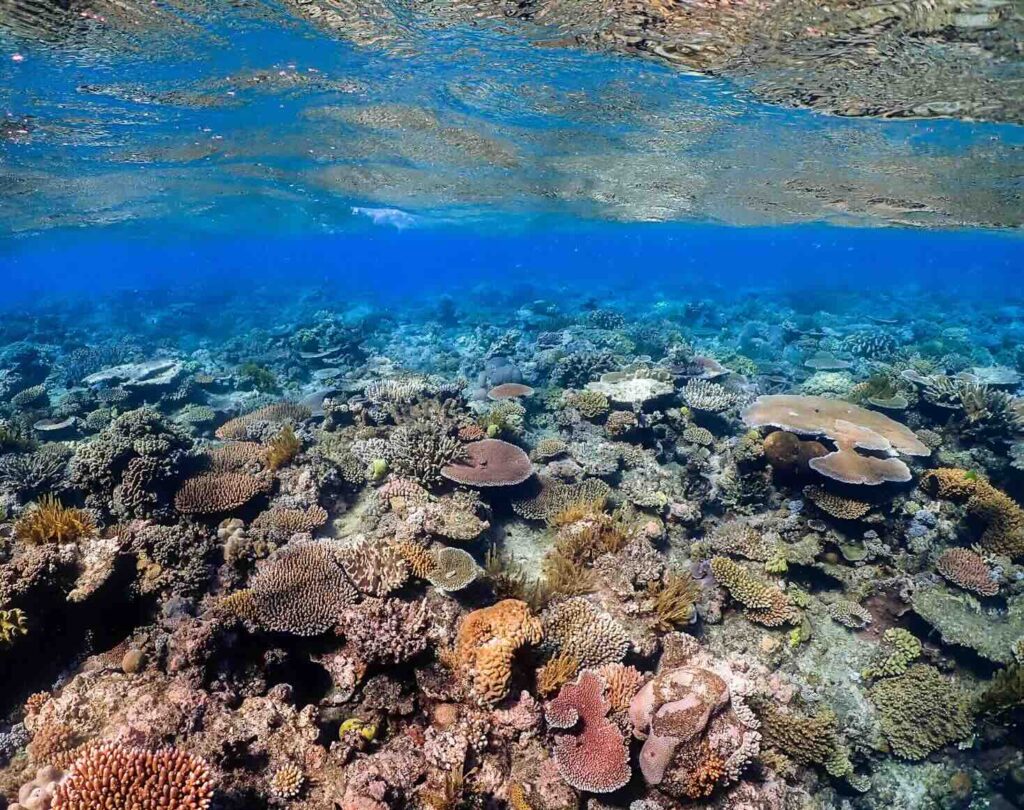
Day trips from Cairns run $250–$400, and multi-day liveaboards out to the Coral Sea cost $1,800–$3,500. The candid 2026 picture is that the inner-reef sections have experienced significant bleaching in recent years, and the outer ribbon reefs and Coral Sea outposts now hold most of the reef’s strongest sections. The nearest hyperbaric chamber is in Townsville. Cairns and Port Douglas anchor most of the reef’s commercial dive fleet, with day boats and multi-day liveaboards both running year-round.
Wrecks, Caves, and the Extreme
The final group includes the destinations that don’t fit either reef or pelagic categories: WWII wrecks, freshwater caves, tectonic plates, and the cold-water sites that demand specialty certifications.
11. Red Sea, Egypt (Best for Wrecks and Budget Liveaboards)
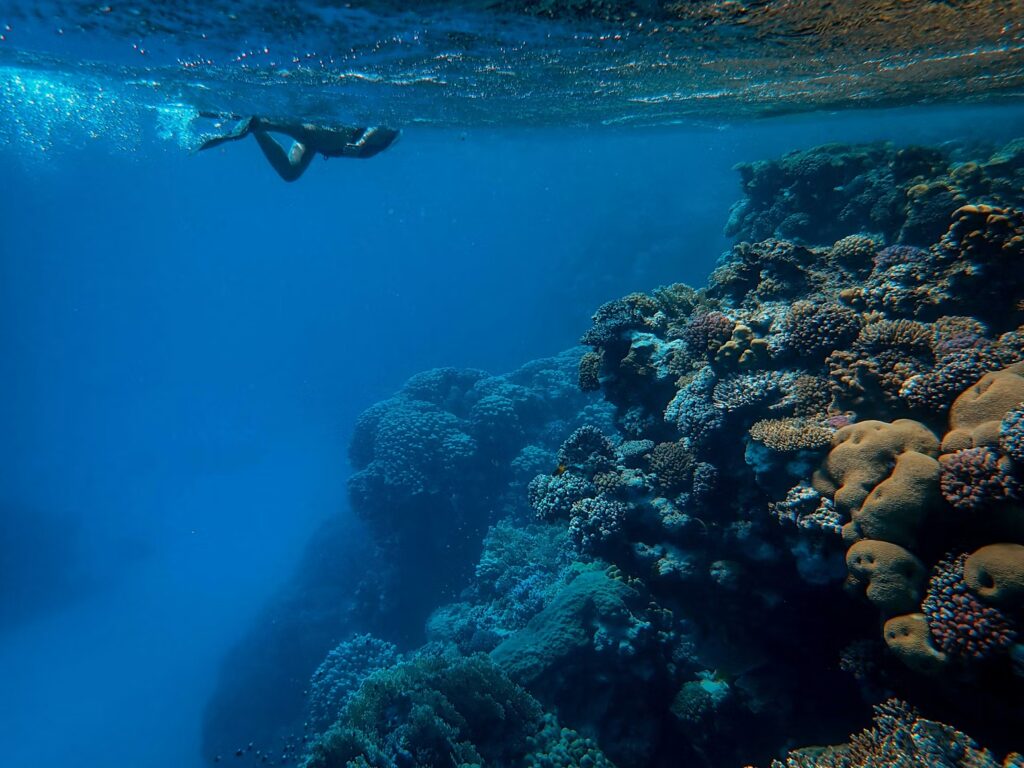
The Red Sea remains the most economically accessible serious diving on the planet, with weekly liveaboards routinely starting under $1,000 and the SS Thistlegorm wreck still ranking among the world’s great dives. The 1941 supply ship, sunk by German bombers, sits at 100 feet with motorcycles, trucks, and rifles still inside the holds.
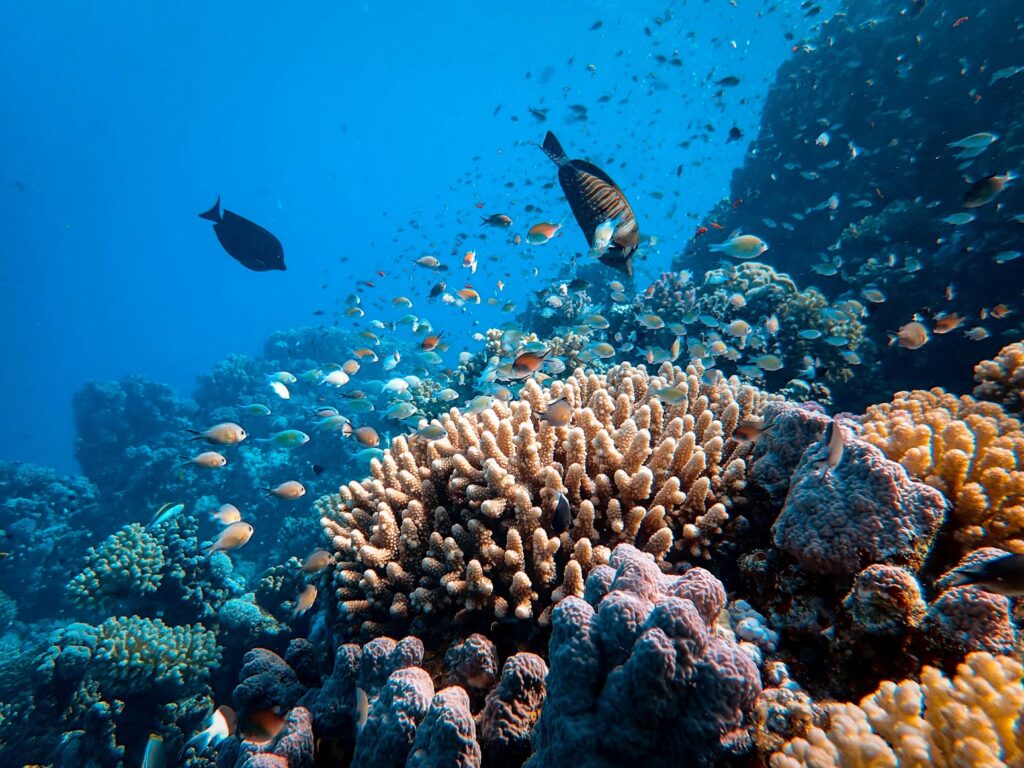
March through May and September through November offer the most stable conditions, while winter brings rougher crossings. Open Water certification is sufficient for reef diving and the Thistlegorm exterior, with Wreck or Advanced certification needed for the interior penetration.
Liveaboards run $800–$2,500 per week, which makes a serious week of diving possible on a modest budget. Hyperbaric chambers are located in Sharm el-Sheikh, Hurghada, and Marsa Alam. The Red Sea has one of the densest concentrations of liveaboard operators in the world, so options at every tier are plentiful.
12. Truk Lagoon, Micronesia (Best for WWII Wrecks)
Truk Lagoon holds the most concentrated collection of wreck diving anywhere in the world, with more than 60 Japanese Imperial Navy ships and aircraft sunk during Operation Hailstone in 1944. The lagoon’s protected waters have kept the wrecks unusually intact, with coral now growing over guns, holds still loaded with tanks and trucks, and human remains that some divers find more confronting than they expect.
December through April offers the calmest surface conditions. Wreck certification or Advanced with strong buoyancy is the realistic minimum, since depths range from 50–200 feet and several of the best wrecks involve penetration. Liveaboards run $2,500–$3,500 per week. The nearest hyperbaric chamber is on Guam, three hours by air, which is a real consideration given the depth profile of most Truk diving. A small number of liveaboards and land-based operations work the lagoon year-round.
13. Mexican Cenotes (Best for Cavern and Freshwater Diving)
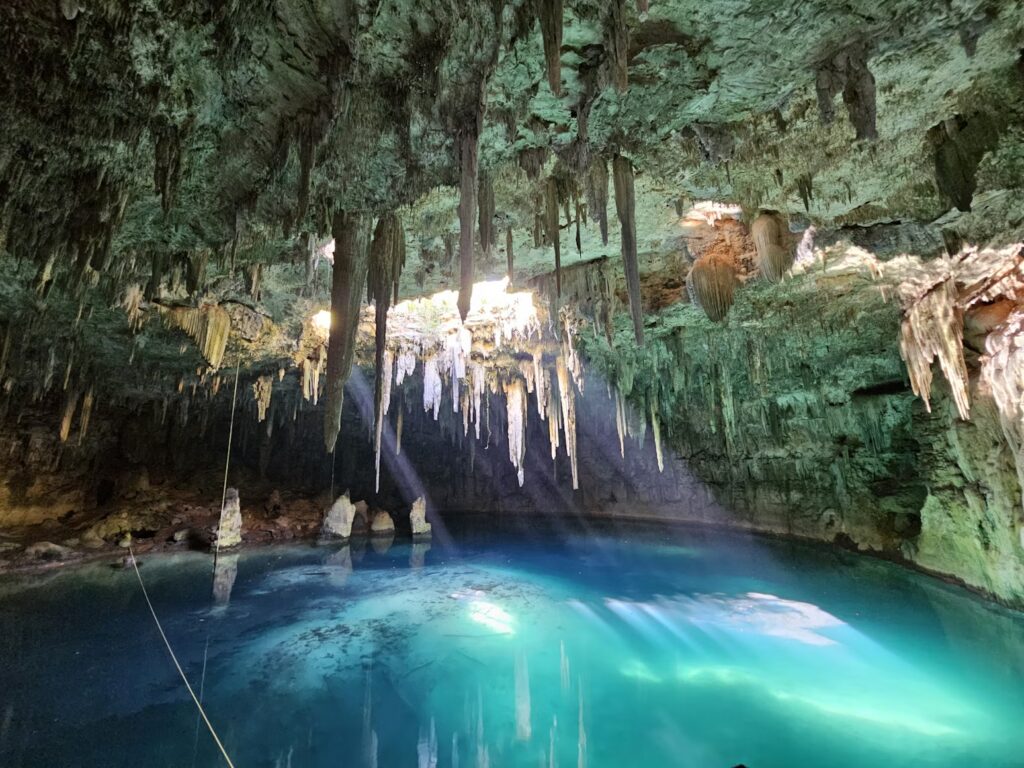
The cenotes of the Yucatán Peninsula are flooded freshwater sinkholes connected to one of the largest underwater cave systems in the world. Dos Ojos and The Pit deliver the experience that draws most divers: light beams cutting through gin-clear water, hydrogen sulfide clouds in deeper sections, and a stillness that contrasts sharply with open-water diving.
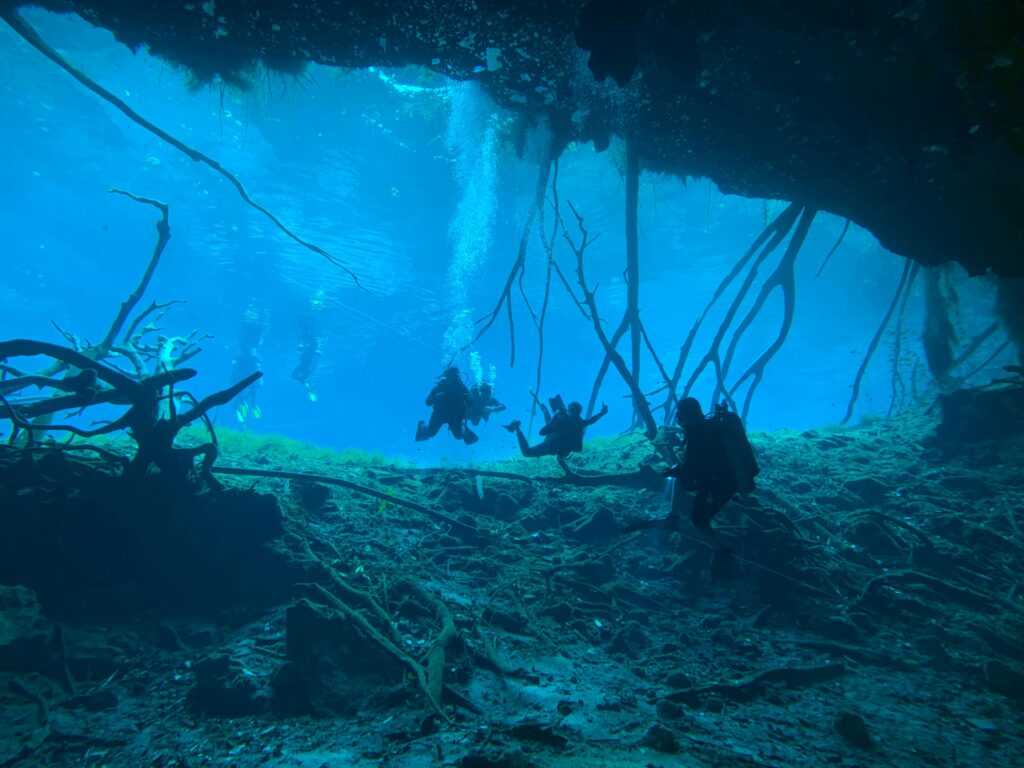
Diving runs year-round, with conditions remarkably stable. Open Water certification is sufficient for the cavern sections, but buoyancy control isn’t optional: the formations are millennia old and damaged by a single fin kick, and silt-outs from poor technique can be lethal. The Pit is the exception: its hydrogen sulfide layer sits around 30 meters, deeper than Open Water limits, so operators typically require Advanced certification. Full cave certification is required to leave the daylight zone. Two-tank guided trips run $100–$200. Hyperbaric chambers are in Playa del Carmen and Cancún. Tulum is the main base for cave-and-cavern operators, with a small specialist community that has worked the system for decades.
14. Silfra, Iceland (Best for Tectonic Plates and Ice)
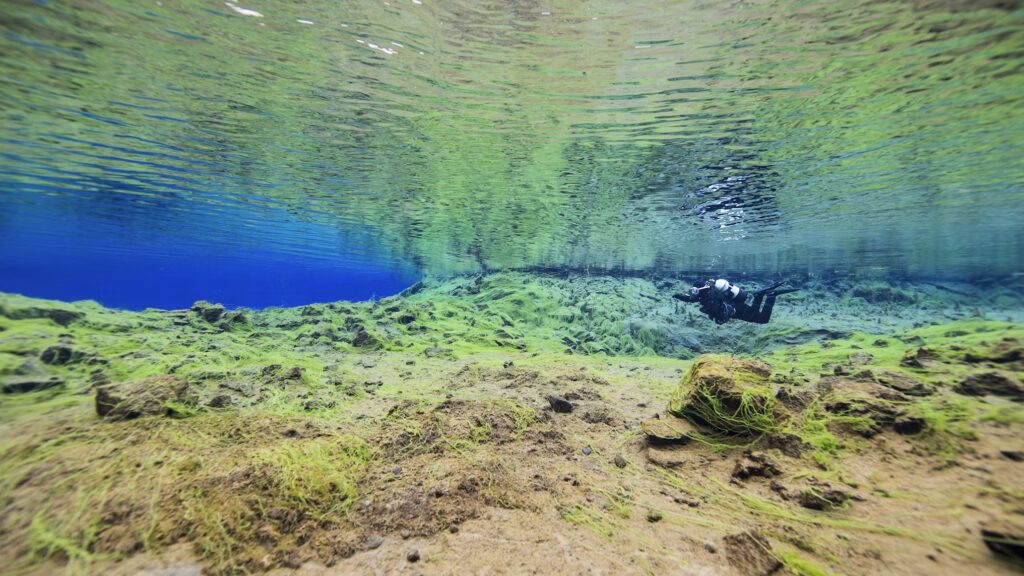
Silfra offers something no other dive site can: a swim between the North American and Eurasian tectonic plates, with water filtered for decades through volcanic rock and visibility that routinely exceeds 300 feet. The water sits at a constant 35–39°F, which makes this a drysuit-only site.
June through August are the warmer months, though Silfra dives year-round. A Drysuit certification with at least 10 logged drysuit dives is the standard operator requirement, and day-tour prices run $200–$400. The nearest hyperbaric chamber is in Reykjavík. A small number of licensed operators run the site, all out of Thingvellir National Park with small group sizes.
15. Coiba National Park, Panama (Best for Off-the-Grid Hammerheads)
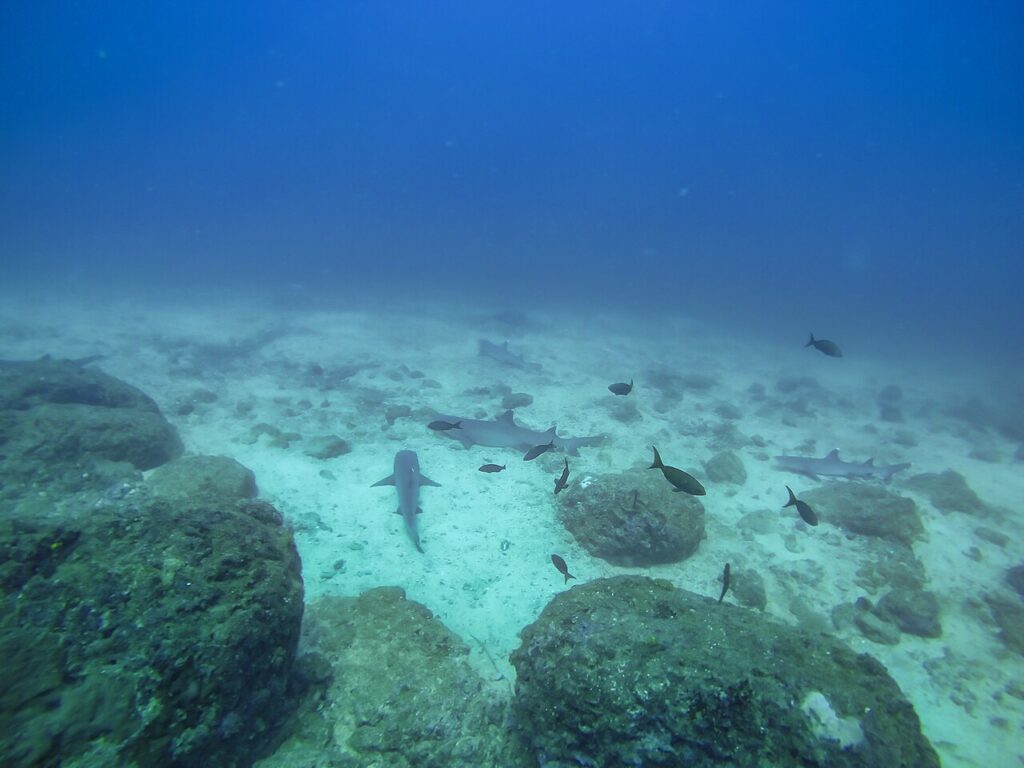
April and May produce the best hammerhead action, while diving runs year-round. Advanced certification with current experience is the practical minimum. A two-tank dive runs $120–$160, which makes Coiba one of the cheapest serious shark destinations anywhere. The nearest hyperbaric chamber is in David, Panama, which is a real evacuation distance from the park. Santa Catalina, on the mainland, is the base town where the boats depart from.
Scuba Diving Safety: What You Must Know in 2026
Dedicated Dive Insurance Isn’t Optional
Standard travel insurance doesn’t cover the costs that matter most in a diving emergency: hyperbaric chamber treatment, which can run $30,000 or more for a serious case, and emergency air evacuation, which routinely exceeds $50,000 from remote locations. Divers Alert Network (DAN) is the long-established dedicated dive insurer, with annual policies starting under $100. The policy pays for chamber treatment and evacuation that ordinary travel insurance flatly excludes, and the gap is large enough that any serious dive trip should be planned around having coverage in place.
Flying After Diving and Decompression Sickness
DAN’s widely cited guideline is to wait at least 12 hours after a single no-decompression dive and at least 18 hours after multiple dives or multiple days of diving before flying, and substantially longer after any dive that required decompression stops. Many divers and operators build in a full 24 hours for an extra margin. The window matters because residual nitrogen in the body, harmless at sea level, can come out of solution at altitude and cause decompression sickness hours after a dive. Plan the last day of any dive trip as a non-diving day, both to extend the trip and to remove the risk.
Marine Hazards That Catch Divers Off Guard
Box jellyfish in northern Australian waters between October and May produce some of the most venomous stings in the world and require stinger suits at most beaches. Lionfish in the Red Sea and Caribbean carry venomous spines that should never be touched, even when curious. Downcurrents at Komodo and the Galápagos can pull divers below their planned depth in seconds, which is why local briefings emphasize current management on every dive. None of these hazards make the regions unsafe, but each rewards advance awareness.
Frequently Asked Questions
Where is the cheapest place to get PADI Open Water certified?
Utila in Honduras, Koh Tao in Thailand, and Dahab on Egypt’s Red Sea coast have held the title of cheapest serious certification destinations for the past two decades, with full PADI Open Water courses typically running $250 to $400 including all equipment and materials. Quality varies by operator, so picking a shop with strong reviews rather than the absolute lowest price is the more useful filter.
Liveaboard vs. day-boat: Which is right for me?
Liveaboards are the answer for remote sites that day-boats cannot reach efficiently, including Cocos, Tubbataha, and the outer Coral Sea, and they typically deliver three to four dives per day across consecutive days. The trade-offs are cost (liveaboards run roughly $115 to $1,000+ per day all-in, from budget Red Sea boats to remote Pacific charters), confined quarters, and limited ability to skip a day if seasick. Day-boats suit divers who prefer evenings on land, want flexibility to skip diving days, or are seasick-prone.
What is the best month to see whale sharks in the Maldives?
The dry season from December through April produces the most reliable whale shark encounters, with South Ari Atoll holding a resident population that can be seen year-round. Hanifaru Bay’s plankton-rich waters also draw feeding mantas, and occasionally whale sharks, during the southwest monsoon from June through November. Local operators track conditions weekly during the season, which is worth checking shortly before booking.
Is standard travel insurance enough for scuba diving?
No. Standard travel insurance routinely excludes hyperbaric chamber treatment and dive-related evacuations, both of which are the largest financial risks in a diving emergency. A DAN policy or a comparable dedicated dive insurance product is the practical floor for any serious dive trip and pays for itself the first time it is needed.
What is the best scuba diving destination for non-diving partners?
The Great Barrier Reef, the Maldives, and Fiji rank highest for couples where one partner dives and the other doesn’t. All three offer strong snorkeling, beach and resort programming for non-diving days, and the kind of above-water settings worth the trip on their own.
Can I dive the Mexican Cenotes with just an Open Water certification?
Yes for the cavern sections, where natural daylight remains visible and exits are direct. Open Water with strong buoyancy control is the standard floor for guided cavern trips at Dos Ojos and other accessible sites. Full cave certification is required to leave the daylight zone and enter the deeper system, which is a different kind of diving and not appropriate for casual visitors.
How much does a 1-week scuba diving vacation cost?
The realistic range runs from about $800 all-in for a budget Red Sea liveaboard to $10,000+ for a Galápagos charter, with most quality destinations falling somewhere between $2,000 and $4,500 per week. The cost drivers are airfare to the region, the type of accommodation (liveaboard vs. resort), and conservation or park fees that some destinations charge separately.
Cenote vs. reef vs. wreck diving: What’s the difference?
Reef diving involves natural coral structures in open water, generally with the most marine life and the widest range of difficulty. Wreck diving focuses on sunken ships and aircraft, often deeper, sometimes involving penetration, and rewarding to divers drawn to history and structure. Cenote and cave diving move into freshwater environments with no surface access overhead, demanding strong buoyancy and specialized training, and offering geological rather than biological rewards.
Choosing Your 2026 Dive Destination
The right dive trip comes down to three things: the certification you actually hold, the budget you’re working with, and the month you can travel. A budget Red Sea liveaboard and a luxury Galápagos charter are both on this list, and which one fits depends entirely on those three answers.
Ocean conditions shift faster than guidebooks can update. The certifications and prices in this guide reflect 2026, but the marine ecosystems behind them change year to year and sometimes month to month. Two reminders matter before any dive trip: dedicated dive insurance through DAN or an equivalent is non-negotiable, and the briefings local operators give about currents and conservation rules deserve full attention. The best places to scuba dive in the world reward divers who plan around the ocean rather than against it.