
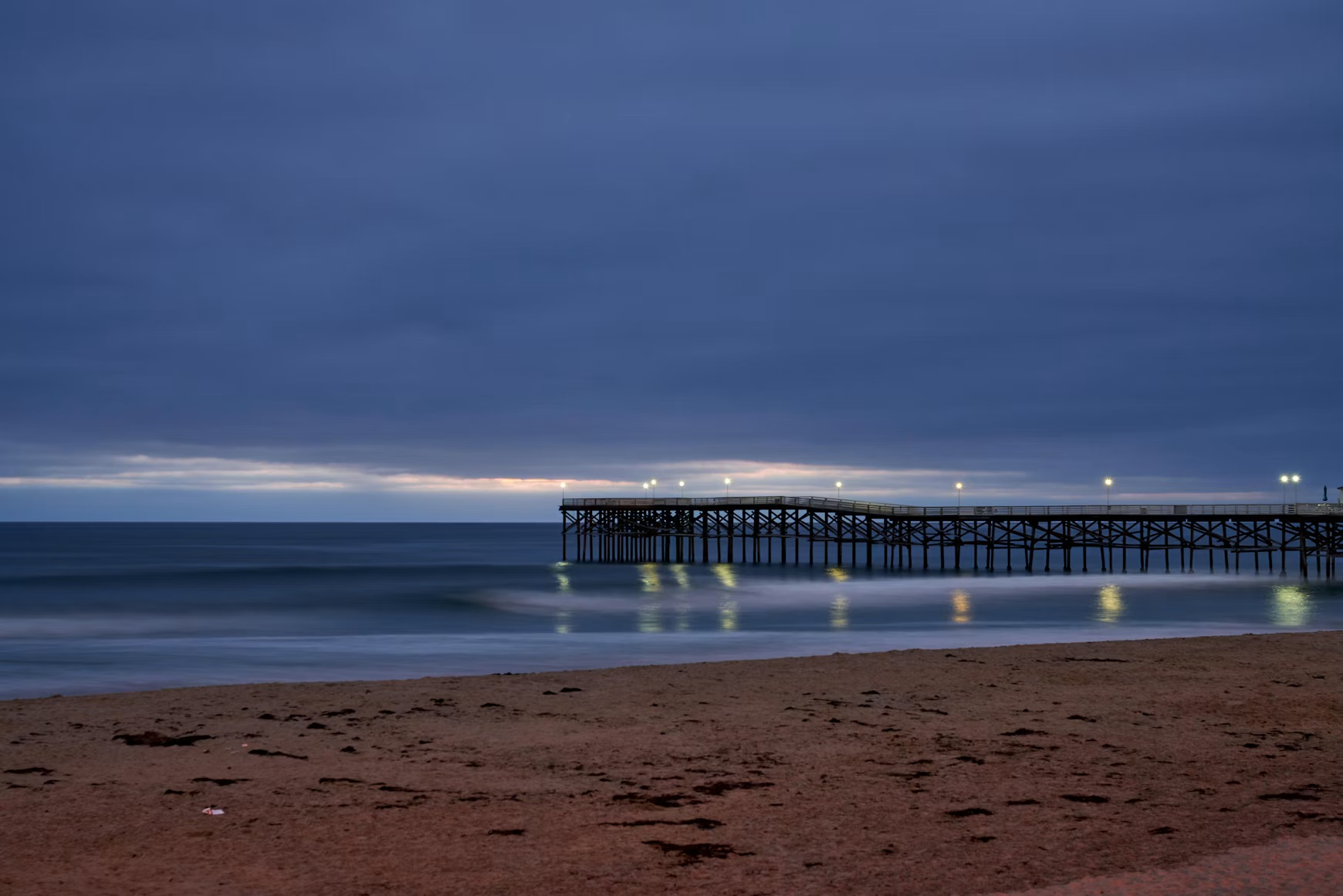
Every so often, the waves along the San Diego coastline stop being water and start looking like something else entirely: a wall of neon blue light, breaking and curling in the dark. It made global headlines in spring 2020, when footage of a pod of dolphins cutting glowing trails through the water just up the coast in Newport Beach went viral, and surfers have been chasing the same effect on their boards ever since. The honest version of this story, the one most local agencies admit quietly, is that the phenomenon is maddeningly hard to predict. Show up on the wrong night and there’s nothing but ordinary black water.
This guide is built to cut down on that guesswork, covering where the eight most reliable beaches sit, how tides and moon phases actually affect what you’ll see, realistic kayak tour pricing, and the camera settings that actually capture the glow instead of a dark, grainy mess.
Current Status: Is San Diego Glowing Right Now?
Last updated: September 29, 2026
We haven’t found any confirmed reports of a bioluminescent red tide along the San Diego coast as of this update. Blooms can appear with little warning, so check for reddish-brown water during the day, recent #redtidesd posts, and news from Scripps Institution of Oceanography before heading out. We update this section when a new bloom is reported.
When to See Bioluminescence in San Diego (2026)
The strongest historical pattern points to two windows each year: spring, roughly April into May, and a smaller secondary window in early fall, September into October. Spring blooms tend to follow the season’s rains, which wash nutrients into coastal waters just as the water starts warming up, creating the conditions the responsible organism needs to multiply into a visible bloom. There’s no guaranteed bioluminescence forecast the way there is for tides or sunset times, but those two windows give the best odds.
Within whatever window you’re working with, two practical conditions still need to line up:
- Moon phase: a new moon, or the days just before and after it, gives genuinely dark skies. The glow is far more visible without ambient moonlight competing with it, so it’s worth checking the lunar calendar before locking in a date.
- Time of night: the glow becomes visible once the sky is fully dark, usually about one to two hours after sunset, and can last well into the night as long as the bloom is close to shore.
Rather than guessing blind, a few real signals are worth checking before driving out:
- Daytime water color: a noticeable reddish-brown tint, the telltale sign of a red tide, is the single best predictor that the same water will glow after dark.
- Scripps Institution of Oceanography: based right in La Jolla, Scripps publishes news and an FAQ on red tides and bioluminescence when notable blooms appear. There’s no formal red tide monitoring program, though, so a bloom is usually confirmed because people see it.
- #redtidesd: this hashtag on social platforms tends to surface recent, geotagged sightings from people already at the beach, often faster than any official channel.
The Science: What Causes California’s Glowing Waves
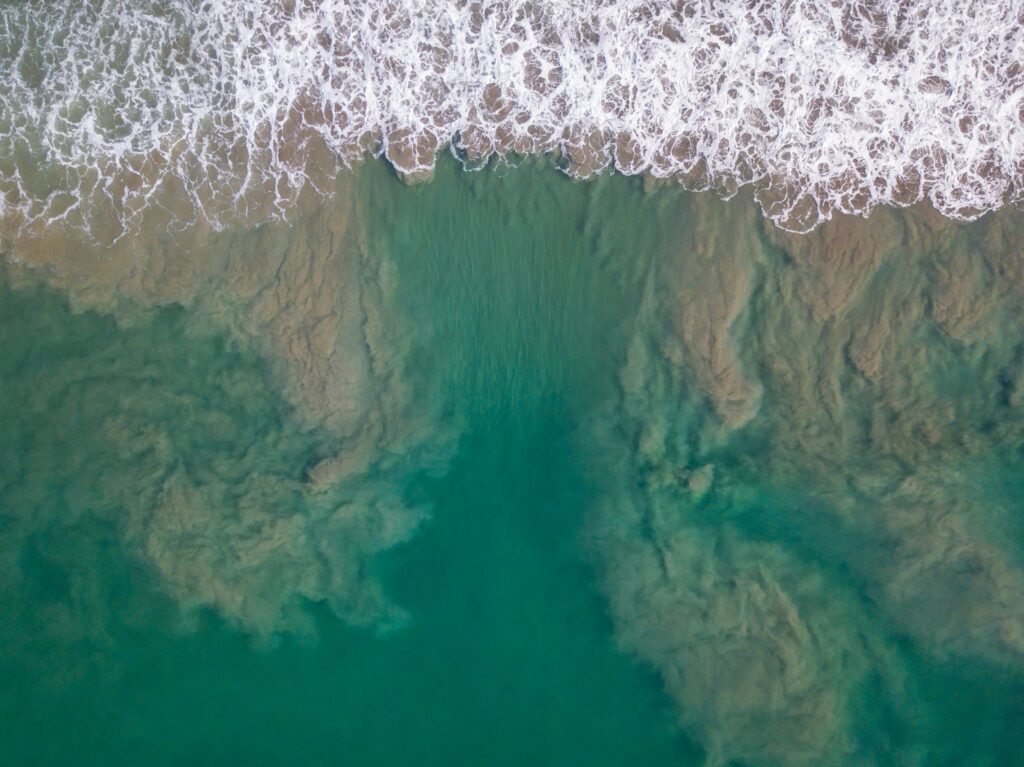
The organism responsible has a name that sounds more intimidating than it is: Lingulodinium polyedra, a single-celled dinoflagellate that’s been observed in San Diego’s coastal waters for more than a century.
- By day: these cells carry a small amount of reddish pigment and rise toward the surface to photosynthesize, which is what gives the water its rust-colored tint and the event its common name, red tide.
- By night: the same cells produce a flash of blue-green light through a chemical reaction whenever they’re physically disturbed, a defense mechanism scientists describe as a kind of predator-startle response.
That disturbance can come from almost anything: a wave breaking, a surfboard cutting through the water, a kayak paddle dipping in, or even a stone tossed into the shallows. According to Michael Latz, a bioluminescence researcher at Scripps Institution of Oceanography who has studied these blooms for years, the blue glow is essentially the organism’s way of trying to startle off whatever just touched it.
Not every red tide produces a strong bioluminescent show, and there’s currently no reliable forecasting model that predicts exactly when or how long a bloom will last; some events fade within days, while the unusually large bloom of spring 2020 stretched for roughly a month and drew crowds from across the region.
The 8 Best Beaches for Bioluminescence in San Diego
| Beach | Darkness | Access | Night hazards | Best for |
|---|---|---|---|---|
| La Jolla Shores & Cove | Moderate | Easy; main kayak tour launch | Low; calm, protected water | First-timers, kayak tours |
| Scripps Pier | Moderate | Easy, via La Jolla Shores | Low | Pier photos, chance of glowing dolphins |
| Black’s Beach | Very dark | Steep, sometimes muddy trail | High: rip currents, cliff collapse, no lifeguards at night | Experienced beachgoers |
| Torrey Pines State Beach | Very dark | State park lot closes in the evening | Moderate | Dark skies, fewer crowds |
| Mission & Pacific Beach | Lower (city lights) | Easy, along the boardwalk | Low | Families, a casual first look |
| Coronado Beach | Moderate, away from the Hotel del | Easy | Low; calm surf | Tripod photography |
| Del Mar Beach | Moderate | Easy | Low | Quieter nights, dolphin spotting |
| Sunset Cliffs | Very dark | Clifftop viewpoints | High: unstable cliff edges | Watching from above |
La Jolla Shores and La Jolla Cove

This stretch sits in a relatively dark, low-light-pollution bay and is the most popular launch point for kayak tours, including trips that paddle into the sea caves along the cove. The calm, protected water here also makes it one of the more approachable spots for a first-time visit.
Scripps Pier

Right next to the research institution that studies these blooms most closely, this stretch occasionally offers a bonus: dolphins swimming offshore at night sometimes leave glowing trails behind them as they move through the water.
>>> 15 Best Places to Scuba Dive in the World
Black’s Beach
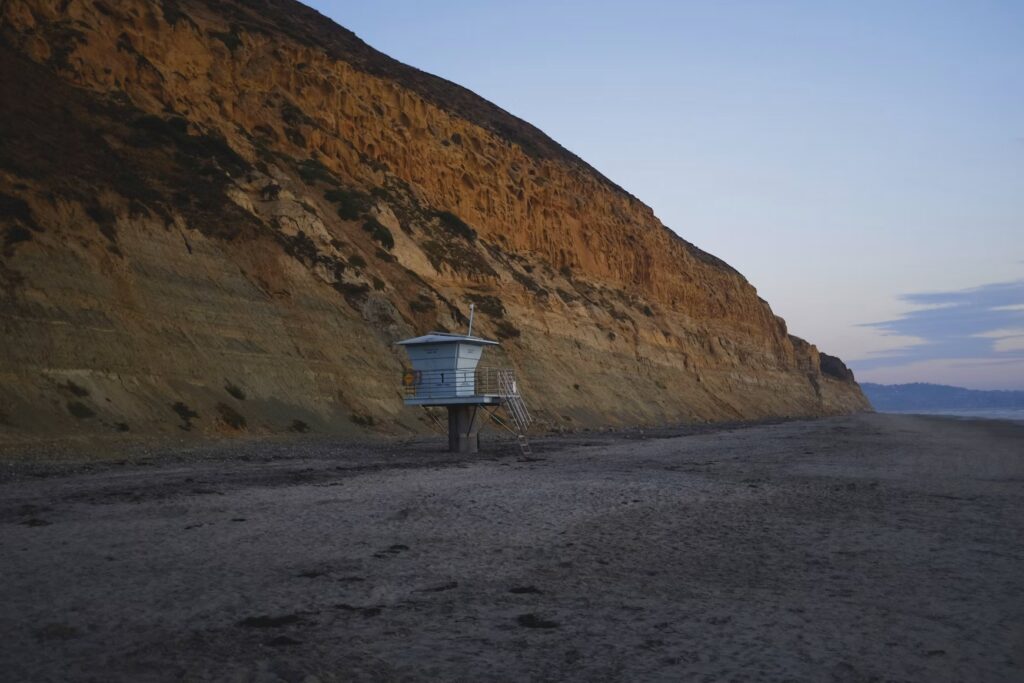
Backed by sandstone bluffs that run roughly 300 feet high, Black’s blocks out most ambient city light, which makes it one of the darkest and most dramatic spots on this list. It’s also a serious surf break, popular with experienced surfers rather than beginners, and the same swell that makes for a good ride here tends to agitate the water enough to trigger a brighter glow.
That said, this beach carries real hazards after dark: rip currents are common at both ends of the beach, the cliffs above are prone to sudden collapse and should never be approached closely, and access involves a steep, sometimes muddy trail with no lifeguards on duty at night. This is a beach best appreciated cautiously, from a safe distance off the cliffside, rather than treated casually.
Torrey Pines State Beach
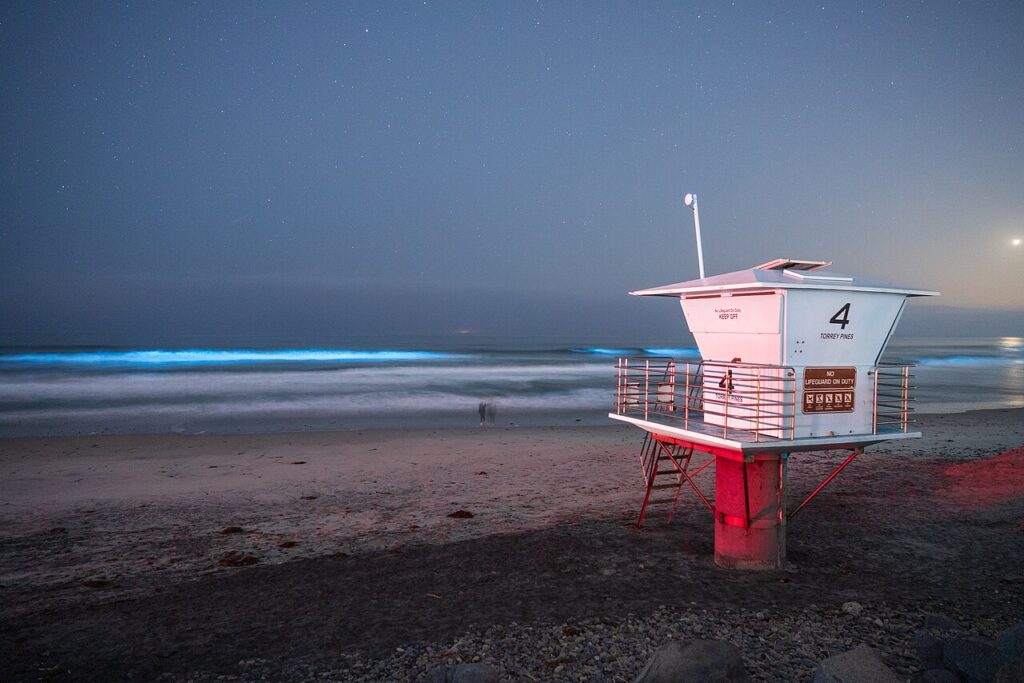
Wide, undeveloped, and genuinely dark once the sun goes down, this stretch rewards the effort of getting there. The one logistical catch is the state park’s parking lot, which closes at a set hour each evening, so anyone planning to stay past closing needs an alternate parking plan outside the gate.
Mission Beach and Pacific Beach
These two beaches work best for a more low-key, family-friendly outing rather than a wilderness trek. Walking the boardwalk that connects them is an easy way to scan the shoreline, and at Mission Beach specifically, dragging a foot through the wet sand at the waterline can trigger a faint glow underfoot, a smaller-scale version of the same reaction happening in the waves.
Coronado Beach
The flat, wide sand here and generally calm surf make this one of the more practical spots for setting up a tripod for long-exposure photography. The one adjustment needed is distance from the Hotel del Coronado: its lighting washes out the sky enough that walking a reasonable stretch away from the hotel makes a real difference in what shows up on camera.
Del Mar Beach
A quieter, less crowded option with fairly consistent wave action, and dolphins are spotted here often enough that it’s worth scanning the water beyond just the breaking waves.
Sunset Cliffs
On the western edge of Point Loma, Sunset Cliffs Natural Park trades a sandy beach for dramatic sandstone bluffs above the surf, and its distance from the city center keeps it one of the darker viewing spots in San Diego. During a strong bloom, watching the waves light up as they break against the rocks below is a completely different perspective from the beaches farther north.
The same cliffs that make it dramatic also make it dangerous after dark. The edges are unstable and erode without warning, so stay well back from the rim, watch from the established viewpoints along Sunset Cliffs Boulevard, and never try to climb down to the water at night.
Kayak and Boat Tours: A Different Way to Experience the Glow
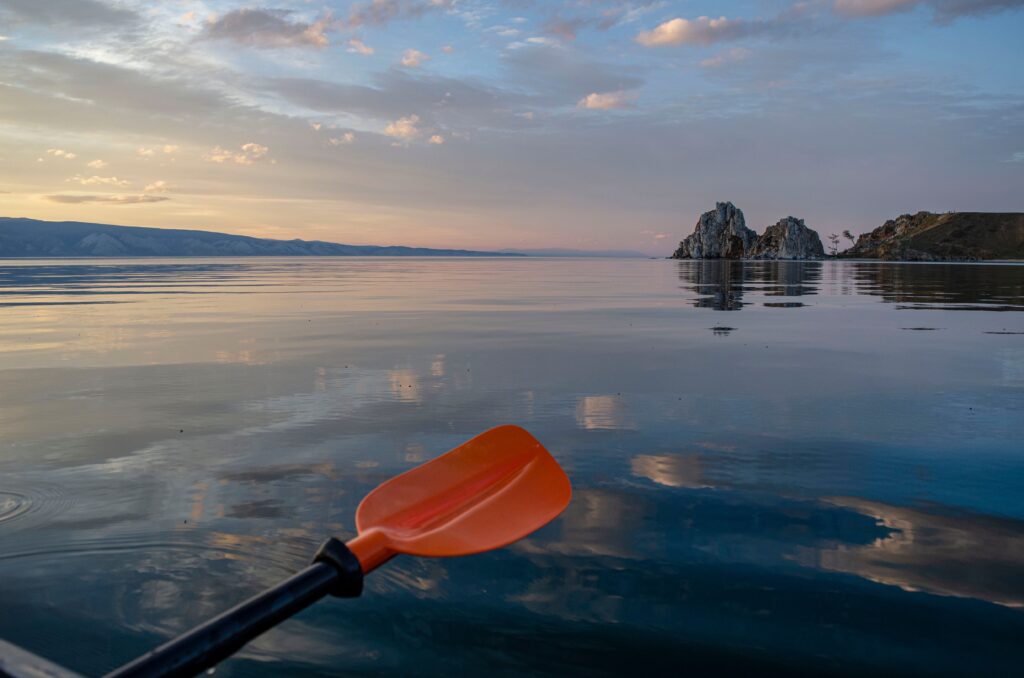
Watching from the sand is one thing, but pulling a kayak paddle through water that lights up with every stroke is a different experience entirely, and most people who’ve tried both describe the on-water version as the more memorable one. Night kayak tours launching from La Jolla typically run $55–$85 per person, while boat or cruise-style tours further north out of Dana Point in Orange County, about an hour’s drive from San Diego and a gentler option for anyone who’d rather stay dry, generally run $45–$65 per person. Pricing shifts depending on the operator, season, and whether the tour includes gear rental.
Night paddling carries its own set of safety considerations, and not every outfitter runs the same standard of trip, particularly when it comes to clear-bottom kayaks designed specifically to let paddlers see the glow happening directly beneath them. A separate guide breaks down: First-Time Bioluminescent Kayaking: The Ultimate Guide to Safety, Gear & Clear Boats.
Is Bioluminescence Safe? The Red Tide Health Guide
The most persistent rumor about red tides is that they’re toxic to swim in, and the honest answer is more nuanced than a flat yes or no.
- The toxin question: some populations of Lingulodinium polyedra elsewhere in the world, particularly in parts of the Mediterranean, produce meaningful levels of yessotoxin, a compound that affects the nervous system. Research from Scripps Institution of Oceanography has found that San Diego’s local populations of the same organism generally produce yessotoxin only at low concentrations. A study of the historic 2020 bloom, published in 2023, detected the toxin in trace amounts in the water and even in sea spray carried through the air, though researchers concluded the levels were unlikely to pose a meaningful risk to people swimming or walking the beach.
- Mild sensitivities: some people do report mild allergic reactions or respiratory irritation during a heavy bloom, an effect scientists are still working to explain; a 2026 study points to osmolytes, compounds produced by the algae, as one possible and previously overlooked factor. Swimming during an active red tide is generally considered safe for most people, with the caveat that anyone with respiratory sensitivities might want to be more cautious.
- The smell: one thing worth bracing for regardless of toxicity is that as the algae dies off, it produces a noticeably fishy, sometimes sulfurous smell along the shore, which catches a lot of first-time visitors off guard.
A few night-specific safety habits matter more than the toxin question:
- Rip currents: a real hazard after dark, especially at spots like Black’s Beach, and harder to spot at night than during the day.
- The buddy system: going with at least one other person rather than alone is standard advice for any nighttime beach visit.
- Red-tinted flashlights: a red light, rather than a standard white one, is the practical choice for navigating the sand. It preserves night vision far better and avoids washing out the very glow everyone came to see.
Pro Photography Tips: How to Capture the Glow

Camera flash is the single most common mistake people make, and it instantly kills the effect in any photo, since it overexposes the dark water and erases the glow entirely.
A tripod is close to mandatory, since capturing this light requires holding the camera still for several seconds at minimum. On a DSLR or mirrorless camera, a long exposure somewhere between 15 and 30 seconds tends to work well, paired with an ISO pushed up to the 3200–6400 range and the widest aperture the lens allows, ideally f/2.8 or wider.
Smartphones can manage a reasonable result using Night Mode, which extends the exposure automatically, though the output usually comes with more visible grain and noise than a dedicated camera will produce.
Beyond San Diego: Where Else to See Bioluminescence in California
San Diego gets most of the attention, but the same Lingulodinium polyedra blooms aren’t limited to one stretch of coastline. Orange County sees comparable activity at Newport Beach and Huntington Beach during the same general seasonal windows.
Much further north, Tomales Bay offers a genuinely different version of the experience: the glow there comes from different bioluminescent plankton rather than San Diego’s red tides, and its still, sheltered water makes it one of the better-known spots in Northern California for a calm, guided night kayak trip.
Santa Cruz and Monterey Bay round out the list of spots along the central coast where reports of glowing water surface most years.
FAQ About California’s Glowing Waves
What time of year is bioluminescence in San Diego most likely?
Spring, roughly April through May, is the strongest and most consistent window, with a smaller secondary chance in early fall, September into October.
How long does the bioluminescence last once it starts?
It varies considerably. Some blooms fade out within a few days, while others, like the historic spring 2020 event, have stretched on for a month or more before dying off.
Can I swim in bioluminescent water?
For most people, yes. San Diego’s local algae generally carries only trace, low-risk levels of yessotoxin rather than the higher concentrations seen in some other parts of the world, though a small number of people report mild skin or respiratory irritation during a heavy bloom, so anyone with existing sensitivities may want to be more cautious.
Is bioluminescence the same thing as a red tide?
They’re connected but not identical. The red tide is the reddish-brown daytime coloring caused by the same algae concentrating near the surface; the bioluminescence is the separate nighttime light reaction the same organisms produce when physically disturbed.
Conclusion: Ready for San Diego’s Neon Night Show?
Chasing bioluminescence in San Diego is ultimately a game of patience layered on top of a little luck. Nature doesn’t run on a fixed schedule, but checking for a reddish daytime tint in the water, watching the lunar calendar for a dark new moon, and choosing from the eight beaches above stacks the odds meaningfully in your favor. The three habits worth remembering above everything else: check the moon phase before you go, plan to arrive an hour or two after sunset, and leave the camera flash off entirely if you want any usable photos. If the glow does show up while you’re out there, it’s worth noting which beach and roughly what time, since that kind of firsthand reporting is often more useful than any official tracker for figuring out where the next good night might happen.