
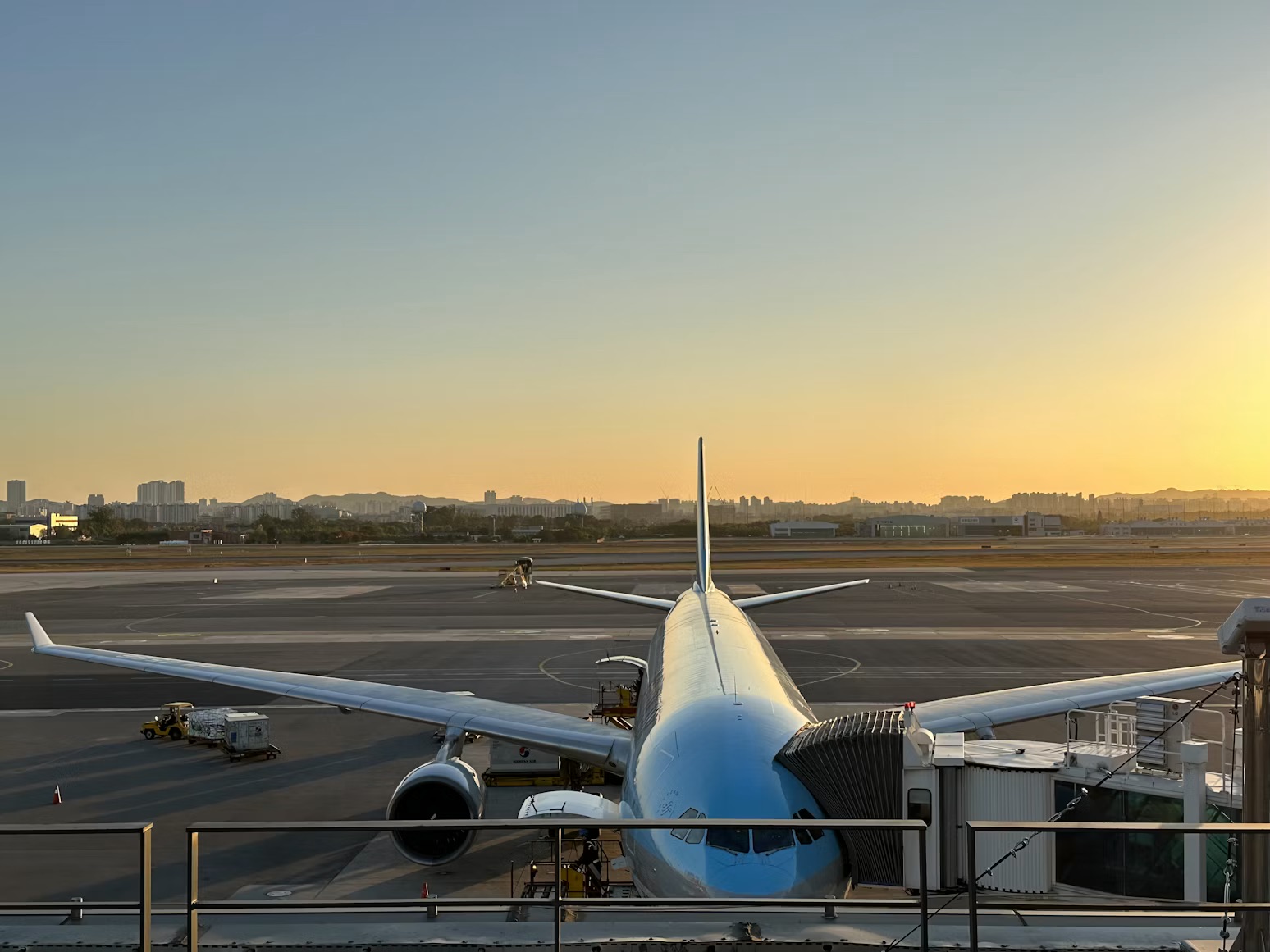
Japan to Seoul is a route many travelers add almost without friction. It sits close on the map, runs frequently throughout the day, and often slots neatly into longer itineraries without demanding much attention. Booking often happens quickly, with focus staying on dates and onward plans rather than the airport printed on the ticket.
What tends to remain is the way arrival settles after the plane touches down. Movement continues from gate to corridor, from signs to transport, with attention already turning inward as the journey begins to thin out. Energy has been used, though not enough to interrupt awareness, and the first moments on the ground start shaping how the city is met. Seeing this route as a continuation tends to help the transition feel intact.
How the flight usually feels
The distance registers gently. Most travelers stay awake for long stretches, with rest arriving in shallow intervals that soften the body without fully disengaging it. Time passes through familiar rhythms of meals, screens, and small shifts in light, accumulating quietly along the way.
On arrival, the body feels capable. Walking, reading signs, and navigating space come easily, though pace eases on its own. There is a readiness to slow, which often makes the first hours feel smoother when they remain uncomplicated and loosely structured.
This state is easy to overlook while planning, though it becomes clear once movement through the terminal begins.
Direct flights and continuity
Direct flights give the journey a clean edge, with the sense of transit settling naturally at arrival. Attention turns toward entering the city, finding transport, and letting the body settle without needing to stay alert for the next step.
When connections are involved, that sense of completion stretches out. Focus stays on timing and movement longer, and the body remains oriented outward even after landing. Over a route of this length, that extension can quietly thin energy, especially when arrival comes later in the day. Keeping the journey contained often leaves the transition calmer.
Gimpo and Incheon on arrival
Gimpo places the city close. The shorter distance becomes noticeable when energy is limited or plans begin soon after landing. Reaching accommodation tends to feel direct, and the sense of being in Seoul arrives early.
Incheon keeps the movement going after touchdown. There is still ground to cover before the city feels near, and that stretch asks for attention and patience. For travelers familiar with Seoul, this often passes smoothly. For first-time visitors or anyone arriving slightly worn, it can delay the feeling of arrival in small ways.
Both airports generally function smoothly. The difference shows up in how quickly the city feels present.
When Seoul isn’t the final stop
For travelers continuing onward the same day, arrival carries more weight. Immigration, baggage, and customs require focus, followed by a period where attention stays on movement and timing. Even when processes run smoothly, they unfold at their own pace. When schedules leave room, the transition holds steady, and arrival settles naturally into the rest of the journey.
Airline choice and arrival condition
Choices around airlines on this route often reflect how travelers want to feel when they land. Some lean toward consistency and predictability, while others are comfortable adjusting along the way. Both approaches work when expectations align with what the route delivers. What stays with you is the condition you arrive in.
How tiring this route usually is
Most travelers finish this flight with energy intact, though softened. Tiredness is present without overwhelming, enough to influence pacing and decisions during the first hours. Many experienced travelers keep that day light, letting movement, food, and rest guide them gently into the city.
A quiet truth about this route
This flight sets the rhythm for what follows. When the transition unfolds without pressure, Seoul tends to open gradually, meeting you at the pace you arrive with, rather than asking you to catch up.
Related Articles
South Korea’s Unique Blend: Tradition and Modernity in Perfect Balance