
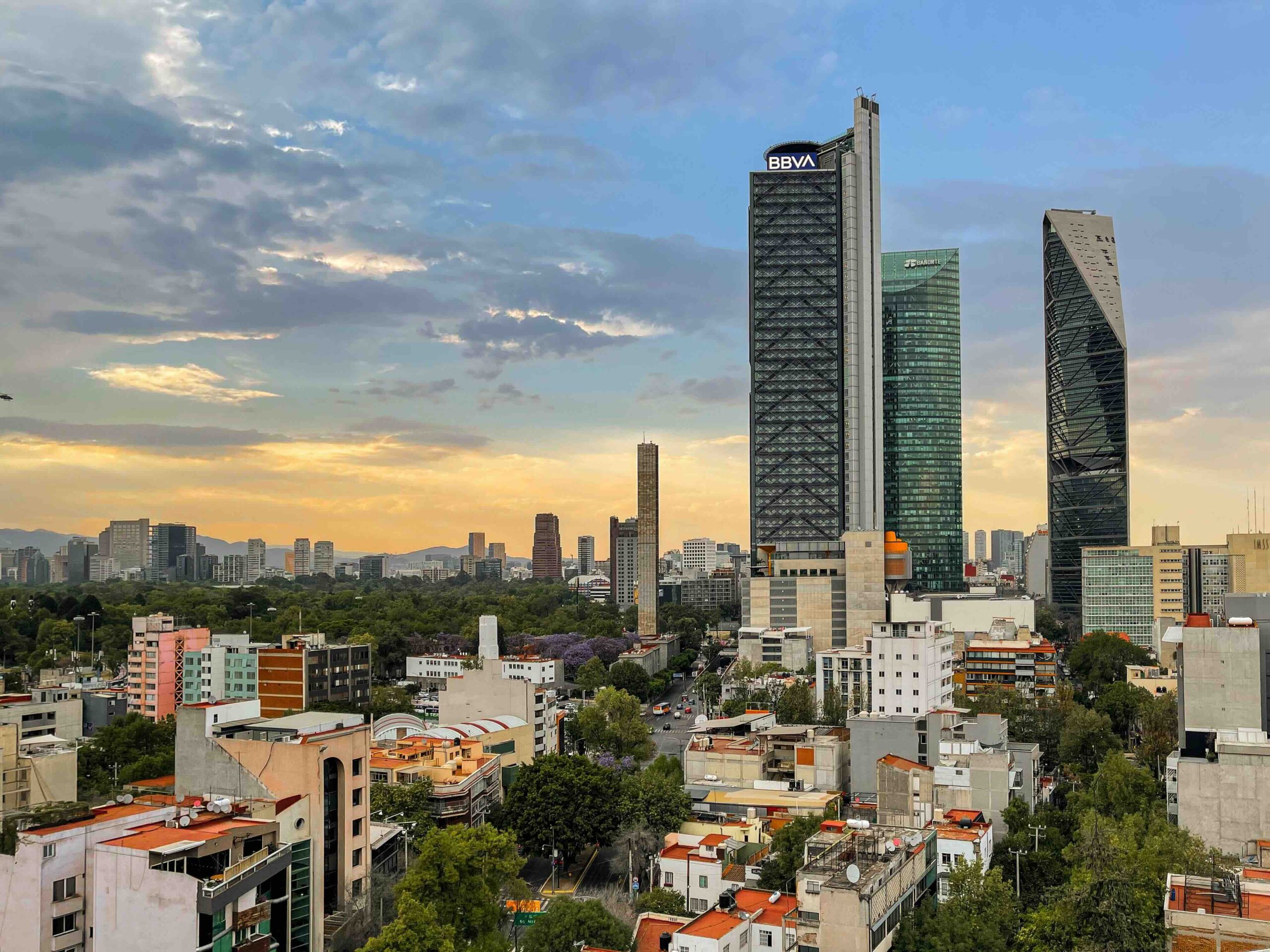
Mexico City doesn’t ease you into itself. There is no gradual widening of the frame, no slow reveal that lets the edges stay soft. The city arrives all at once, complete, already in motion, and it continues to move whether you’re ready for it or not. For remote travelers, this creates a particular kind of immersion, one that doesn’t rely on novelty so much as on being continuously inside the city.
What begins to matter over time is how little space it leaves between moments. Scale shows up in how days stack, how choices remain present even when ignored, and how living inside something this vast quietly reshapes what it means to feel settled.
When abundance becomes constant presence
Mexico City offers more than most cities ask you to process. Neighborhoods overlap without clear edges, and daily life unfolds across layers. Cafés, parks, workspaces, and social scenes exist simultaneously, rarely asking to be chosen deliberately in order to be encountered.
Early on, this abundance feels generous. The city seems to carry the day for you, filling space before it opens. Over time, abundance stops feeling like possibility and starts behaving like constant presence. The effort shifts away from finding things and toward regulating how much of the city enters the day at once.
How scale reshapes movement and attention
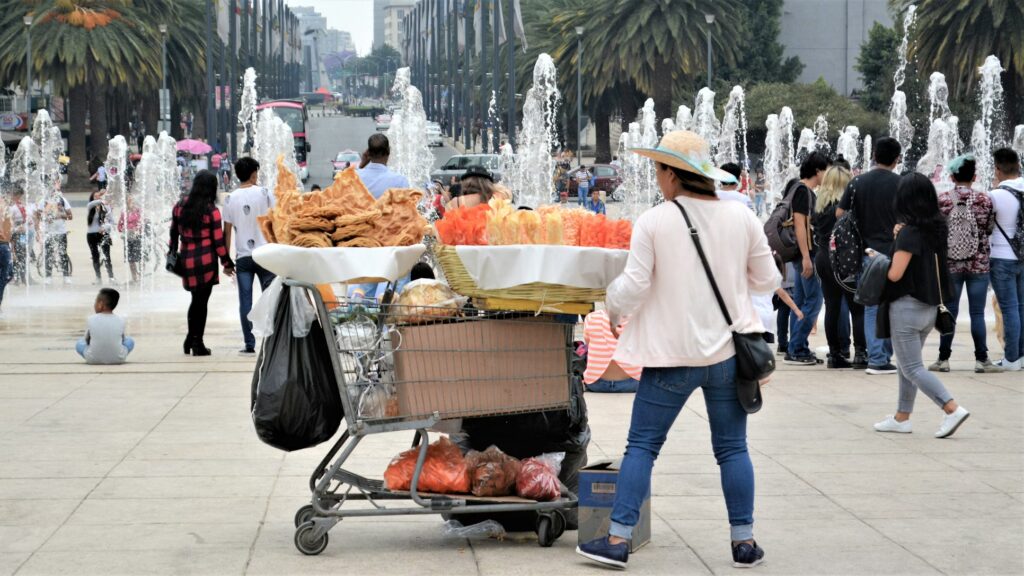
Scale in Mexico City is felt in the way attention is spent. Even short errands begin to carry a mental weight, and staying oriented within density continues to draw focus as the day moves along.
Movement doesn’t feel linear. Days spread across neighborhoods, moods, and tempos, blending into one another without clear transitions. Attention stays slightly expanded, held open by the city’s scale, and across longer stays that openness begins to draw energy instead of generating it.

When routine forms without compression
Routine does emerge in Mexico City, though it does so without compressing the environment around it. Familiar routes appear, preferred neighborhoods narrow the field, and work finds places where it can settle, yet the city itself doesn’t recede in response.
Even as repetition builds, scale remains present. The background stays active. Sound, traffic, and social movement continue beyond the immediate frame of daily life. Routine survives, which can leave the day feeling full even when little changes.
Work inside a city that never quiets
Mexico City supports remote work well in practical terms. Connectivity holds, infrastructure stays reliable, and professional rhythm can be maintained across the city. Eventually, what stands out is the lack of quiet around that rhythm. Work unfolds inside an environment that stays loud, dense, and continuously active. Focus remains possible, held through effort and containment, while recovery becomes something that needs to be shaped deliberately.
The emotional weight of staying inside scale
Living within a city of this size changes how emotional load accumulates. Social life remains accessible, cultural signals are always present, and stimulation rarely drops below a certain threshold. Loneliness arrives through saturation and being continuously surrounded without always feeling supported.
For some remote travelers, this creates momentum and connection. For others, it introduces a low-level fatigue that is difficult to name, as the city rarely gives clear signals that it’s time to withdraw or rest.

Who Mexico City tends to support over time
Mexico City tends to resonate with travelers who find steadiness inside density and variation, who regain energy through engagement, and who feel supported by environments that stay active regardless of individual pace. For others, the city’s constant movement can take longer to absorb. Quiet and spatial compression take time to appear, and their absence begins to register as a gradual weight instead of a sudden strain.
What scale teaches about remote travel
Mexico City reveals a dimension of remote travel that smaller or calmer places often soften. Scale shapes not only what is available, but how attention is spent gradually. It influences how routine forms, how work is carried, and how rest arrives, if it arrives at all.
For remote travelers, living inside scale becomes a lesson in regulation rather than exploration. The city offers more than enough. What matters is how much of it can be lived with, day after day, without asking the body and attention to stay permanently open to it.