
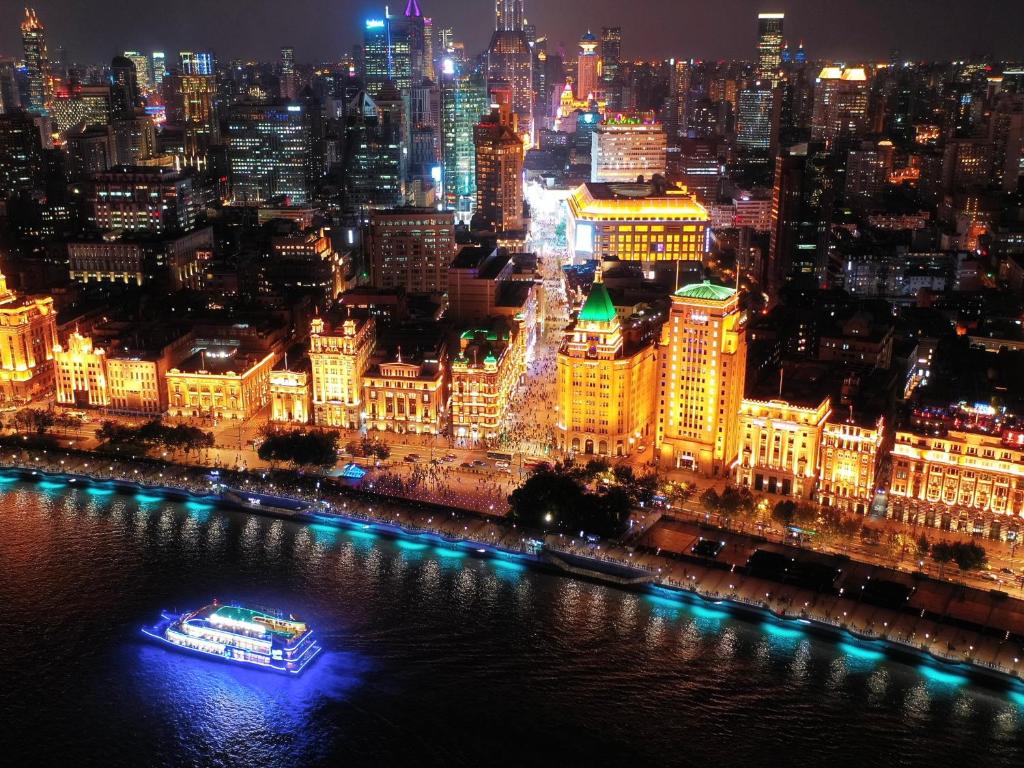
Shanghai operates at a scale that can feel relentless. Streets stretch wide, buildings rise aggressively, and distances are measured vertically as much as horizontally. Staying well here often depends on how effectively a hotel can divide, absorb, and compartmentalise that scale: creating internal environments where movement, sound, and visual intensity are filtered rather than amplified. These hotels stand out for how their architecture, room layouts, and internal circulation help guests navigate Shanghai without being overwhelmed by it.
Fairmont Peace Hotel
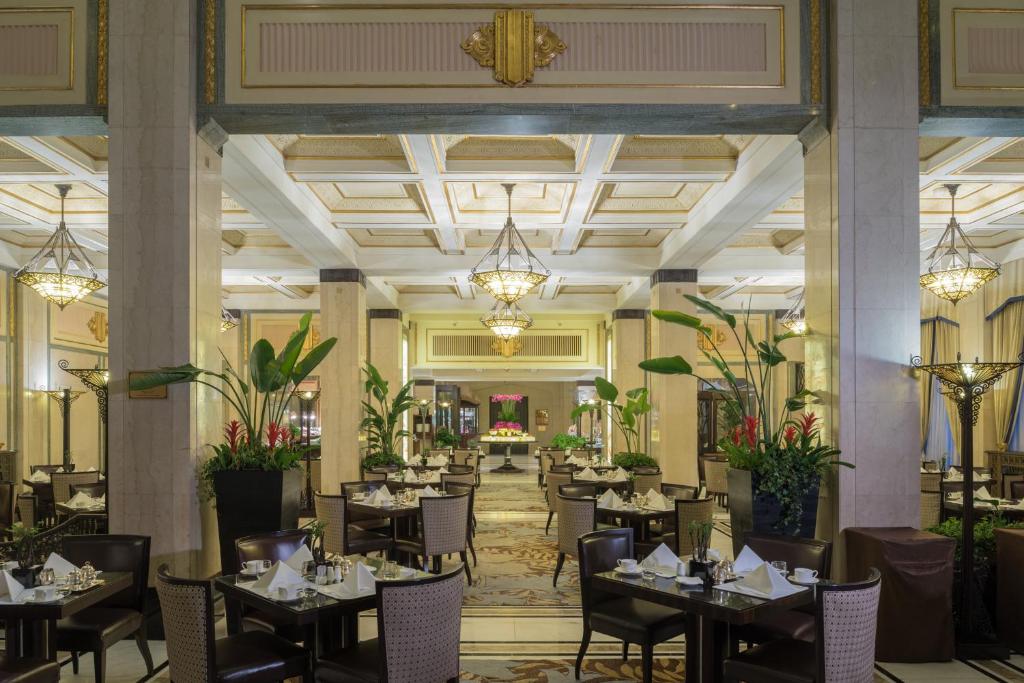
Fairmont Peace Hotel sits at the northern end of the Bund, occupying one of the city’s most recognisable historic structures. The building’s mass and symmetry immediately establish a sense of enclosure against the openness of the riverfront.
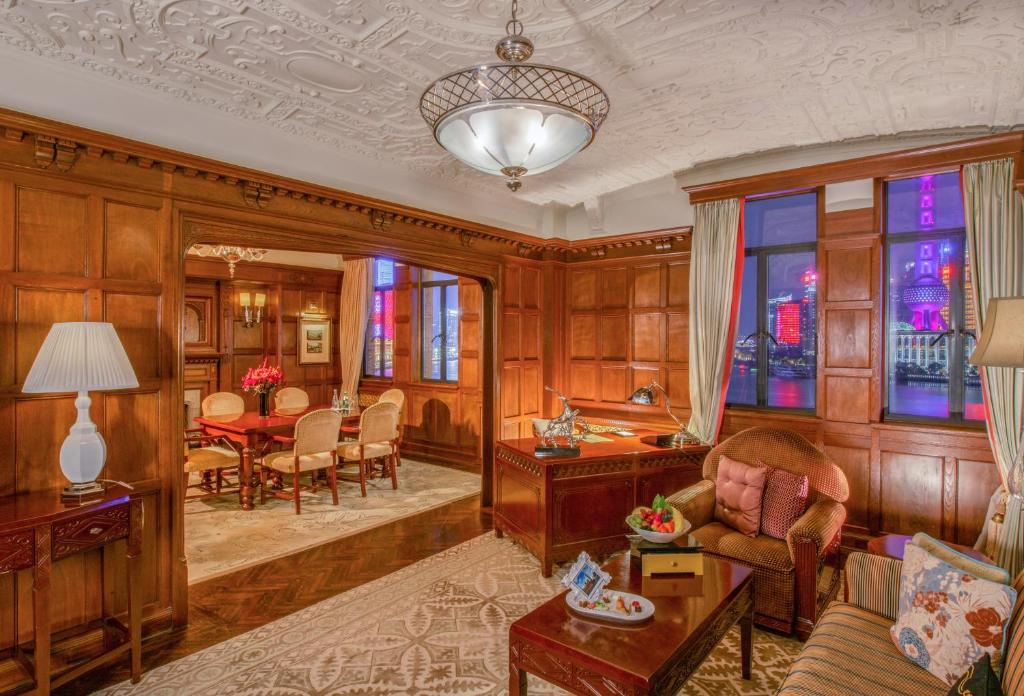
Rooms are generous and formal in layout, with clear separation between sleeping, seating, and bathing areas. Ceilings are high, windows are thickly framed, and sound insulation softens the constant movement outside. Interiors lean traditional, but the weight of materials, like wood, stone, and heavy fabrics, creates a feeling of stability well suited to the city’s scale.
Booking your stay on Booking.com
Booking your stay on Hotels.com
Waldorf Astoria Shanghai
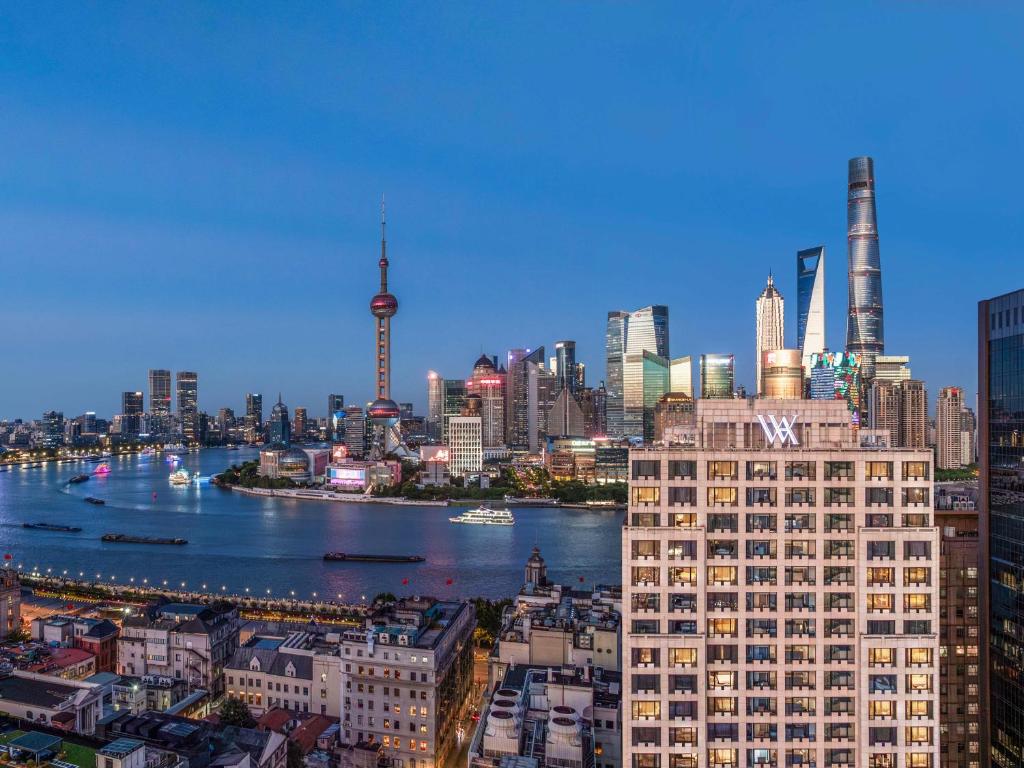
Waldorf Astoria Shanghai occupies a riverfront site slightly removed from the Bund’s densest pedestrian flows. The hotel combines a historic wing with a modern tower, offering two distinct spatial experiences.

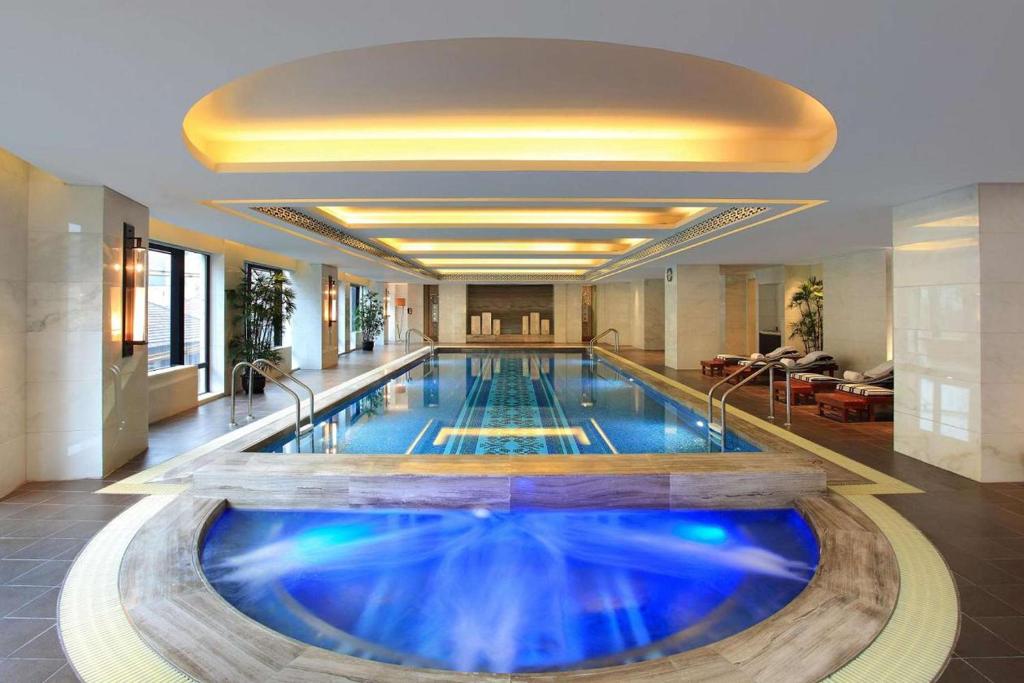
Rooms in the newer section are expansive and quiet, designed with wide corridors, large bathrooms, and generous buffer zones between functional areas. Windows frame the river rather than the street, reducing visual noise. The hotel’s internal layout allows guests to move between dining, spa, and room floors without repeatedly re-engaging with the city outside.
Booking your stay on Booking.com
Booking your stay on Hotels.com
Broadway Mansions Hotel

Rooms at Broadway Mansions Hotel are large and structured, with deep window frames and thick walls that mute external sound, reinforcing a sense of separation from Shanghai’s intensity. Interiors feel formal and inward-looking, creating a calm environment that encourages guests to retreat fully indoors after time spent along the riverfront.
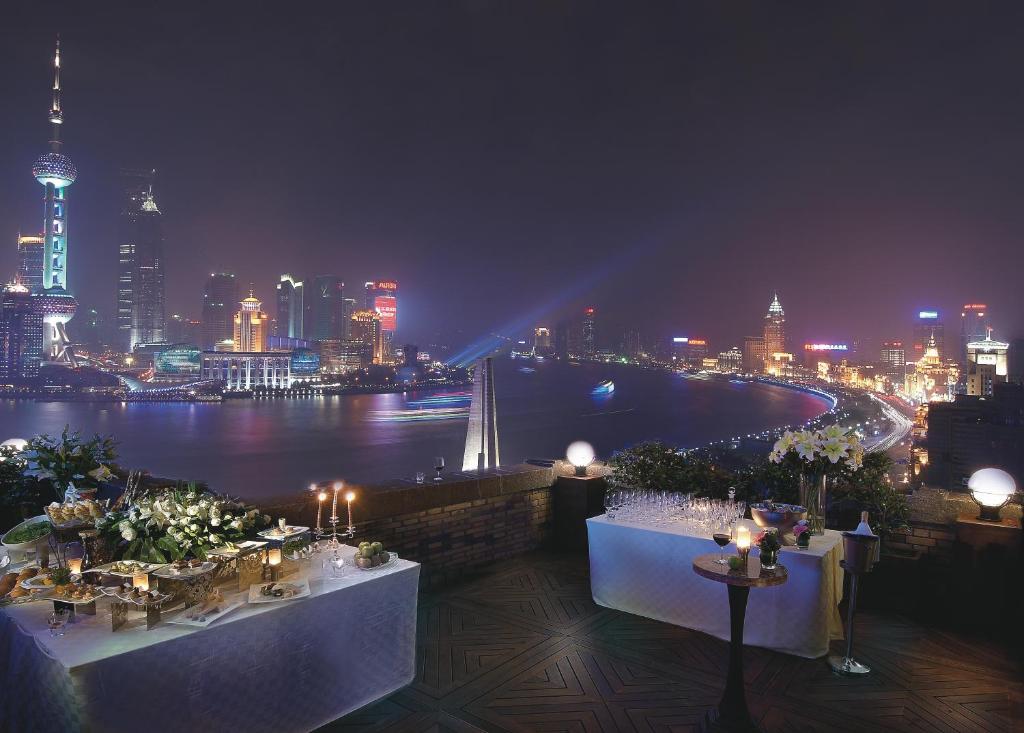
The building’s Art Deco form emphasises solidity and containment, while the hotel’s scale and position at the northern curve of the Bund create a sense of separation, with the river bending and traffic thinning slightly.
Booking your stay on Booking.com
Booking your stay on Hotels.com
J Hotel Shanghai Tower
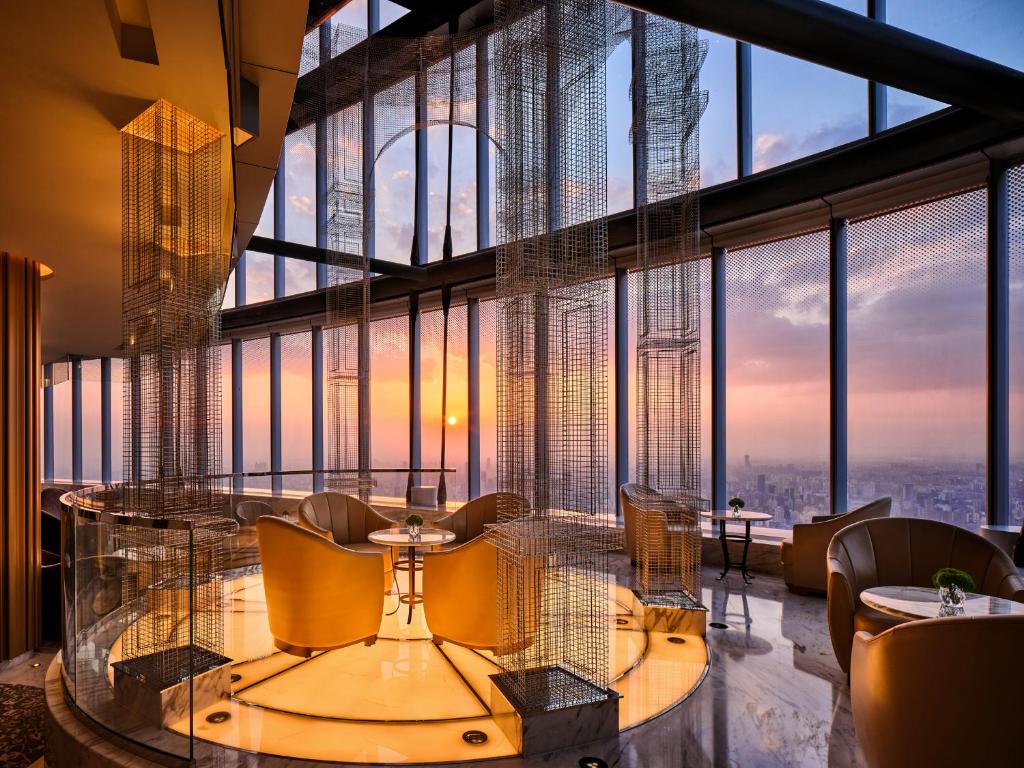
J Hotel Shanghai Tower occupies the upper levels of China’s tallest building, turning vertical distance into its primary form of containment. Entry involves multiple transitions, such as security, elevators, and height, that remove guests from street-level activity long before reaching their rooms.
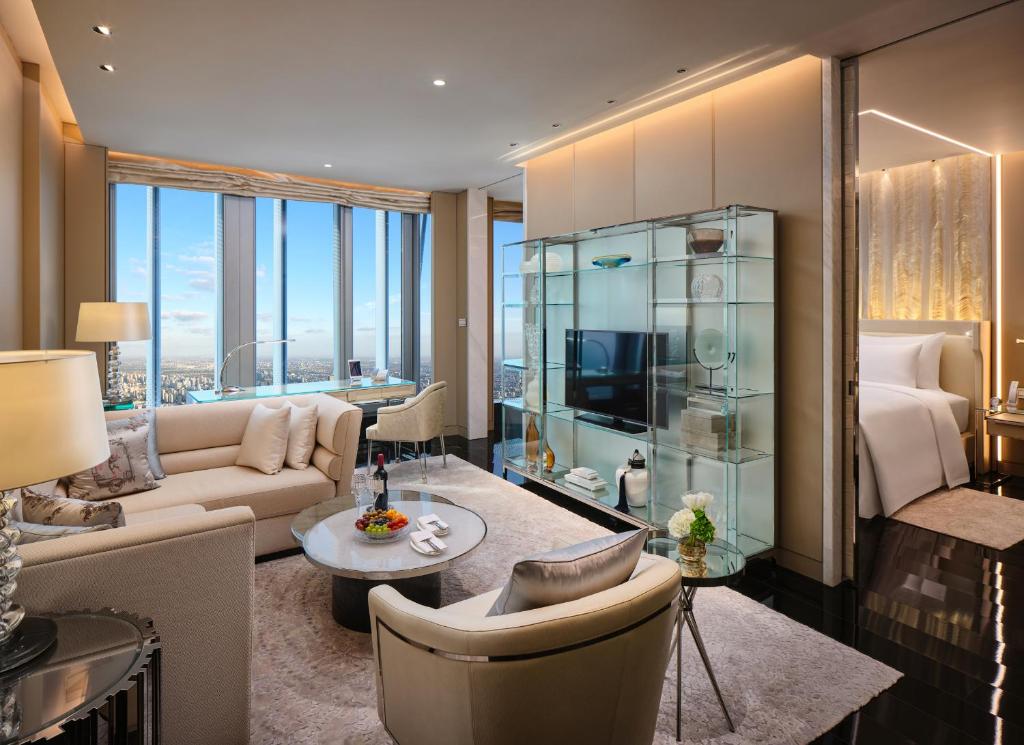
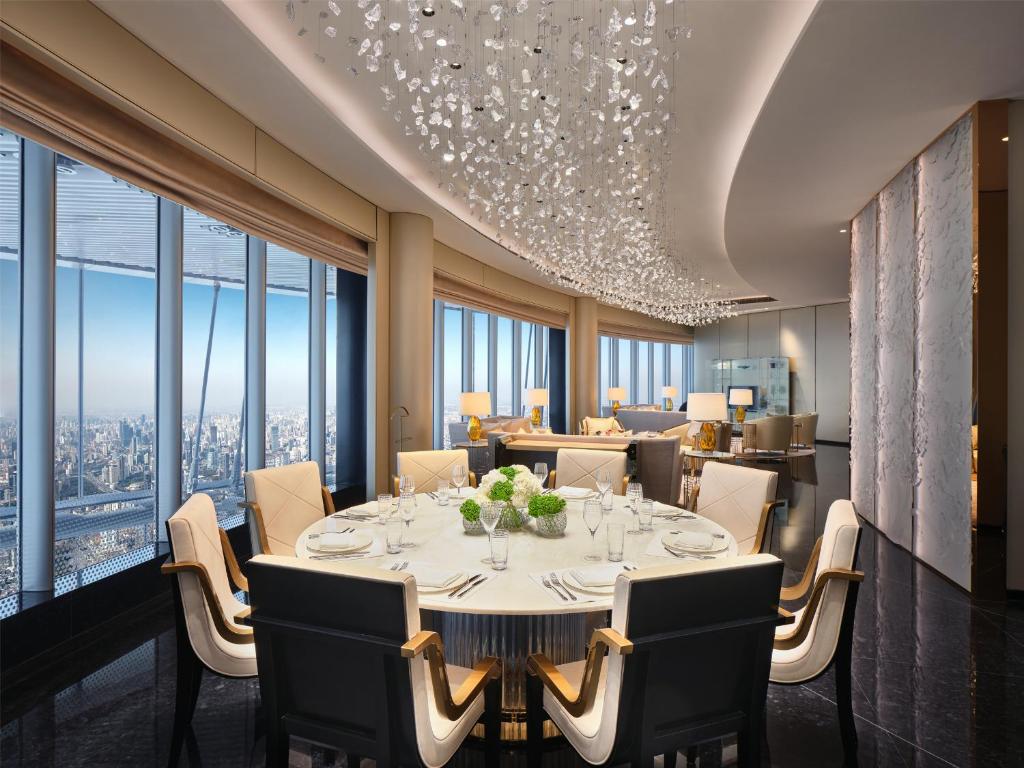
Rooms are expansive and controlled, with panoramic views that feel observational rather than immersive. Layouts prioritise clarity, with strong separation between sleeping, bathing, and living zones. The height itself functions as insulation, making the city feel distant and abstract rather than immediate.
Booking your stay on Booking.com
Booking your stay on Hotels.com
The Ritz-Carlton Shanghai, Pudong
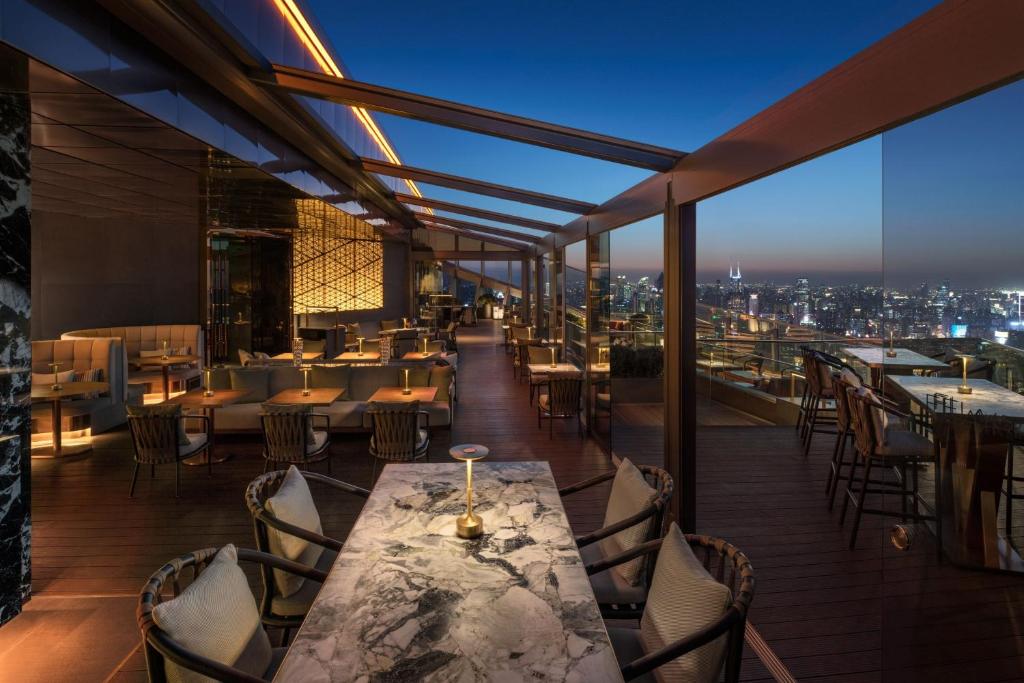
The Ritz-Carlton Shanghai, Pudong allows guests to remain within the building for much of the day, with dining, lounge spaces, and wellness services that support extended stays. Rooms are spacious and orderly, featuring classic layouts that emphasise symmetry and proportion. Bathrooms are large, clearly zoned, and sound insulation enhances privacy and comfort.
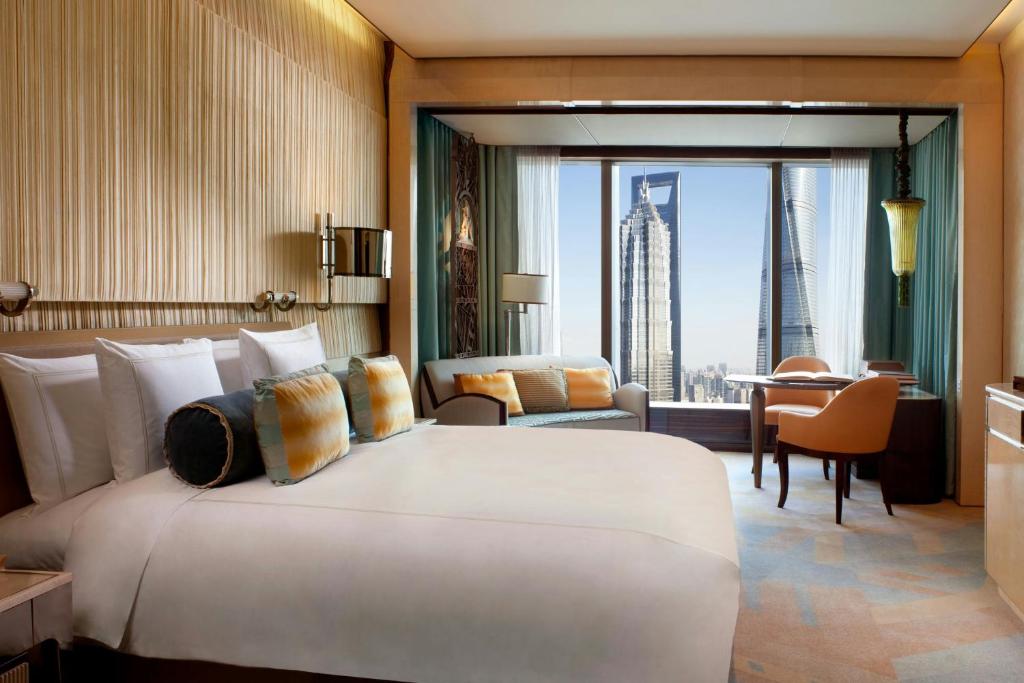
Arrival routes are formal and contained, guiding guests upward and inward. The hotel’s elevation and interior scale manage the surrounding density, offering a sense of separation from the commercial district of Lujiazui.

Booking your stay on Booking.com
Booking your stay on Hotels.com
Pudong Shangri-La
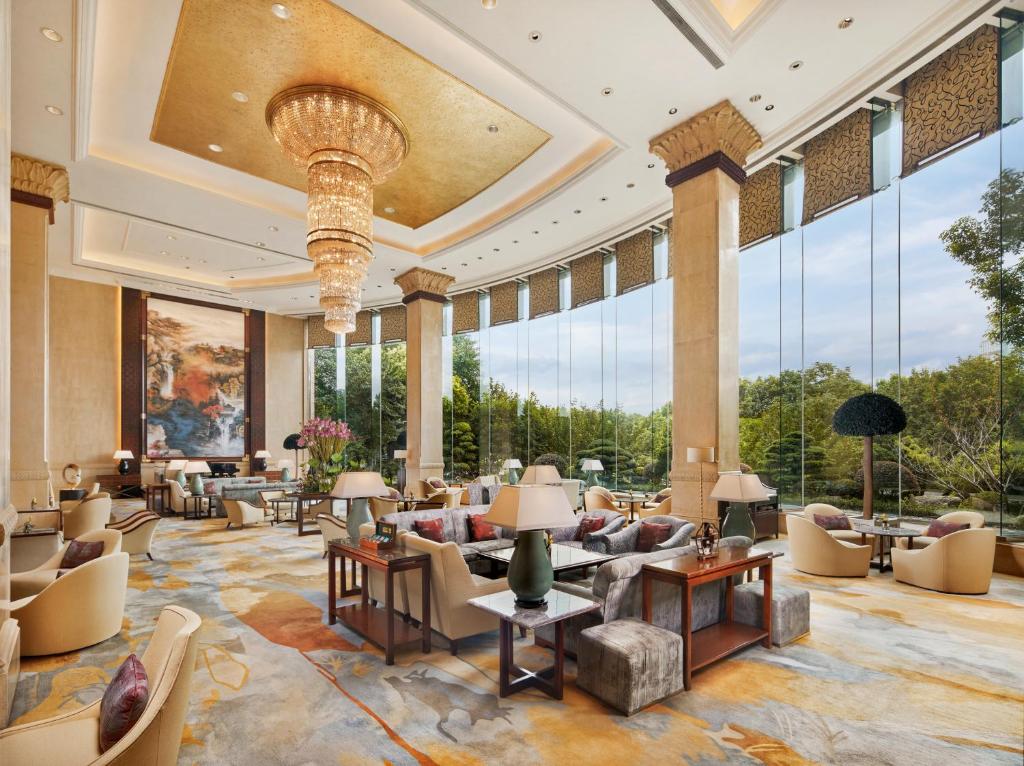
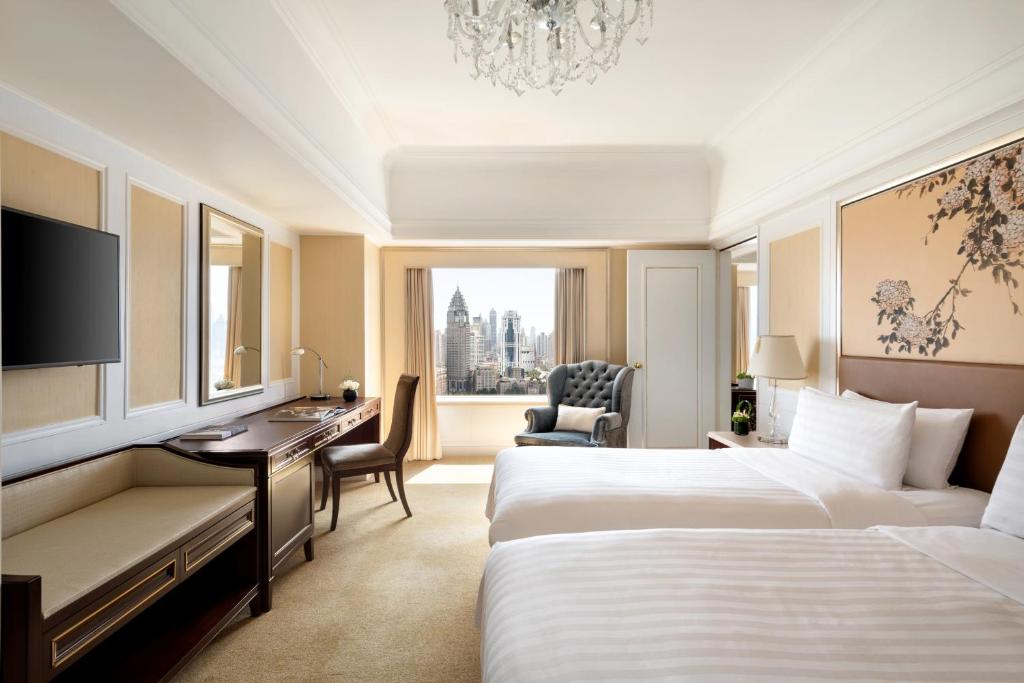
Pudong Shangri-La occupies a broad riverside site directly opposite the Bund. The hotel functions as a stable base within one of Shanghai’s busiest districts. Its footprint allows for wide circulation spaces and layered public areas that absorb guest volume without feeling compressed. Rooms are comfortable and consistent, with layouts designed for predictability rather than novelty. Windows frame the skyline at a distance, and interiors prioritise quiet over visual drama.
Booking your stay on Booking.com
Booking your stay on Hotels.com
Moller Villa Hotel
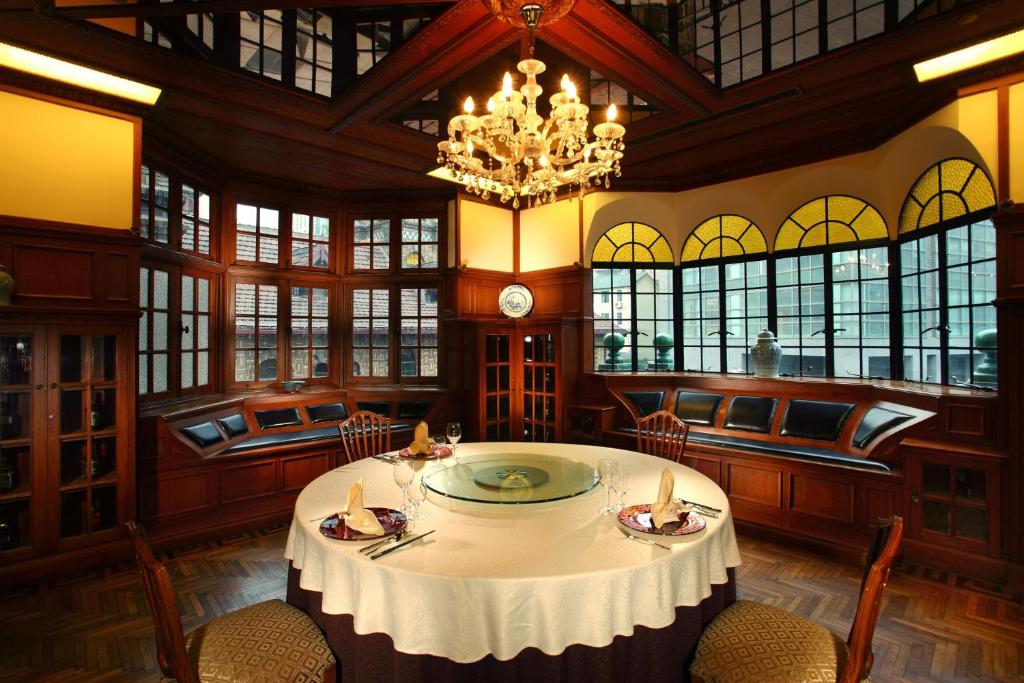
Moller Villa Hotel sits within a historic residential neighbourhood, offering a sharp contrast to Shanghai’s commercial scale. The building’s eccentric architecture and low-rise form create a sense of enclosure rarely found in the city.
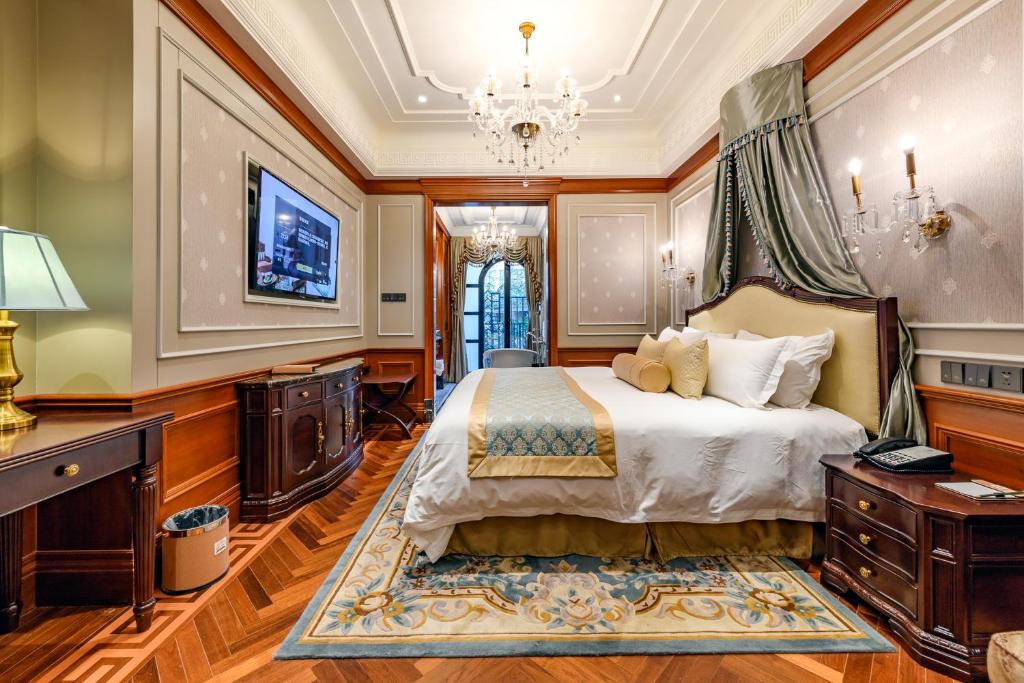
The experience feels inward and self-contained, suited to travellers seeking relief from Shanghai’s vastness. Rooms vary in layout and size but generally feel intimate and insulated. Thick walls, small corridors, and irregular geometry limit exposure to the surrounding streets.
Booking your stay on Booking.com
Booking your stay on Hotels.com
The Langham Shanghai Xintiandi
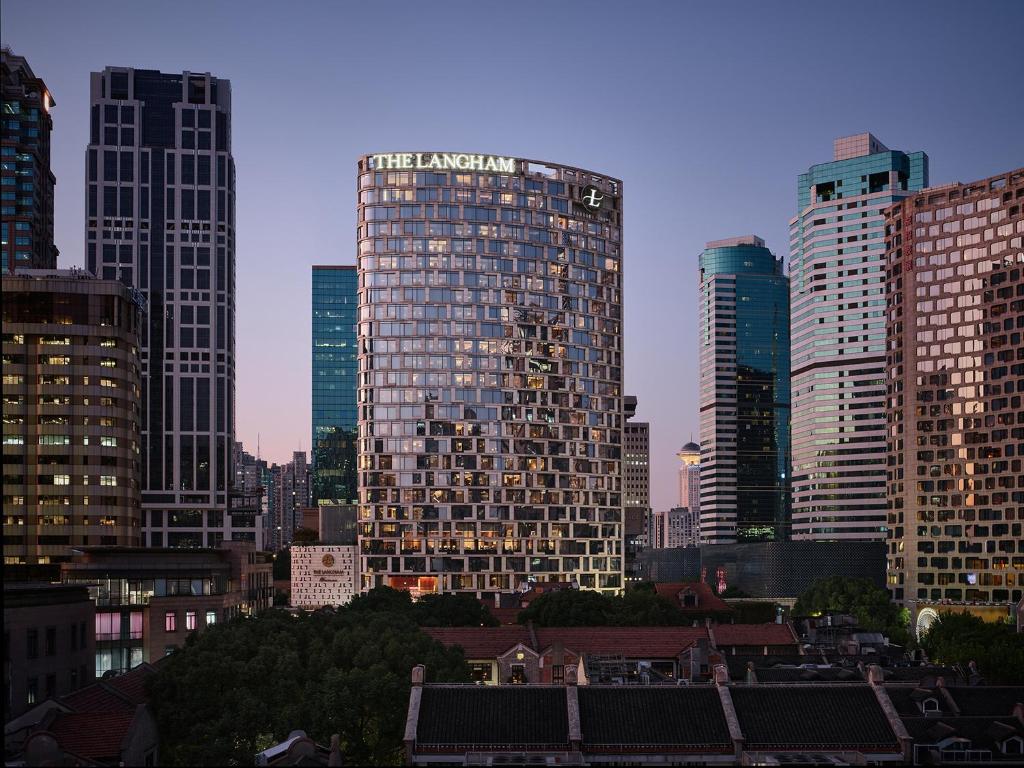
The Langham Shanghai Xintiandi allows guests to step in and out of Xintiandi’s energy without carrying it back to their rooms. The hotel’s internal organisation keeps the atmosphere controlled, with a clearly segmented layout that provides a sense of separation. Rooms are modern and well-insulated, with practical proportions that support everyday use.

Bathrooms are compact but efficient, and lighting remains soft throughout, reinforcing the hotel’s calm, inward-focused tone. Situated adjacent to one of the city’s busiest pedestrian and dining zones, the hotel offers a retreat-like experience despite its central location.
Booking your stay on Booking.com
Booking your stay on Hotels.com
Oriental Riverside Bund View Hotel
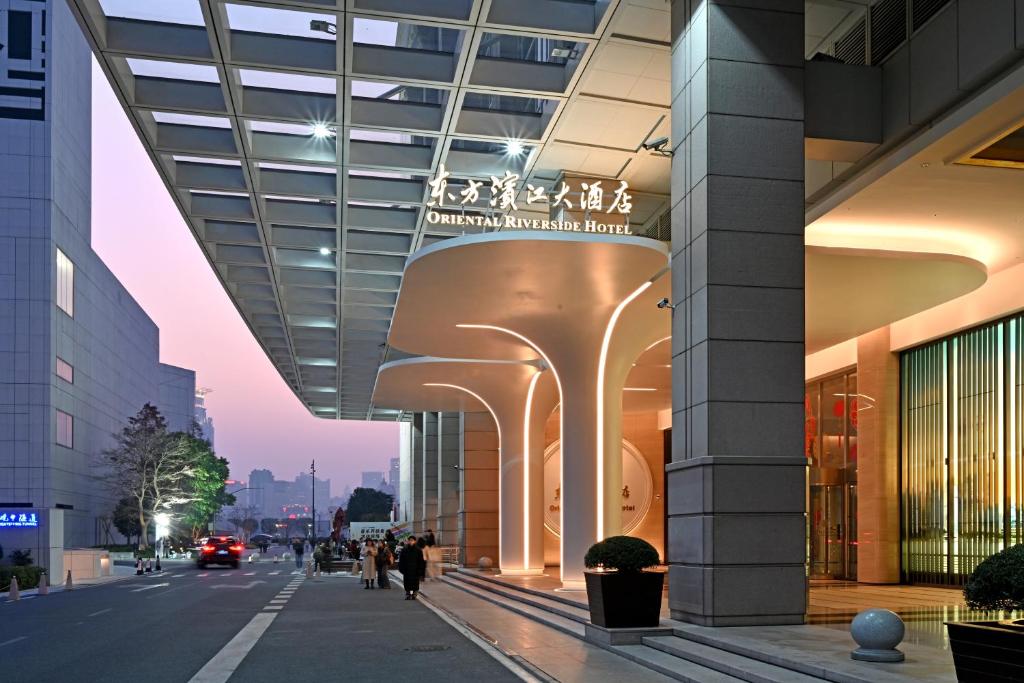
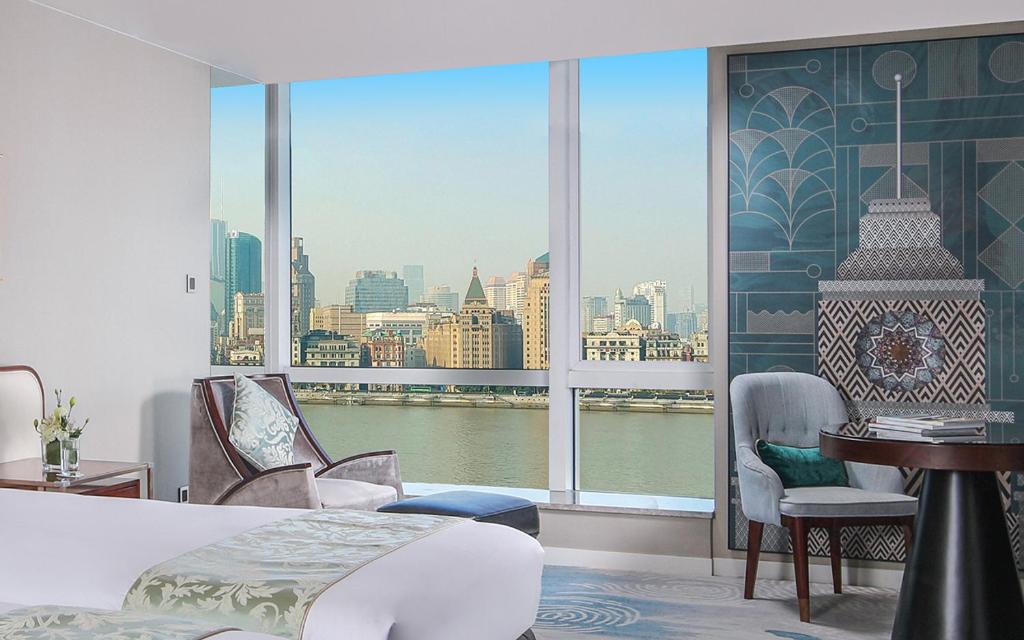
Oriental Riverside Bund View Hotel occupies a large structure directly facing the river. Its scale mirrors the openness of the Bund while maintaining strong internal compartmentalisation. Rooms are spacious and quiet, with layouts that separate sleeping and seating zones effectively. Views are expansive, but interiors remain grounded and neutral. The hotel manages Shanghai’s vastness by offering visual access without sensory overload.
Booking your stay on Booking.com
Booking your stay on Hotels.com