



The Caribbean is a vast tropical paradise, home to over 7,000 islands, reefs, and cays that stretch across a sun-soaked expanse between North and South America. While Jamaica, the Bahamas, and Puerto Rico often dominate travel headlines, this region offers countless hidden gems, remote coves, and culturally rich islands waiting to be explored.
Whether you’re a geography enthusiast fascinated by Caribbean island names or a traveler planning your next Caribbean vacation with kids, the full list of Caribbean islands below and accompanying map of the Caribbean will help you decode every island, from sovereign nations to overseas territories, so you can plan with clarity and confidence.
Where is the Caribbean? A Quick Map Overview
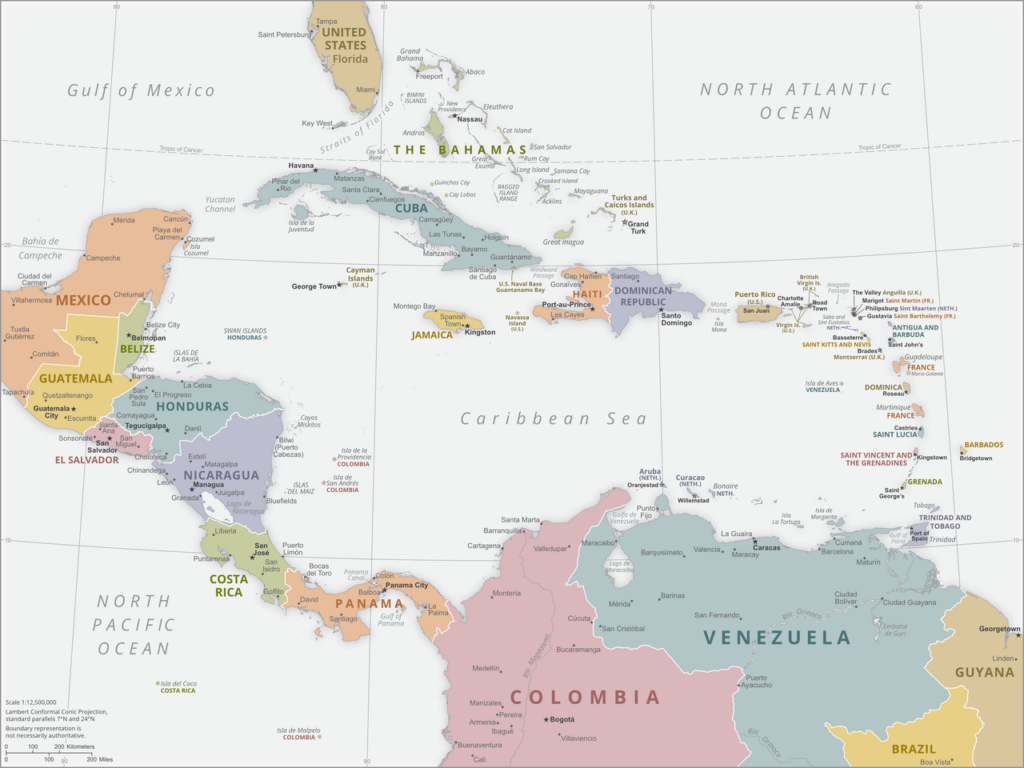
Image: “Central_America_and_the_Caribbean_Political_Map_CIA_World_Factbook.png” by Central Intelligence Agency (CIA), used under Central Intelligence Agency (CIA), via Wikipedia Commons. Link to image
The Caribbean region lies southeast of the Gulf of Mexico and north of South America. It’s composed of thousands of islands, islets, reefs, and cays, many grouped into island nations, dependencies, or overseas territories. Travelers often divide the region into geographic clusters to better understand its layout, climate, and cultural variations.
The Lucayan Archipelago

Image: “Bahamas_-_Caribbean.svg” by Hogweard, used under Creative Commons Attribution-Share Alike 3.0 Unported license, via Wikipedia Commons. Link to image
This northernmost group of islands lies just south of Florida and includes the Bahamas and Turks & Caicos. The islands are part of the Atlantic Ocean but are frequently associated with the Caribbean for cultural and travel purposes. Shallow seas, calm waters, and well-protected beaches make these islands ideal for family activities, snorkeling, and safe swimming. Nassau, the capital of the Bahamas, is a hub for ferries to smaller cays, while Providenciales in Turks & Caicos offers world-class resorts and kid-friendly beaches.
The Greater Antilles
The Greater Antilles form the backbone of the Caribbean, consisting of the largest and most culturally significant islands:
- Cuba: Famous for its colonial architecture in Havana, the lush Viñales Valley, and vibrant music scene.
- Hispaniola: Shared by Haiti and the Dominican Republic, featuring a mix of mountainous terrain, historical landmarks, and rich cultural heritage.
- Jamaica: Known for reggae music, Blue Mountains coffee, Dunn’s River Falls, and family-friendly resorts.
- Puerto Rico: A U.S. territory with historical forts, the El Yunque rainforest, and bioluminescent bays.
- Cayman Islands: Renowned for Seven Mile Beach, Stingray City, and exceptionally safe tourism infrastructure.
These islands are ideal for travelers seeking both history and adventure, offering extensive accommodations, cultural activities, and reliable transportation.

Image: “Antilles_map,_color-coded.svg” by FreeMediaKid!, used under Creative Commons CC0 1.0 Universal Public Domain Dedication, via Wikipedia Commons. Link to image
The Lesser Antilles
The Lesser Antilles form a curved chain stretching from the Virgin Islands down to Trinidad and Tobago, divided into two main subregions:
- Leeward Islands (Northern Lesser Antilles): Antigua and Barbuda, Saint Kitts and Nevis, Anguilla, Montserrat, Guadeloupe, and the Dutch Caribbean territories (Aruba, Bonaire, Curaçao). These islands are often smaller, quieter, and well-suited for safe, family-focused exploration.
- Windward Islands (Southern Lesser Antilles): Saint Lucia, Saint Vincent and the Grenadines, Grenada, Dominica, Martinique, and Barbados. Known for lush rainforests, active volcanoes, and protected marine reserves, these islands appeal to families and adventure travelers seeking eco-tourism and snorkeling opportunities.
Each island offers a distinct combination of culture, natural beauty, and historical significance, allowing visitors to choose destinations that match their interests, whether relaxing on calm beaches, exploring mountainous terrain, or engaging in water-based adventures. Many smaller territories and dependencies provide safe, secure environments for families, with high-quality resorts, educational excursions, and protected beaches.
The Complete A-Z List of Caribbean Island Names
| Letter | Island Name | Status / Affiliation | Etymology & Fun Fact (How it got its name) |
| A | Anguilla | UK Overseas Territory | Derived from the word for “eel” in European languages (French anguille, Spanish anguila) because of its long, thin shape. |
| A | Antigua | Independent (Antigua & Barbuda) | Named by Christopher Columbus in 1493 after the Church of Santa María La Antigua in Seville, Spain. |
| A | Aruba | Constituent Country (Netherlands) | Likely derived from the indigenous Caquetio words Ora Oubao, meaning “Shell Island.” |
| B | Bahamas | Independent | Comes from the Spanish phrase Baja Mar, meaning “shallow sea,” describing the clear, shallow waters surrounding the islands. |
| B | Barbados | Independent | Portuguese explorers named it Os Barbados (“the bearded ones”) after the island’s abundant fig trees with long, beard-like aerial roots. |
| B | Bonaire | Special Municipality (Netherlands) | Thought to originate from the Caquetio word Bonay, meaning “low country.” |
| B | British Virgin Islands (BVI) | UK Overseas Territory | Columbus named the archipelago after Saint Ursula and her legendary 11,000 virgin followers. |
| C | Cayman Islands | UK Overseas Territory | Derived from the Carib word Caimanas, which means “marine crocodiles,” which used to inhabit the islands. |
| C | Cuba | Independent | Comes from the indigenous Taíno word Cubao, translating to “where fertile land is abundant.” |
| C | Curaçao | Constituent Country (Netherlands) | Possibly derived from the Portuguese word coração (heart), as it was a central trade hub, or from the indigenous autonym of the local people. |
| D | Dominica | Independent | Columbus spotted the island on a Sunday, so he named it using the Latin word for Sunday: Dies Dominica. |
| D | Dominican Republic | Independent | Shares the island of Hispaniola. Named after its capital, Santo Domingo (Saint Dominic), the patron saint of astronomers. |
| E | Eleuthera | Part of The Bahamas | Derived from the Greek word eleutheros, meaning “free.” It was named by Puritan pilgrims seeking religious freedom. |
| G | Grenada | Independent | Named by Spanish sailors who thought the lush green hills resembled the region of Andalusia around the city of Granada in Spain. |
| G | Guadeloupe | French Overseas Region | Columbus named it after the Spanish monastery of Santa María de Guadalupe in Extremadura. |
| H | Haiti | Independent | Derived from the indigenous Taíno name Ayiti, meaning “land of high mountains.” |
| H | Hispaniola | Shared Island (Haiti & DR) | Named La Española (“The Spanish Island”) by Columbus. It is the second-largest island in the Caribbean. |
| J | Jamaica | Independent | Comes from the Taíno word Xaymaca, beautifully translating to “Land of Wood and Water.” |
| J | Jost Van Dyke | Part of the BVI (UK) | Uniquely named after an early Dutch settler and reputed privateer (pirate) who used its harbors as a hideout. |
| M | Martinique | French Overseas Region | Evolved from the indigenous Carib name Madinina, which means “Island of Flowers.” |
| M | Montserrat | UK Overseas Territory | Named by Columbus in 1493 after the jagged Montserrat mountain located near Barcelona, Spain. |
| N | Nevis | Independent (St. Kitts & Nevis) | Columbus called it Nuestra Señora de las Nieves (Our Lady of the Snows) because the cloud-capped peak looked like it was covered in snow. |
| P | Puerto Rico | US Territory | Spanish for “Rich Port.” The island’s original Taíno name is Borikén, meaning “Land of the Valiant Lord.” |
| P | Providenciales | Part of Turks & Caicos (UK) | Often called “Provo,” its name is derived from the word “Providence” (divine guidance). |
| R | Roatán | Part of Honduras | While politically Central American, it’s culturally Caribbean. The name likely stems from Mesoamerican origins meaning “place of women.” |
| S | Saba | Special Municipality (Netherlands) | Believed to be derived from the indigenous Arawak word siba, which simply means “rock.” |
| S | Saint Barthélemy (St. Barts) | French Collectivity | Columbus named the island after his younger brother, Bartolomeo (Bartholomew). |
| S | Saint Kitts | Independent (St. Kitts & Nevis) | An abbreviation of Saint Christopher, the patron saint of travelers, named by Columbus. |
| S | Saint Lucia | Independent | Named after Saint Lucy of Syracuse. It is the only country in the world named after a historical human woman. |
| S | Saint Martin / Sint Maarten | Shared (France / Netherlands) | Named by Columbus in 1493 on the feast day of Saint Martin of Tours. |
| S | Saint Vincent | Independent (St. Vincent & Grenadines) | Discovered by Columbus on January 22, 1498, the feast day of Saint Vincent of Saragossa. |
| T | Tobago | Independent (Trinidad & Tobago) | Believed to be named after the indigenous word tavaco, a pipe used by locals to smoke tobacco, due to the island’s shape. |
| T | Trinidad | Independent (Trinidad & Tobago) | Spanish for “Trinity.” Columbus named it after spotting three prominent mountain peaks from his ship. |
| T | Turks and Caicos | UK Overseas Territory | “Turks” comes from the indigenous Turk’s-cap cactus (which looks like a Turkish fez hat). “Caicos” is from the Lucayan term caya hico (string of islands). |
| U | US Virgin Islands (USVI) | US Territory | Like the BVI, they were named by Columbus after Saint Ursula. Purchased by the US from Denmark in 1917. |
| V | Vieques | Part of Puerto Rico (US) | Derived from the indigenous Taíno word Bieke, meaning “small island.” |
How Did the Caribbean Islands Get Their Names?

The story of Caribbean island names reflects a fascinating tapestry of Indigenous heritage, European colonization, and cultural adaptation over centuries. Each island’s name carries traces of the people, languages, and historical events that shaped it, offering travelers a window into the region’s rich past.
Taíno & Arawak Roots
Many islands retain their original Indigenous names, preserving the legacy of the Taíno and Arawak peoples who inhabited the region long before European arrival. For example, Jamaica derives from Xaymaca, which translates to “Land of Wood and Water,” highlighting the island’s lush forests and river networks. Haiti’s original name, Ayiti, means “land of high mountains,” accurately reflecting its rugged terrain. Other islands, such as Aruba and Bonaire, also preserve Indigenous terms that describe geographic features or natural resources.
Columbus’s Naming Spree
During his voyages, Christopher Columbus and subsequent explorers often renamed islands to honor saints, religious figures, or European royalty. Saint Lucia, discovered on December 13, was named after Saint Lucy of Syracuse, while Saint Vincent was named for Saint Vincent of Saragossa. These names were meant to assert colonial influence and religious presence, leaving a legacy of European nomenclature across the Caribbean.
Colonial Tug-of-War
Over the following centuries, competing claims by England, France, Spain, and the Netherlands led to a mix of European and Indigenous names coexisting in the region. Some islands changed names multiple times, reflecting shifts in control, language, and culture. For example, Saint Martin is split between French and Dutch territories, resulting in dual official names: Saint-Martin and Sint Maarten. This blending of cultures and naming traditions created a complex and layered map of the Caribbean, preserving stories of conquest, trade, and adaptation for modern travelers to explore.
Exploring the Regions
The ABC Islands Map (Aruba, Bonaire, Curaçao)

The map highlights the ABC islands (Aruba, Bonaire, Curaçao) in red. Thanks to their location at the southernmost edge of the Caribbean Sea, just off the coast of South America, this chain of islands enjoys a remarkable advantage: they are entirely outside the hurricane belt (Hurricane-free zone).
The ABC Islands: Aruba, Bonaire, and Curaçao, are located off the northern coast of Venezuela and lie entirely outside the Atlantic hurricane belt, making them safe for travel year-round. Each island is a Dutch territory, offering a unique blend of European infrastructure, tropical landscapes, and rich local culture.
Aruba is famous for its soft white-sand beaches and desert-like terrain, including iconic Fofoti trees along the shoreline. Bonaire is a top destination for snorkeling and diving, with calm, protected reefs and family-friendly shallow waters. Curaçao features colorful Dutch colonial architecture in Willemstad, tranquil beaches, and excellent opportunities for water sports. Together, these islands showcase the highlights of the Caribbean islands list, offering safety, accessibility, and natural beauty for travelers of all types.
The Virgin Islands Map (USVI and BVI)

Image: “SVG_Map_of_Virgin_Islands.svg” by かぬま, used under Creative Commons Attribution-Share Alike 3.0 Unported license, via Wikipedia Commons. Link to image
The U.S. Virgin Islands (USVI) and British Virgin Islands (BVI) are celebrated for their sailing opportunities and secluded coves. For U.S. citizens, visiting the USVI requires no passport, making it an easy and safe destination. The BVI, on the other hand, offers quieter anchorages and secure sailing waters, with well-regulated marinas and low onshore crime. Both island groups provide a mix of adventure and relaxation, from water sports and snorkeling to exploring local culture and hiking trails.
Which Caribbean Island Should You Visit Next?

Selecting an island is about more than memorizing names, you should choose a destination that aligns with your travel style, family needs, and safety considerations. This Caribbean islands list can help you navigate the options:
- For absolute safety and peace of mind: Explore [The 15 Safest Caribbean Spots for US Travelers], featuring islands with low crime, stable infrastructure, and calm waters.
- For budget-conscious travelers: Check [9 Cheapest Caribbean Islands to Visit: Stop Overpaying] for beautiful destinations that balance affordability with activities.
- For families traveling with children: Refer to [10 Best Caribbean Islands for Families (Where Parents Actually Relax in 2026)], highlighting kid-friendly beaches, resorts, and activities.
By combining maps with travel style considerations, this guide helps you not just identify islands but also plan a trip that aligns with your preferences, safety requirements, and family needs.


