


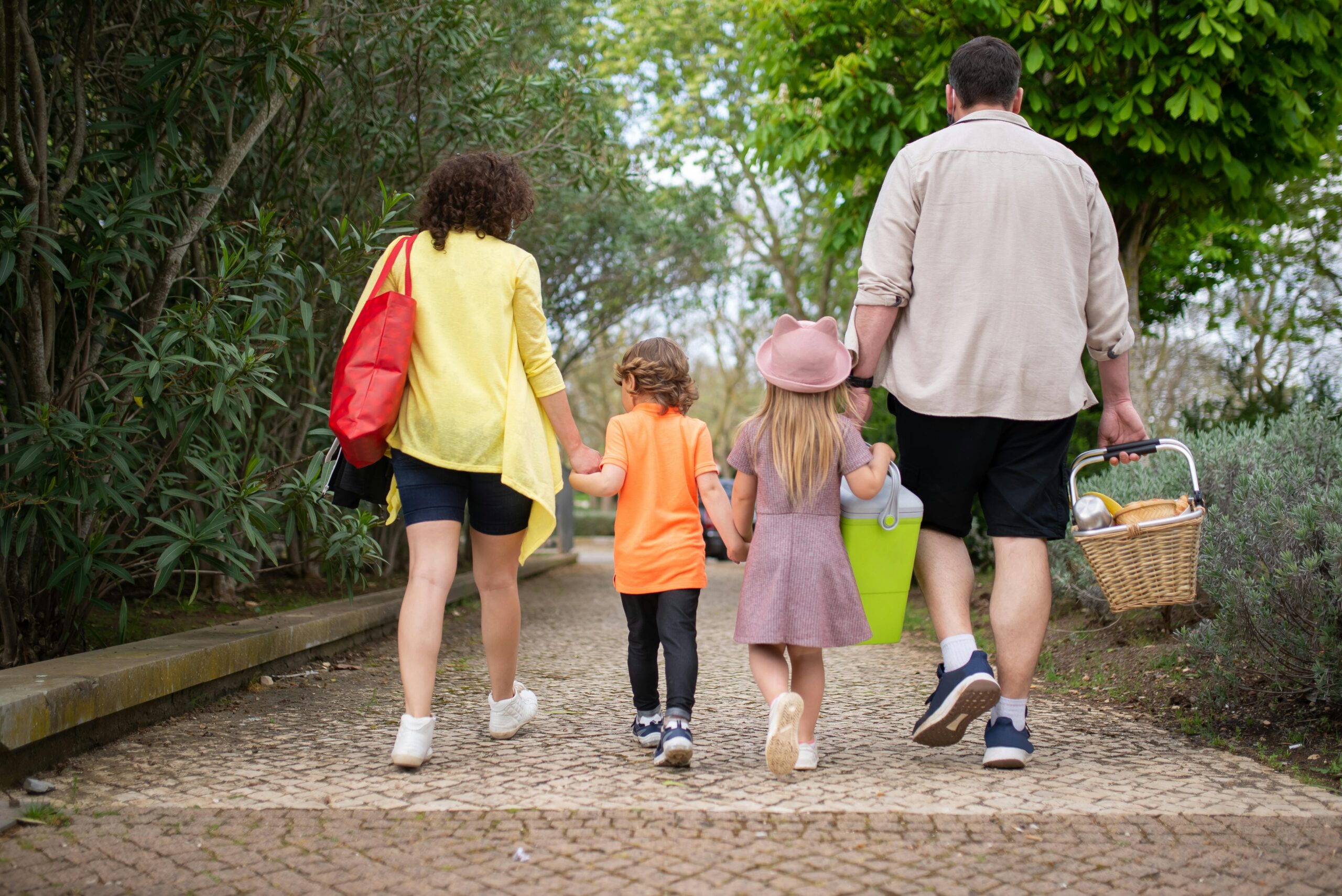
A relaxed family of four walking down a sunny path with a picnic basket, enjoying fun vacations for kids thanks to smart family travel tips
Traveling with children often feels less like a vacation and more like a test of endurance. From managing cranky toddlers to juggling long airport waits, parents can easily become overwhelmed. In 2026, these 21 family travel tips provide actionable, real-world strategies to maintain calm, save time, and create truly fun vacations for kids without the stress.
This guide is designed for busy parents who want decision-first advice: clear, concise, and immediately applicable.
Phase 1 – Planning & Packing
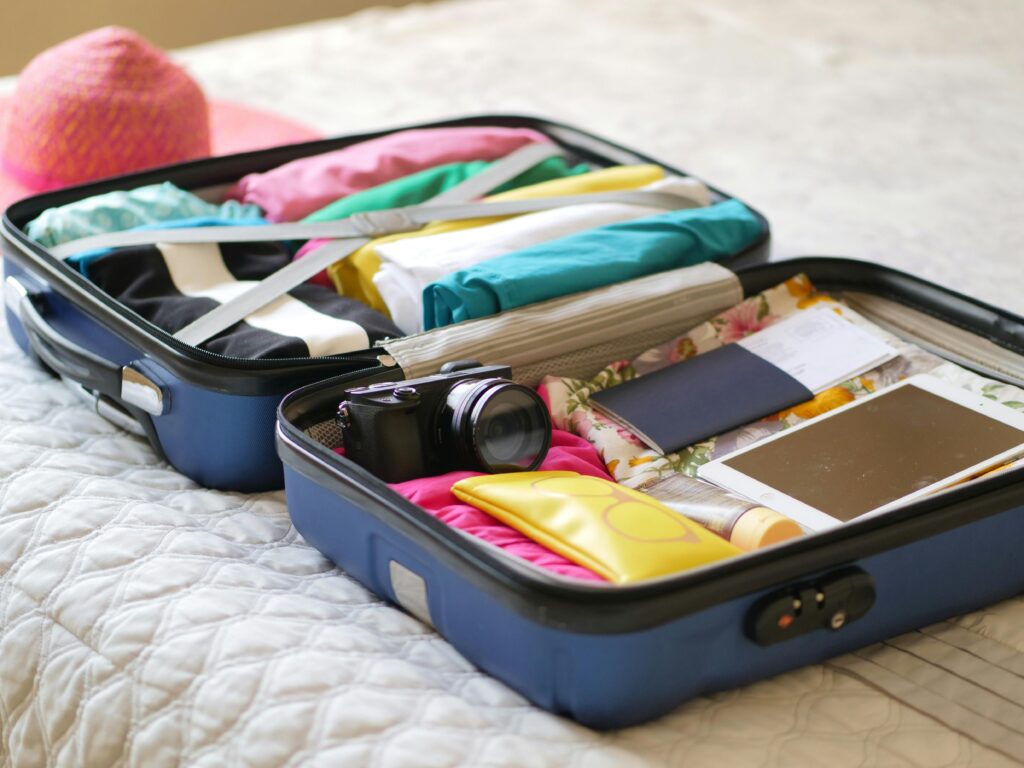
A neatly organized suitcase using the color-coded outfit rolling method, showcasing an efficient packing list for toddlers
1. The “Outfit Rolling” Method
Instead of folding individual items, roll each day’s outfit into a compact bundle, such as shirt, pants, underwear, and socks, like a burrito. This ensures kids can pick a complete outfit independently, eliminating morning stress. It also keeps suitcases organized and prevents clothes from getting mixed or wrinkled. For toddlers and preschoolers, labeling each roll with a small sticky note or color-coded sticker can further simplify mornings, so even the youngest can grab their set without assistance.
2. Ship the Bulky Stuff
Large items such as diapers, formula, strollers, or snacks can take up valuable suitcase space. Use grocery delivery services like Instacart or Amazon Fresh to send these essentials directly to the hotel before arrival. This not only saves space but also prevents the stress of making a first-day run to a store while managing tired or fussy children. For example, sending snacks, milk, and baby wipes ensures the family can start exploring immediately upon check-in.
3. The 3-to-1 Rule for Itineraries
Plan three high-energy days: visiting theme parks, hiking trails, or long museum tours, followed by one low-intensity day. On the “reset” day, families can relax at the hotel pool, have a leisurely breakfast, or enjoy a local playground. This rhythm prevents burnout, allows children to recharge, and gives parents a moment to rest while still maintaining structured vacation time.
4. Use Packing Cubes by Person, Not by Item
Assign each family member a color-coded packing cube. This optimizes your packing list for toddlers, keeps individual belongings separate, and allows parents to locate items quickly. For instance, when a toddler spills water at the pool, you can pull the child’s dedicated cube instead of rummaging through a communal suitcase. This system reduces stress and keeps packing organized throughout the trip.
5. Pack a “Day-1 Go-Bag”
Prepare a small backpack with essentials for the first day: a swimsuit, sunscreen, one change of clothes, and basic toiletries. Even if hotel check-in is delayed, children can immediately enjoy a pool or beach without waiting for luggage. This simple step ensures the first day of vacation starts smoothly and prevents frustration for both kids and parents.
Phase 2 – Airport & Transit Survival
![Three kids eating snacks from a plastic container in the car trunk, an essential of the [family travel hacks] to prevent hangry meltdowns during a road trip](https://yourtravelplanning.com/wp-content/uploads/2026/05/food-packing-Family-Travel-Tips-1024x683.jpg)
Three kids eating snacks from a plastic container in the car trunk, an essential of the [family travel hacks] to prevent hangry meltdowns during a road trip
6. The “Dollar Tree” Hourly Surprise
Purchase small, inexpensive toys or trinkets for each child. During long flights or car rides, reward them every two hours with a surprise item. This gamifies travel, keeps attention focused, and reduces repeated “Are we there yet?” questions. Rotate items so the novelty remains, and make sure each prize is easy to store in your carry-on or seat pocket.
7. Always Pack a “Carpet Picnic”
Bring a lightweight blanket and a box of snacks. In case of airport delays or long layovers, you can spread out a mini picnic in a quiet corner. This approach gives children a safe space to eat and play while keeping energy levels stable. It also saves money by avoiding overpriced airport meals and reduces stress in crowded terminals.
8. Download, Don’t Stream
Before departure, download movies, TV shows, audiobooks, and offline maps to your devices. This ensures entertainment is reliable regardless of Wi-Fi availability on planes, trains, or buses. Include interactive story apps or educational content to keep children engaged while adults handle check-ins or transit logistics.
9. The Ziploc Snack Dispenser
Divide snacks into small, compartmentalized containers or Ziploc bags. Kids can self-serve without spilling crumbs across the car seat or plane. This family travel hack keeps vehicles and luggage tidy while maintaining a sense of independence for children. Rotate snack types to maintain interest and include both healthy and indulgent options.
10. Wear Slip-On Shoes Only
For airport and transit convenience, ensure every child wears slip-on shoes. Crocs or velcro sneakers allow kids to pass through security quickly, reducing the stress of removing shoes or laces. This simple choice saves minutes at TSA checkpoints and keeps children comfortable during long walks to gates or baggage claims.
11. Board Last, Not First
While airlines often encourage families to board first, waiting until the final boarding group allows children to burn energy at the gate. Running, playing with small toys, or interacting with other children keeps them calm once on board, making the flight easier for parents and fellow passengers.
Phase 3 – Destination Hacks

A parent relaxing on the beach while kids play safely in the sand, demonstrating a slow-paced approach for stress-free vacations

A mother and her toddler laughing while playing on a tire swing by the beach at sunset, capturing the joy of stress-free family vacations
12. Book Hotels, Not Just Rooms
Selecting hotels with free breakfast and a pool adds convenience and built-in entertainment. Children can enjoy morning meals and a swim without extra coordination, giving parents breathing room to plan the day. Pools double as a safe space for kids to burn off energy while parents relax. The catch: popular hotels fill quickly during peak seasons, so booking early ensures availability and stress-free arrival.
13. The “Kids Budget” Trick
Give older children a small, preloaded envelope of cash for souvenirs or small treats. This approach teaches financial responsibility and reduces negotiation conflicts at gift shops. Kids enjoy the autonomy of managing their own purchases, and parents gain peace of mind knowing spending is controlled. The minor consideration is that younger children may still need guidance, but the strategy encourages independence gradually.
14. Start Early, Crash Early
Arriving at attractions right when they open maximizes access before crowds arrive. Playing until early afternoon and returning to the hotel for a nap ensures toddlers maintain sleep schedules and older kids remain energized. This technique reduces exposure to intense sun or peak crowds while keeping the day productive and fun. The key is planning meals and breaks around these early excursions to maintain rhythm.
15. The “1-Activity-Per-Day” Rule
Focusing on a single major activity per day allows families to explore at a relaxed pace. The remaining time can be spent on impromptu stops, ice cream breaks, or local parks. Children benefit from a predictable, stress-free schedule, and parents avoid the overwhelm of cramming too much into a single day. Flexibility is essential; allowing spontaneous detours ensures enjoyment without pressure.
16. Rotate the “Parent On Duty”
Assign supervision shifts between parents, one handles morning activities while the other enjoys a break. This rotation ensures both adults have moments to recharge, whether it’s coffee, reading, or a short spa visit, improving overall energy and reducing tension. Minor planning is required to coordinate shifts, but the benefits in maintaining a calm family dynamic are significant.
17. Locate the Nearest Playground
Upon arrival at a destination, find a nearby playground or park for children to expend energy safely. These short bursts of play prevent restlessness during long restaurant waits or museum visits. Incorporating playground stops into itineraries is cost-effective and keeps children engaged without the stress of structured entertainment.
Phase 4 – Meltdown Management

A mother comforting her pouting child with a lollipop, a genius family travel hack to manage hangry meltdowns during a trip

A mother comforting her tired toddler, illustrating the ‘validate, don’t fix’ approach to managing emotions while traveling with kids
18. The “Hangry” First-Aid Kit
Carry small, healthy snacks such as sugar-free lollipops, crackers, or fruit pouches to manage hunger-induced tantrums instantly. Quick access to snacks reduces frustration and stabilizes moods during long flights, road trips, or museum visits. Parents should refresh the kit daily to maintain its effectiveness throughout the vacation.
19. Let the Kids Lead
Allow older children to make minor decisions, such as navigating to a restaurant or selecting the next activity. This empowerment transforms potential resistance into engagement and builds confidence. While guidance is still necessary, giving children responsibility reduces conflict and increases cooperation.
20. Validate, Don’t Fix
When children express frustration or fatigue, acknowledge their feelings rather than dismiss them. Simple statements like, “I know you’re tired; I’m tired too,” help calm emotions quickly. Recognizing feelings rather than correcting them speeds up resolution and reduces repeated outbursts.
21. Lower Your Expectations
Accept that plans may change, clothes may get dirty, and children may refuse meals. Letting go of perfection allows families to embrace the experience fully, focusing on memories rather than rigid schedules. Parents who release the need for everything to be orderly find vacations more enjoyable and less stressful.
Lead Magnet – The 2026 Ultimate Family Packing List
Even the most meticulously planned family vacation can be derailed by forgotten essentials. To avoid that stress, download the [2026 Family Travel Packing Checklist], a comprehensive guide that ensures you pack everything from phone chargers and sunscreen to fever syrup and spare clothes.
Conclusion & Internal Linking
Following these 21 family travel tips allows parents to travel without exhaustion while children remain engaged and happy. These tips cover planning, transit, on-site management, and meltdown control, creating truly fun vacations for kids in 2026.
For more inspiration, explore [25 Best Places to Travel with Kids in the US] or plan road-based adventures with [11 Best US Family Road Trips]. Families escaping winter chills can also see [Warm Places to Visit in December USA]. By combining careful preparation with practical strategies, parents can finally enjoy stress-free, memorable family travel.
Related Articles
15 Cheap Family Vacations in the US: Trips Under $1,500 (2026)
