
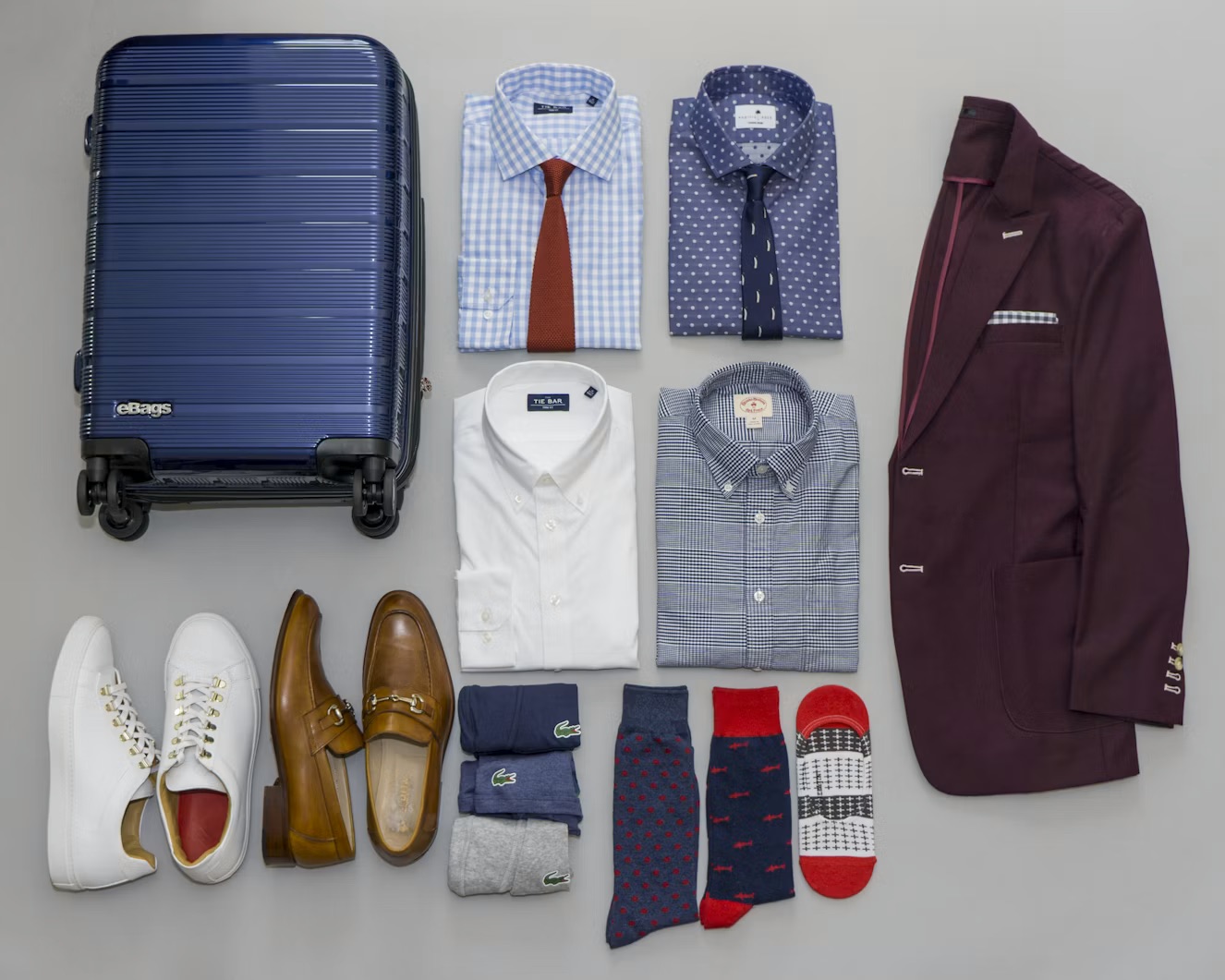
There are few worse feelings than checking into a hotel before a wedding or a big meeting, opening your bag, and finding your good suit crushed flat with a hard crease broken across the lapels. Before any folding technique, though, one rule matters more than all the rest, and getting it wrong is what ruins most suits: never steam a tailored jacket or hang it in a steamy bathroom to relax the wrinkles. Many off-the-rack suits use a glued inner canvas, and hot steam can melt that bond and leave permanent bubbling across the chest and lapels that no pressing will fix. This guide covers how to pack a suit in a suitcase the way tailors themselves do it, working with the jacket’s structure instead of against it. If you are packing for a longer trip beyond the suit, it pairs with a full guide to how to pack a suitcase efficiently.
Should You Use a Garment Bag or a Suitcase?
Getting this right starts with a choice most people skip: the bag itself. The best way to protect a jacket is to keep it out of a suitcase altogether, so a carry-on garment bag wins whenever it is an option, since you can hang it in the aircraft’s onboard closet, if the cabin has one, or lay it flat over the bags in the overhead bin. When a suitcase is unavoidable, the type matters more than most people expect, and the table below lays out the trade-offs.
Bag Selection Guide
Bag type | Best for | Wrinkle risk | Folding method |
|---|---|---|---|
Garment bag (carry-on) | Short trips, a single suit | Low | Hanging, no fold |
Hardshell carry-on | Longer trips needing protection | Low to medium | Inside-out fold |
Soft-sided luggage | Packing light and flexible | Medium to high | Inside-out fold |
Tri-fold garment bag | Frequent business flyers | Low | Single fold |
A hardshell carry-on is worth singling out, because its rigid walls keep the weight of other bags from crushing the suit, which a soft-sided case cannot promise.
How to Fold a Suit for Travel: The Inside-Out Method
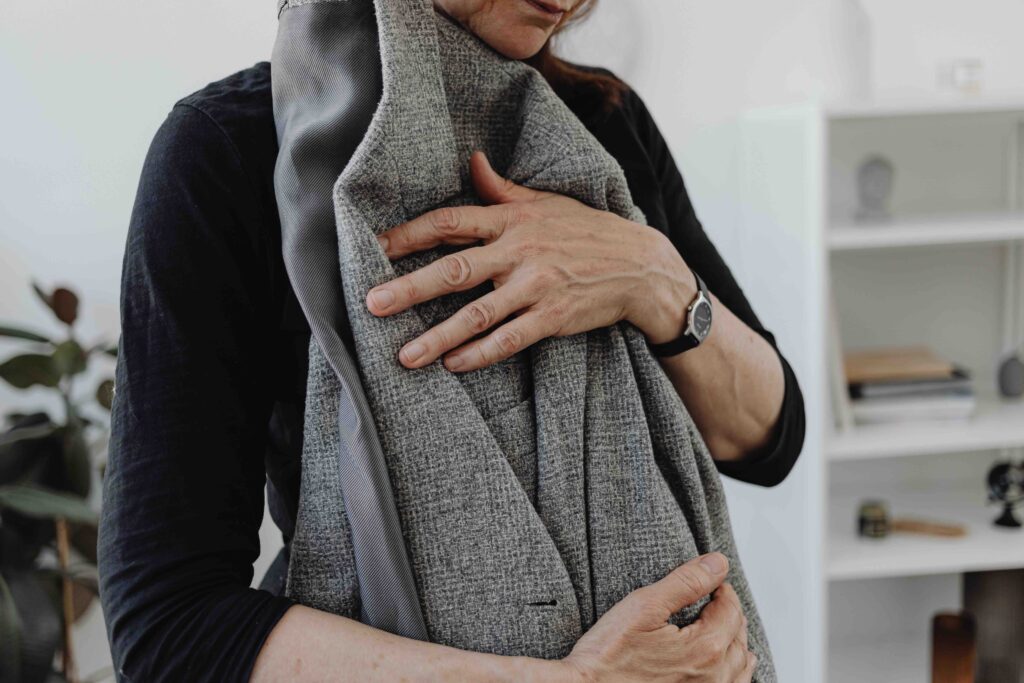
This is the technique that protects the lapels and shoulder padding, and it is the heart of how to fold a suit jacket for travel without leaving a permanent line across the back. It takes about 30 seconds once you have done it a few times:
- Pop one shoulder inside out. Turn the left shoulder of the jacket inside out so the lining faces outward.
- Nest the other shoulder inside it. Tuck the right shoulder, kept right-side out, into the first, which brings both linings together and leaves the outer fabric shielded inside the bundle.
- Fold around a soft core. Instead of creasing the jacket flat down the middle, roll a thin sweater or a few pairs of socks into a cushion, set it against the back of the coat, and fold the jacket around it so the bend stays rounded rather than sharp. This last step, borrowed from bespoke tailors, is what saves the back from a hard line.
Packing the Rest of the Outfit: Pants, Shirts, and Shoes
The Trousers
Fold trousers along their existing crease, never across it, so the sharp line stays exactly where it belongs. For the least wrinkling, use the drape method: lay the trousers across the open suitcase with the legs hanging over the side, pack everything else on top, then fold the dangling legs back over the pile. Draping them over that soft mound rounds out the fold and keeps a hard line from setting into the knees.
The Dress Shirt
A dress shirt travels best either in a KonMari-style upright fold or rolled around a soft core. Whichever you choose, coil a belt into a ring and tuck it inside the collar, which keeps the collar standing and stops it from flattening under the weight of everything stacked above.
Shoes and Accessories
Dress shoes hold their shape and earn their space when you stuff them with socks, underwear, or a small pouch of cufflinks. Slide each shoe into a fabric shoe bag so the soles never touch your clothing, and lay them along the bottom of the case near the wheels where the weight sits low.
The Wrinkle-Free Secret Starts with the Fabric
Some of this is decided long before you pack, in the cloth itself, and the surest way to keep a suit from wrinkling is to start with a fabric that resists it. A linen or lightweight summer-wool suit will crease no matter how well you fold it, so if you fly for work often, it is worth owning a suit in something more forgiving. High-twist wool, hopsack, flannel, and tweed all shrug off wrinkles far better thanks to how tightly the yarn is spun or woven, and a good high-twist wool can come out of a bag looking as though it was never folded.
What to Do When You Arrive (And What Not to Do)

A few soft wrinkles are normal, and the realistic goal is a suit that settles out quickly once it hangs. Here is the order of operations:
- Unpack immediately. Take the suit out the moment you reach the room, before anything else, so it is not sitting folded a minute longer than it has to be.
- Hang it properly. Use a contoured wooden hanger in a dry, warm spot, which lets the shoulders hold their shape as the fabric relaxes.
- Give it time. Good wool, merino especially, sheds most of its wrinkles on its own within about 12 hours as gravity draws the fibers straight.
- For deep creases, call the valet, not the steamer. If a crease will not fall out, hand the suit to the hotel valet or concierge for a professional hand press, and leave the steamer where it is.
Packing Formalwear for Women: Gowns and Blazers
The same inside-out fold works just as well for a woman’s blazer, guarding the shoulders and lapels in the same way. Long silk gowns and evening dresses call for a gentler approach, because a sharp fold in silk leaves a crease that is very hard to lift out. Keep them in a garment sleeve where you can, and anywhere you must fold, lay sheets of tissue paper between the layers so the fabric slides against itself rather than pressing in, which is what causes the deepest creasing.
Airline Rules: Does a Garment Bag Count as a Carry-On?
For most US airlines, including Delta, American, and United, a garment bag counts as your single carry-on as long as it meets the usual size limit, roughly 22 by 14 by 9 inches when folded. Premium cabins sometimes have an onboard closet where the crew will hang a bag for you, but that space is limited and first-come, so do not build your plan around it. When you are unsure, check your airline’s carry-on dimensions before you head to the airport.
Frequently Asked Questions
Can you steam a suit to get the wrinkles out?
It is risky, and on many suits it does real damage. Steam can melt the glued inner canvas in fused jackets and leave permanent bubbling, so skip both the steamer and the steamy-bathroom trick, and turn to a professional hand press if the wrinkles are severe.
How do you keep a suit from wrinkling in a suitcase?
Fold it inside-out around a soft core like a rolled sweater, pick a hardshell carry-on that resists crushing, and pack it near the top so nothing heavy presses down on it. The cloth helps too, since high-twist wool wrinkles far less than linen.
Should you wear your suit jacket on the plane?
For a flight under 3 hours, wearing it or draping it over your lap is fine. On longer flights, fold it properly into the bag or ask the crew whether there is a closet, since hours crumpled against a seat will crease it more than a careful fold ever would.
Conclusion: Arrive Sharp and Stress-Free
Keeping a suit sharp on the road is mostly about respecting how the jacket is built. Fold it inside-out around a soft core, favor a hardshell case or a proper garment bag, choose a resilient cloth when you can, and stay well away from hot steam. Do that, and you will walk into the wedding or the meeting looking as though you never traveled at all.