
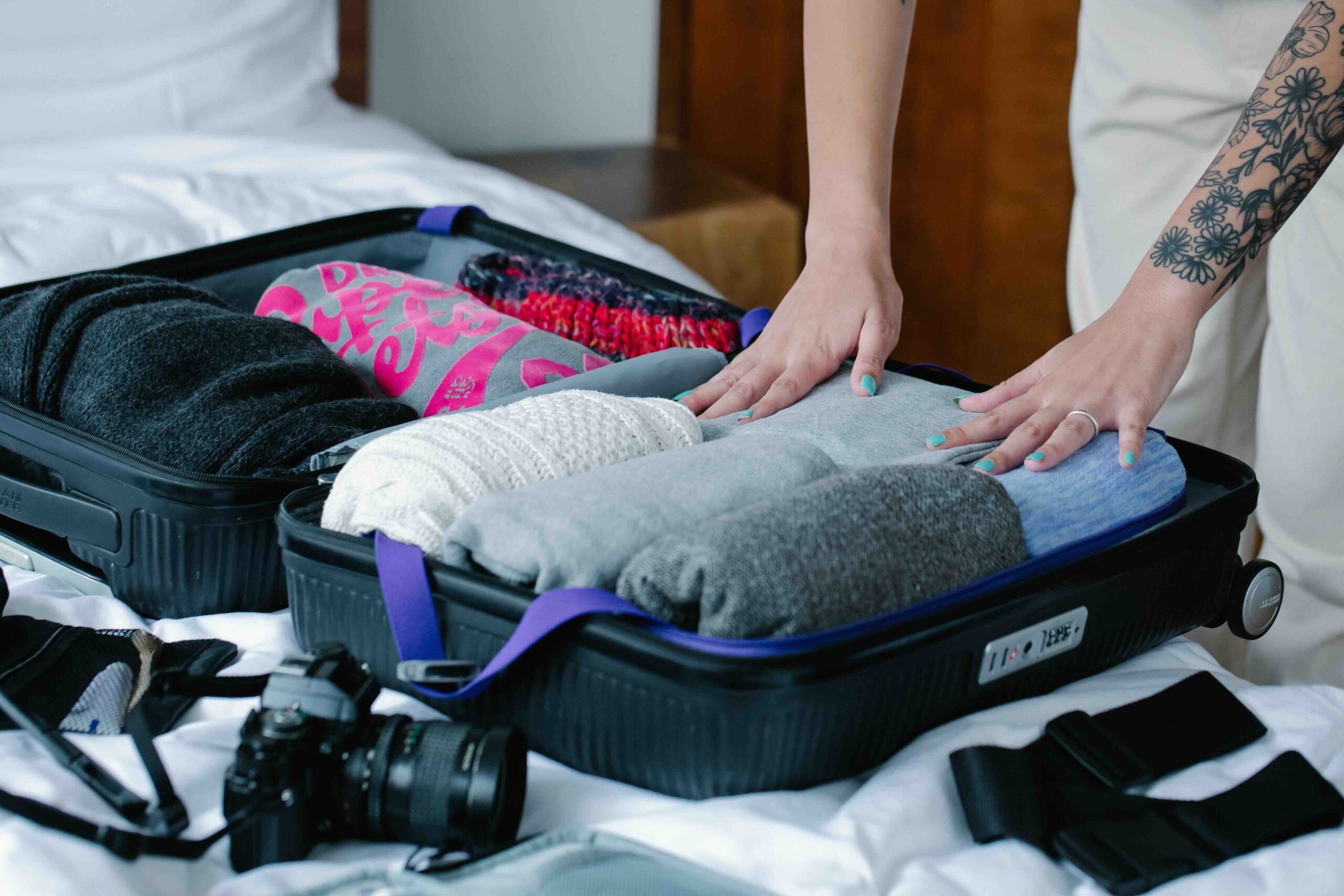
Checked-bag fees now run roughly $35 to $50 each way on major US airlines after a round of increases in spring 2026, and that is before you count the time lost standing at the carousel watching everyone else’s luggage circle past. Skipping all of it comes down to a single skill. If you want to learn how to pack a suitcase efficiently, the secret is maximizing every square inch of your carry-on, usually a bag around 22 by 14 by 9 inches. Packed well, the same carry-on most people stuff for a weekend can carry 1 to 2 weeks of clothing, and this guide walks through the whole process: deciding what earns a spot, the best folds and rolls for each fabric, and how to handle the bulky, leaky, and fragile things that complicate everything.
How to Pack a Suitcase: Start by Editing What You Bring
Most overpacking happens before a single shirt is folded, back at the decision about what goes in at all. Getting that part right is more than half the job, so the work starts with honest, slightly ruthless editing of the pile on your bed.
The 5-4-3-2-1 Method
A simple formula keeps a week’s worth of clothes in check: 5 tops, 4 bottoms, 3 accessories or layers, 2 pairs of packed shoes (plus the pair you wear on the plane), and 1 swimsuit. It sounds tight until you notice how much you can restyle the same pieces, especially when you build around a single color palette so everything mixes. The math works because most people wear only a fraction of what they bring, so a few versatile basics go further than a bag full of options you will never reach for.
For trips longer than a week, plan one quick wash midway, whether that is in a hotel sink, at a laundromat, or in a rental with a washing machine. That single load is what lets the same capsule wardrobe stretch to two weeks without adding a single piece to the bag.
Wear Your Bulkiest Items on the Plane
The heaviest, boxiest things you own eat the most space, so the move is to wear them instead of packing them. Put on your thickest jacket and your largest shoes, whether that is boots or chunky sneakers, for the flight, and you free up a startling amount of room at no cost. Planes run cold anyway, so a heavy layer rarely goes to waste, and you can always ball the jacket into the overhead bin once you have settled in.
The Best Way to Pack a Suitcase: Rolling vs. Folding vs. Cubes
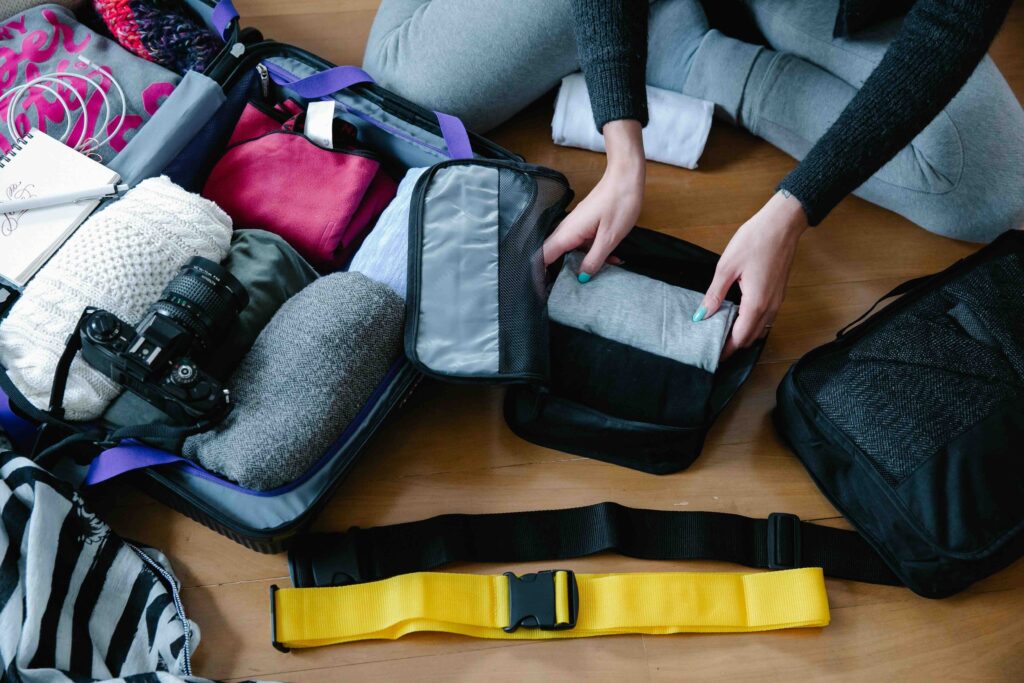
Once the pile is set, the best way to pack a suitcase comes down to the fabric in your hands, because rolling, folding, and cubing each solve a different problem.
>>> 11 Best US Family Road Trips: Easy Route Ideas for Kids
The Ranger Roll
Rolling is the space-saver, and the tightest version is the ranger roll, a military technique that tucks each garment into its own waistband to lock the roll shut. It works best on soft, knit fabrics, so t-shirts, shorts, underwear, and gym clothes all compress into neat logs that slot into gaps and shrug off the deep creases a flat fold tends to leave. For anything soft and casual, this is what buys you the most room.
The KonMari Fold
Folding still wins for structure. The KonMari method folds each item into a compact rectangle that stands on its edge, turning a deep suitcase or a packing cube into a filing system where you can see every piece and pull one out without disturbing the rest. It suits jeans, sweaters, and anything whose shape you want to protect. Because the folds follow the garment’s own seams, stiffer fabrics come out with far fewer odd creases than rolling gives them.
Packing Cubes
Packing cubes hold the whole system together. They sort your rolled and folded clothes into labeled zones, so the bag stays organized across a trip instead of dissolving into a jumble by day 3, and compression cubes go a step further, zipping down to force the air out of bulky things like sweaters. For anyone who dreads the usual packing wrestling match, they are the most useful thing you can buy.
Packing the Awkward Stuff: Shoes, Toiletries, and Electronics
The Rule of 3 for Shoes
Shoes are the great space thief, which is why the rule of 3 is worth keeping: bring 3 pairs at the most, wear the bulkiest set on the plane, and pack only 2. Line those 2 along the bottom of the bag near the wheels, where their weight sits low and keeps the suitcase from tipping as you tow it. Tuck socks, a charger, or a rolled belt inside each shoe so the hollow space never goes to waste, and slip them into a bag so they do not rub dirt onto your clothes.
Spill-Proofing Your Toiletries
Toiletries have to clear the TSA’s 3-1-1 rule for a carry-on: liquids in containers of 3.4 ounces (100 ml) or less, all fitting inside one quart-size bag. The leaks that ruin a trip are usually caused by cabin pressure, which drops during the climb and pushes liquid out of any bottle with a little give in it. The fix takes about 5 seconds per bottle: unscrew the cap, lay a small square of plastic wrap over the opening, and screw the cap back down over it for a seal that holds at altitude.
Power Banks, Chargers, and Laptops
Spare lithium batteries and power banks must travel in your carry-on, never in checked luggage, and if your bag gets gate-checked on a full flight, pull them out and keep them with you. Power banks up to 100 watt-hours, roughly a 27,000 mAh unit, are allowed without airline approval. Beyond that baseline, airlines tightened their rules in 2026: United no longer lets passengers store power banks in overhead bins, Southwest limits each passenger to one and requires it to stay visible while in use, and many Asian carriers and the Lufthansa Group ban using power banks in flight altogether. Check your airline’s battery page before you fly.
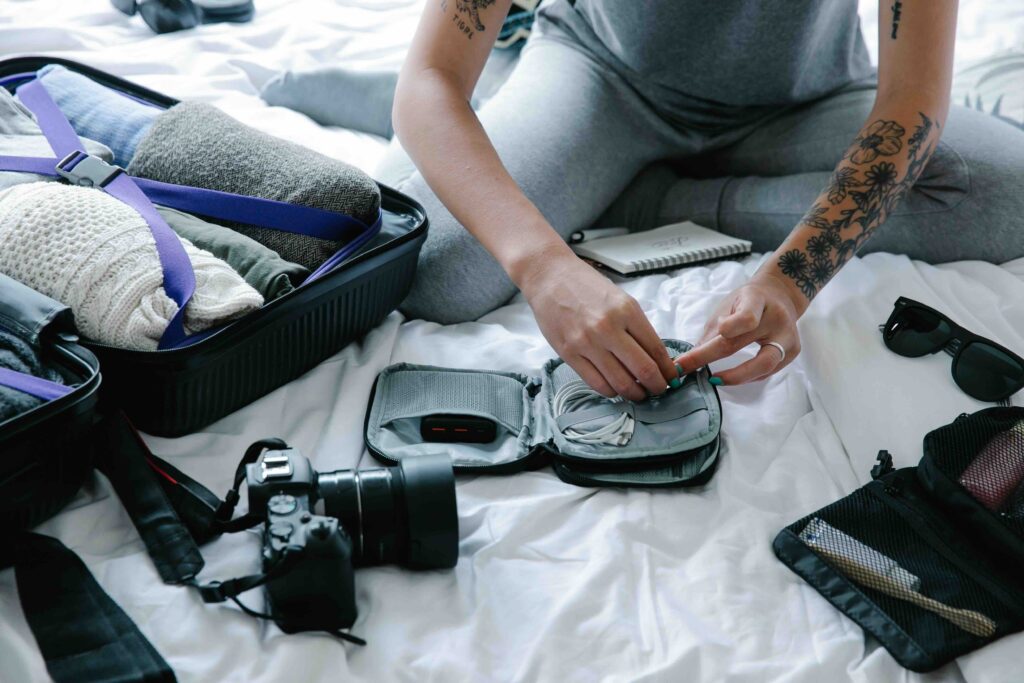
The easiest system is a single small pouch for the power bank, chargers, and cables, kept in your personal item under the seat so it is always within reach. Pack a laptop or tablet near the top of your bag, where you can slide it out quickly if the security checkpoint asks you to.
Packing Formal Wear Without the Creases
Business trips and weddings raise the hardest problem in carry-on packing, which is keeping a jacket sharp in a bag built for t-shirts. For a blazer or dress, turn it inside out, fold it once along the center, and lay it flat on top of everything else so nothing presses down on it; a thin dry-cleaning bag over the garment cuts down on friction creases, and a few minutes in a steamy hotel bathroom relaxes most wrinkles on arrival. A tailored suit needs its own method, folded along the shoulder and lapel lines so the structure survives the journey, and that is enough of a craft to deserve its own walk-through in a guide to how to pack a suit in a suitcase without ruining the lapels. The same gentle handling goes for anything with a collar or a pressed crease you care about.
5 Common Packing Mistakes (And How to Fix Them)
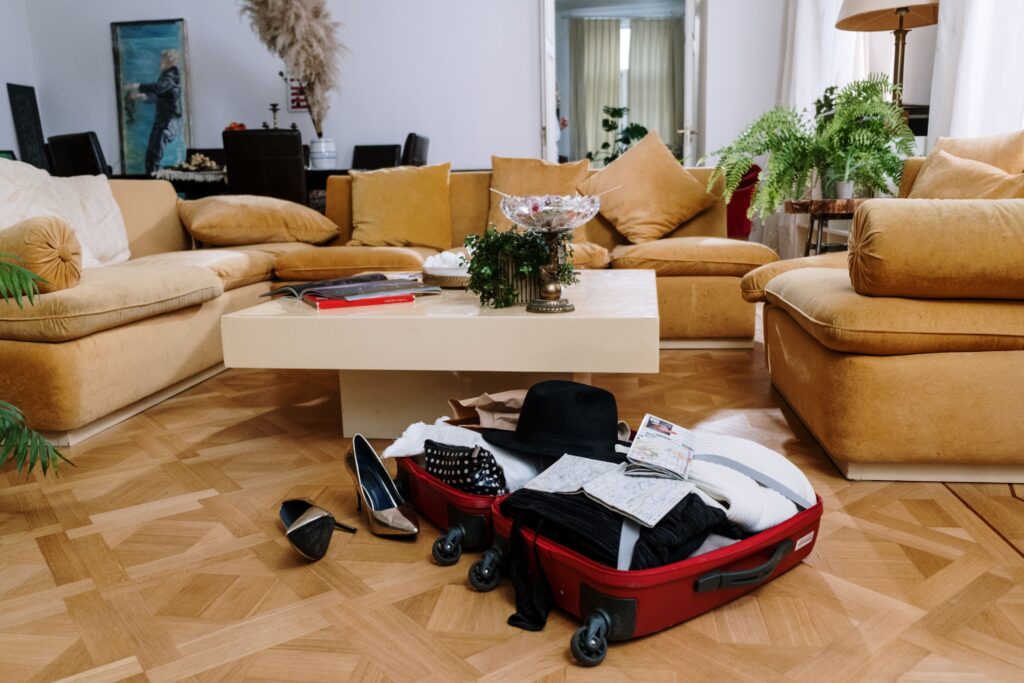
A handful of habits quietly undo even a careful packing job. Watch for these:
- Packing “just in case” items. The umbrella and spare pair of shoes you toss in for a scenario that never arrives are dead weight; when in doubt, leave it out, since small necessities like sunscreen or an umbrella are cheap to grab at your destination.
- Wasting negative space. The hollow insides of shoes and the gaps between rolls should be holding socks, cables, and chargers, not sitting empty.
- Loading heavy items up top. Weight near the lid makes the bag topple when you tow it, so shoes and the toiletry kit belong down by the wheels.
- Folding everything out of reflex. Soft knits pack smaller and smoother rolled; only structured pieces truly need a fold.
- Skipping the weigh-in. This matters most on airlines with strict carry-on limits, including some budget carriers to Japan; a cheap handheld luggage scale saves you from repacking at the check-in desk.
Frequently Asked Questions
Is it better to roll or fold clothes in a suitcase?
Both, depending on the fabric. Roll soft, casual knits like t-shirts and activewear to save space and avoid hard creases, and fold stiffer, structured pieces like dress shirts and trousers along their seams.
How do you keep a suitcase from going overweight?
Weigh it at home with a handheld luggage scale, wear your heaviest clothes and shoes on the plane, and cap your footwear at 3 pairs, since shoes add weight fast.
Where should shoes go in a suitcase?
Along the bottom, near the wheels and around the edges. Keeping the heaviest things low stops the bag from tipping over when you stand it upright.
Does rolling clothes really save space?
Yes, for soft fabrics. Rolling presses the air out from between the layers and fills the small corners a flat fold leaves empty, though very stiff items still fare better folded.
How do you keep clothes smelling fresh in a suitcase?
Tuck a dryer sheet between the layers. It is a small trick that keeps everything smelling clean, which matters most on longer trips and for the worn clothes you carry home.
Can I pack a power bank in my checked bag?
No. Power banks and spare lithium batteries must go in your carry-on. If your carry-on is gate-checked, take them out first and keep them with you in the cabin.
Conclusion: Travel Lighter, Travel Better
Getting a whole trip into a carry-on is a skill that pays off every time you fly, sparing you the bag fee, the wait at the carousel, and the low background stress of dragging too much through an airport. Start by editing hard, roll what is soft and fold what is structured, corral all of it in cubes, and keep the weight low and balanced over the wheels. Get comfortable with that, and the reward shows up at every gate: money kept in your pocket, nothing to wait for on arrival, and a lighter, faster walk to the door.