
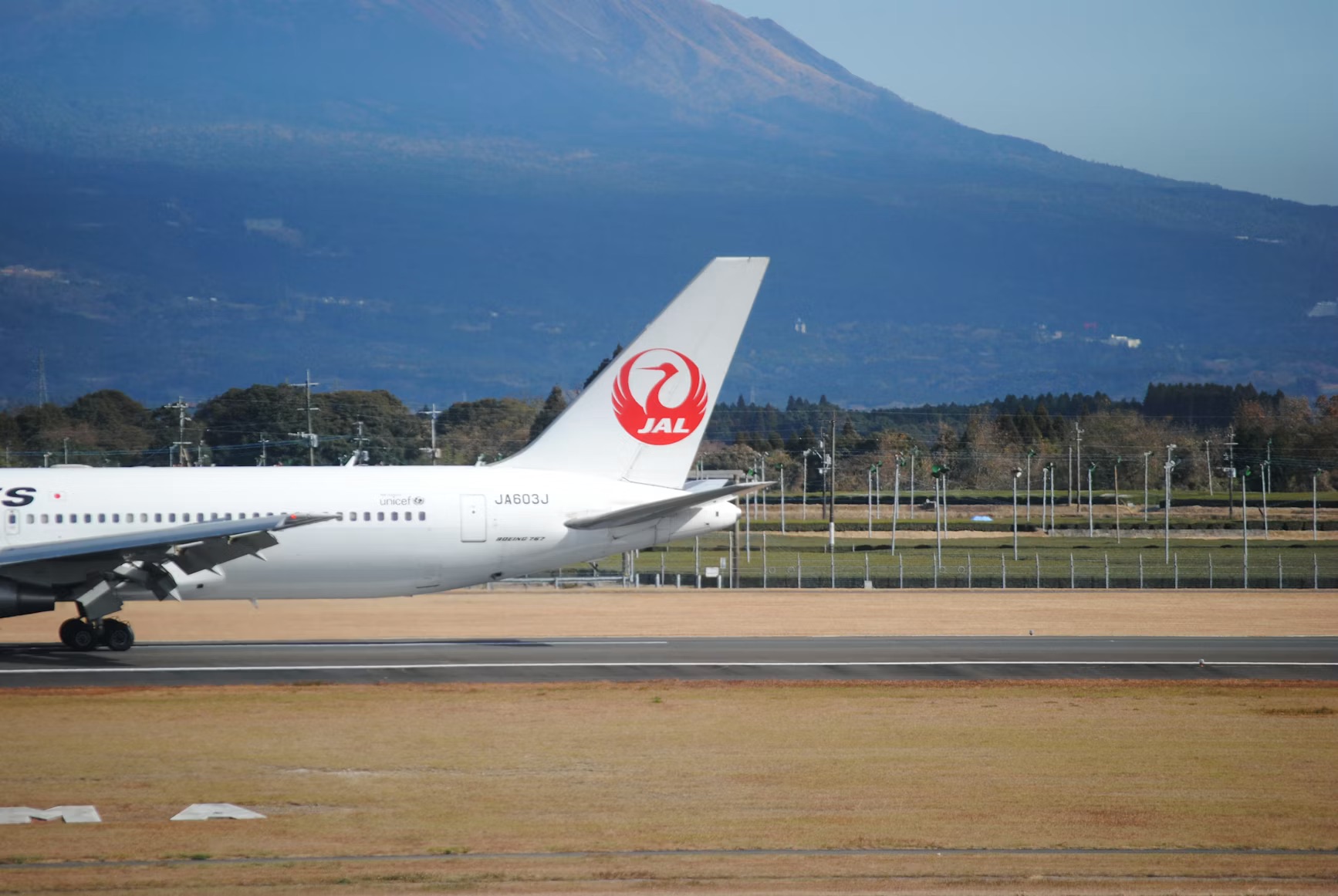
Let’s be clear about what a flight to Japan really is: 11 to 14 hours folded into one seat, long enough that the wrong choice can land you in Tokyo with a wrecked back and a sour mood before the trip has even started. Most people book on price alone, chasing the lowest number on a booking site without noticing how much legroom, seat width, and plain courtesy they are trading away. So here is the short version for travelers flying from the US: if the fare gap is under about $150, Japan Airlines (JAL) and All Nippon Airways (ANA) are the best airlines to fly to Japan in economy, beating United, American, and Delta on both comfort and service. Picking the carrier is only half the job, though, because where you touch down matters too, which is why it pays to read this alongside a guide to choosing between Narita, Haneda, and Kansai.
Quick Verdict: The Best Airline to Fly to Japan by Traveler Type
- Best overall: JAL or ANA, whichever has the better fare and schedule from your city.
- Best for seat width: JAL on its Boeing 787, with a roomier 2-4-2 economy layout.
- Best for points: JAL through American AAdvantage or Alaska, or ANA through United’s Star Alliance partners.
- Best budget option: Zipair, JAL’s low-cost airline, if you travel light.
- Best from smaller US cities: United, American, or Delta, thanks to their huge domestic networks.
The 2026 Transpacific Economy Matrix
Cash fares, award rates, routes, and aircraft are based on information at the time of writing and change often. Seat layouts depend on the aircraft, so always check the specific flight before you book.
Here are the 4 realistic options for flying to Japan in economy from the US, lined up side by side so you can weigh space, price, and points at a glance.
| Airline | Typical economy layout | Nonstop US gateways | Round-trip cash fare | Best award option | What flyers say |
|---|---|---|---|---|---|
| Japan Airlines (JAL) | 2-4-2 on the Boeing 787 (among the widest economy seats); 3-3-3 on the newer A350-1000 | JFK, BOS, ORD, DFW, LAX, SFO, SEA, SAN, HNL | Off-peak $850–$1,100; peak $1,400–$1,900 | Book through American AAdvantage or Alaska | “Real service even in economy, miso soup and hot towels” |
| All Nippon Airways (ANA) | Mostly 3-3-3 on the 787 and 777, with generous legroom | JFK, IAD, ORD, IAH, LAX, SFO, SEA, HNL | Off-peak $900–$1,200; peak $1,500–$2,100 | Book through ANA Mileage Club, United MileagePlus, or Avianca LifeMiles | “Wonderful hospitality, though the 3-3-3 rows feel tight” |
| United / American / Delta | Mostly 3-3-3; seat width varies by aircraft | Wide network (ATL, DTW, EWR, DEN, SFO, LAX, and more) | Off-peak $650–$850; peak $1,200–$1,600 | Best paired with Chase or Amex points into their own programs | “Fine if the price gap is big or you’re chasing status” |
| Zipair (JAL’s low-cost arm) | 3-3-3 in economy; lie-flat seats up front | LAX, SFO, SJC, HNL (check for new routes) | Economy $500–$700; lie-flat $1,600–$2,000 | Not built for points; a cash play | “Cheapest flat bed over the Pacific, but you pay for every extra” |
JAL vs. ANA vs. the US Carriers: What Sets Them Apart
The Space Battle: Why JAL’s Extra Inches Save Your Back
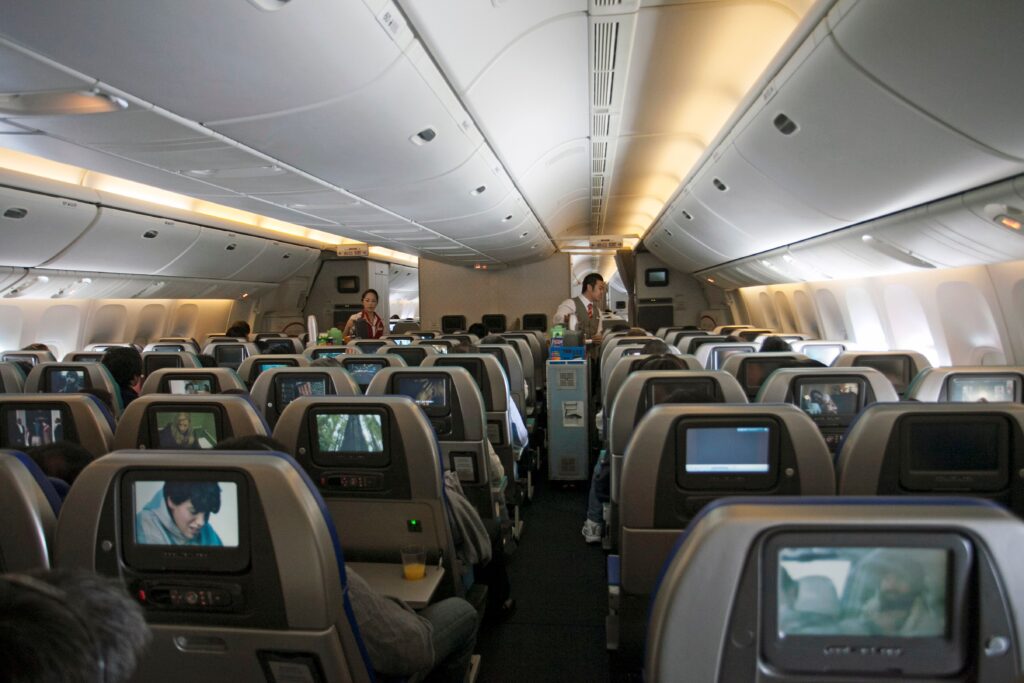
Image source: Pexels
Here is where JAL quietly pulls ahead, and it traces back to a choice most airlines made to fit in more seats. On the Boeing 787, nearly everyone, ANA and the US carriers included, packs economy 9 across in a 3-3-3 layout. JAL is the standout still flying its 787s 8 across, in a 2-4-2 arrangement, which sounds like a technicality until you run the numbers: fewer seats per row means each one is roughly 1.5 to 2 inches wider.
On a 14-hour flight, those inches decide whether your shoulders are pressed against a stranger’s for the whole night or not. If you are broad-shouldered, or you simply value elbow room, this is the most concrete reason to choose JAL. Just check the aircraft before you book: JAL’s newer Airbus A350-1000s use a 3-3-3 layout, and some US carriers fly aircraft like the A350 with slightly wider seats than their 787s.
>>> See more: Flight from Hanoi to Bangkok 2026: Airlines, Time & Prices
Service and Food: Omotenashi at 35,000 Feet

Warm, Japanese-style meals are a highlight even in economy.
The service gap has less to do with rules than with culture. Japan’s tradition of omotenashi, a kind of hospitality that anticipates what you need before you ask, runs straight through how JAL and ANA train their crews, and it shows up even in the cheapest seat. Fly economy on a Japanese carrier and you can expect a hot towel, warm miso soup, fresh meals, and small touches like JAL’s SkyTime yuzu drink.
The US carriers are neither unsafe nor unpleasant, but a common theme in traveler reviews is that their long-haul economy is forgettable, with plainer food and a more businesslike service style. Many travelers who fly a US carrier one way and a Japanese carrier the other say the seats felt similar, but the Japanese airline made the long flight feel shorter. It is also worth knowing that both JAL and ANA hold a 5-Star rating from Skytrax, a mark only a handful of airlines in the world reach.
Routes and Value: Where the US Carriers Win
This is the section where the US carriers earn their keep. Their domestic networks are vast, so if you do not live near one of the JAL or ANA gateway cities, flying United, American, or Delta can spare you a messy chain of connections. Most nonstop flights from the US land in Tokyo at Narita or Haneda, with a smaller number flying to Osaka’s Kansai Airport, and getting to other Japanese cities usually means changing planes once you arrive.
That is where a quiet perk of the Japanese carriers comes in. Visitors from overseas can buy discounted domestic flights, such as the JAL Japan Explorer Pass or ANA’s Experience JAPAN Fare, with flat fares to dozens of cities that cost far less than buying those hops on their own. Check the eligibility rules before you book. Flying from Hawaii? JAL, ANA, Zipair, and Hawaiian Airlines all offer nonstop options from Honolulu.
Worth Considering: Premium Economy
If economy feels too tight but business class is out of reach, both JAL and ANA offer premium economy on many US routes, with wider seats, more recline, and upgraded meals. On a long overnight flight, it can be the sweet spot between comfort and cost, especially when you catch a sale fare.
The Budget Play: Is Zipair Worth It?

Bring your own entertainment on budget flights.
If the lowest possible fare is your top priority, Zipair deserves a serious look. It is JAL’s low-cost offshoot, flying mostly from West Coast hubs like Los Angeles, San Francisco, and San Jose, and it runs on a strict no-frills model: no seatback screens, no free blanket or pillow, and meals you order ahead online. In return, fares fall to levels the big carriers can’t match, starting around $500 round trip in economy, and, more surprisingly, a lie-flat seat across the Pacific for roughly $1,600 to $2,000, one of the cheapest flat beds to Japan you’ll find.
The way to enjoy it is to show up ready: load a tablet with movies, pack your own headphones, buy a blanket-and-pillow kit if you want one, and weigh your bags carefully to avoid steep excess-baggage fees. Travelers who understand the rules tend to walk away happy, while those expecting a full-service airline do not. If you want to skip checked luggage altogether, there is a complete walk-through in our guide to going carry-on only on budget flights to Japan.
The Cheapest Time to Fly to Japan

Mount Fuji
Timing shifts the price more than almost anything else you control. The cheapest time to fly to Japan is usually winter, from January through early March once you set aside the New Year holiday, and again in autumn outside the busiest foliage weeks. Demand thins out in those stretches, and fares can slide to around $650 to $850 on the US carriers and under $1,000 on the Japanese ones. Flying midweek, on a Tuesday or Wednesday, often trims the price further.
The reverse is peak season. Cherry blossom season in late March and April, the Golden Week holidays at the start of May, the summer vacation months of July and August, and the run-up to Christmas and New Year all push economy fares toward $2,000, so if your dates are locked to those windows, book well ahead. For a full breakdown, see our month-by-month guide to the cheapest time to fly to Japan.
Frequently Asked Questions
Is JAL or ANA better?
Both are excellent, and both hold Skytrax’s top 5-Star rating. JAL has the edge on seat width if you fly its 787s, and it pairs well with American and Alaska miles. ANA has a strong schedule and pairs well with United and other Star Alliance programs. In most cases, choose whichever has the better fare, schedule, and aircraft for your dates.
Should you book JAL or ANA through a US partner to earn miles?
Often, yes, and it can be one of the better values in travel. JAL is in the Oneworld alliance alongside American, and ANA is in Star Alliance alongside United, so you can earn and redeem miles through a US program you already use. Award prices change frequently, so compare programs before you book.
Which airline has the best baggage allowance to Japan?
JAL and ANA are among the most generous, typically including 2 free checked bags of up to 50 pounds each in economy. Allowances on US carriers depend on the fare type, and basic economy fares and Zipair usually charge for checked bags, so fold that cost into any fare comparison.
How much is a plane ticket to Japan?
Round-trip economy runs roughly $650 to $1,200 in the off-season and $1,400 to $2,000 or more at peak, depending on the airline and your home airport. Zipair can dip to about $500 if you travel light.
How do you tell which plane you will be flying?
On Google Flights or the airline’s own site, open the flight details and check the aircraft type. If you want JAL’s wider 2-4-2 layout, make sure that leg is operated by a Boeing 787.
Why is the flight home faster than the flight over?
The jet stream flows west to east, so the westbound trip to Japan fights against it while the eastbound trip home rides with it. On the same route, the return can land 1 to 2 hours sooner.
So, What’s the Best Airline to Fly to Japan?
In the end, the best airline to fly to Japan comes down to what you’re optimizing for across those long hours in the air. If you need a nonstop from a smaller city, or your budget tops out around $700, a US carrier or Zipair is the practical choice and nothing to feel bad about. But if you’d rather start the vacation the minute you sit down, with more room at the shoulder, warm food, and a crew that treats economy as though it matters, the modest premium for JAL or ANA is money well spent. For more trip planning, browse our Japan travel guides and flight guides.