
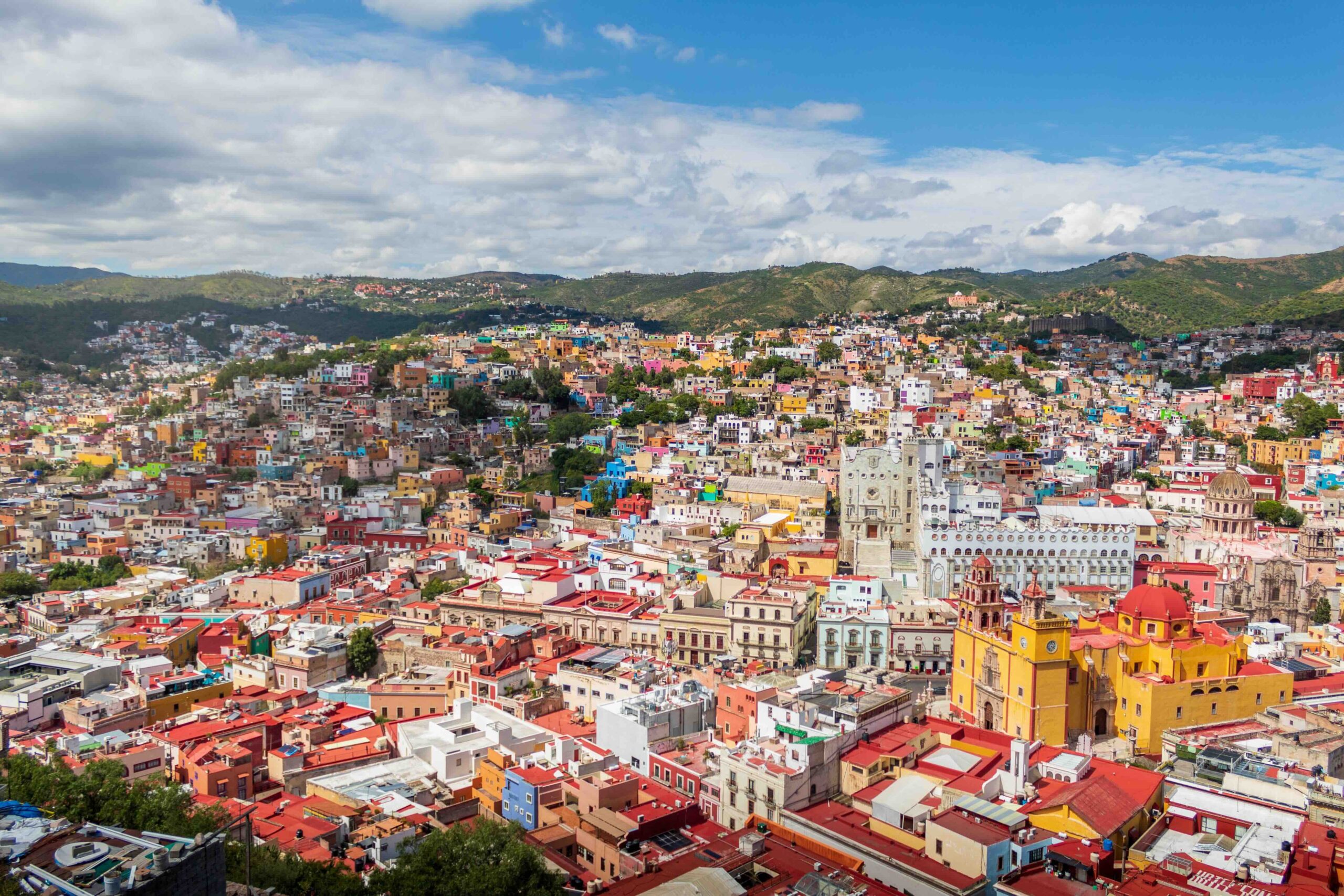
Skip the headlines for a second, because the actual travel data tells a calmer story. Tens of millions of American travelers fly into Riviera Maya resorts or sip mezcal in a shaded Oaxaca alley every single year without anything happening to them at all. The U.S. State Department currently rates most of the states covering Mexico’s major tourist zones at Level 2, the same advisory level it gives France, Italy, and the United Kingdom.
The real skill for 2026 isn’t avoiding Mexico altogether, it’s knowing which dot on the map you’re actually picking. Below is a list of 11 of the safest cities in Mexico, cross-checked against the State Department’s state-by-state advisories, the Mexico Peace Index, and what the on-the-ground expat community actually reports, so you can plan a trip without the constant background hum of worry.
The 2026 Safety Matrix: 11 Worry-Free Destinations
| Destination | State Advisory (2026) | Safety Data Highlight | Why Go |
|---|---|---|---|
| Mérida | Level 1 (lowest advisory) | Lower homicide rate than several major U.S. cities | Maya cultural capital, cenote country |
| Campeche City | Level 1 (lowest advisory) | Small population, stable security for years | Walled 17th-century heritage city |
| Cancún (Hotel Zone) | Level 2 | Dedicated tourist police patrol the resort strip 24/7 | Caribbean beaches, all-inclusive resorts |
| Playa del Carmen | Level 2 | Tourist police unit dedicated to Quinta Avenida | Walkable nightlife, digital-nomad scene |
| Tulum | Level 2 | Resort-zone security run largely by private hotel staff | Jungle scenery, boho-chic beach clubs |
| Los Cabos | Level 2 | Peninsula’s isolation limits spillover risk | Ultra-luxury resorts, whale watching |
| Puerto Vallarta | Level 3 (resort-zone carve-out)* | Blue Flag certification for clean, safe beaches | Pacific dining, LGBTQ+-friendly scene |
| Mexico City (CDMX) | Level 2 | Central districts as safe as most major U.S. cities | Michelin dining, world-class museums |
| Oaxaca City | Level 2 | Essentially no gang-related violence reported | Zapotec heritage, mezcal distilleries |
| San Miguel de Allende | Level 3 (resort-zone carve-out)* | Large American and Canadian expat community | Colonial baroque architecture, galleries |
| Querétaro | Level 2 | Low seismic risk, strong economic stability | Relaxed pace, wine and cheese trail |
A note on the asterisks: Jalisco and Guanajuato carry Level 3 advisories because of cartel activity in rural parts of those states, but the tourist corridors in Puerto Vallarta and San Miguel de Allende are treated as their own carve-out, with a heavier police presence and a different risk profile than the rest of the state.
Inside the Safest Cities in Mexico for 2026
The Yucatán Peninsula: Mexico’s Safety Anchor
1. Mérida: among the safest cities in North America
If you’re wondering “is Merida Mexico safe,” the numbers answer it directly. The Mexico Peace Index has repeatedly ranked Yucatán as the country’s safest state, and Mérida itself is routinely cited as the safest city in Mexico, with a homicide rate below that of several major U.S. cities. That safety record makes the city genuinely easy to explore on foot.
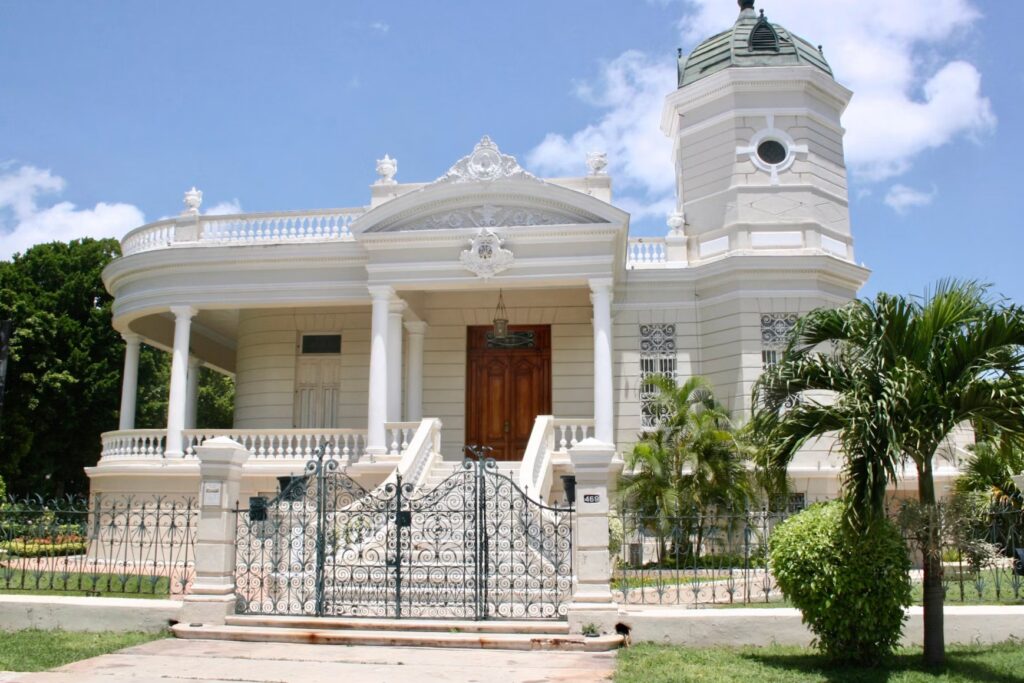
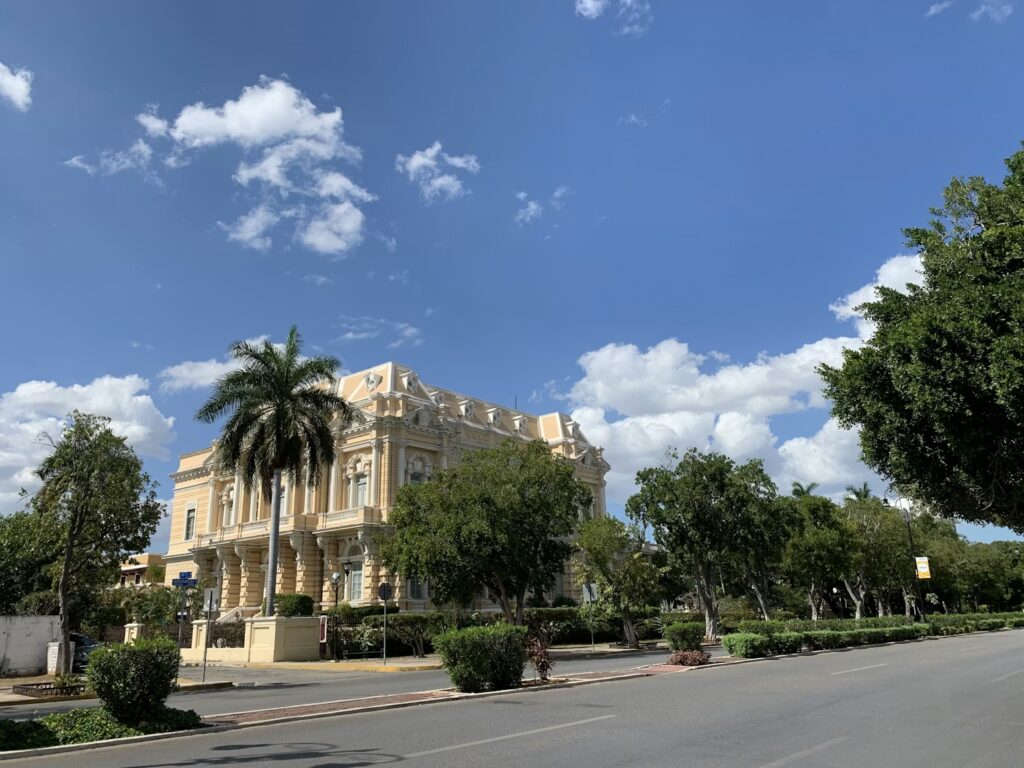
Paseo de Montejo, a tree-lined boulevard modeled on the Champs-Élysées, runs past mansions built during the henequén boom of the late 1800s, several of which are now free or low-cost museums, including Casa Museo Montes Molina and Palacio Cantón. The grid of historic neighborhoods around Plaza Grande, the main square, hosts the Mérida en Domingo street market every Sunday along with folk dance performances, while the centuries-old Lucas de Gálvez market in the city center remains the place to try real Yucatecan cooking, like cochinita pibil and salbutes, rather than a tourist-facing version of it.
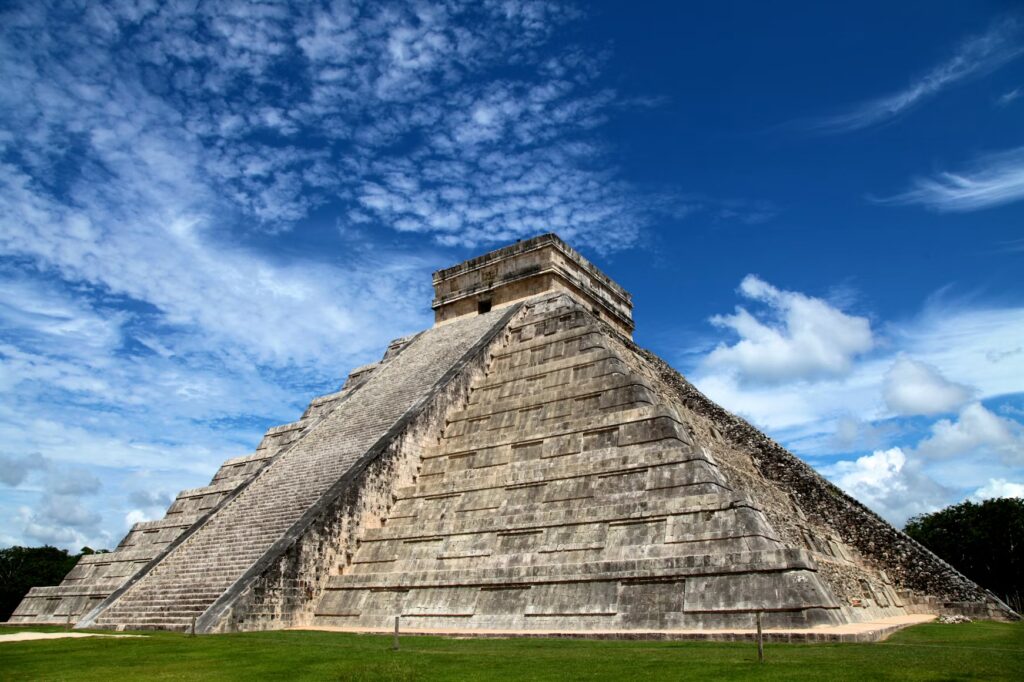
The city also functions as the easiest base for day trips to the region’s cenotes, the freshwater sinkholes scattered across the peninsula, and to the Chichén Itzá ruins, about a two-hour drive away.
2. Campeche City: the walled heritage port
Campeche shares Level 1 status with Yucatán, one of only two Mexican states to hold the lowest advisory rating, and it’s the only completely walled city left in Mexico.

The 17th-century ramparts and bastions, built after repeated pirate raids nearly wiped the city out, still ring the historic center, and several of the old bastions have been converted into small museums, including one inside Fuerte San Miguel holding a jade burial mask recovered from the Calakmul ruins. Inside the walls, the streets are a near-uninterrupted run of restored pastel-colored colonial buildings, and at night, a free light-and-sound show plays against the old city gate, Puerta de Tierra, several evenings a week.


The waterfront Malecón stretches for several miles along the Gulf of Mexico and is the best spot in the city to watch the sunset, and from Campeche, the Edzná ruins make for a quieter, far less crowded alternative to Chichén Itzá, just under an hour away.
The Caribbean Tourism Corridor
3. Cancún’s Hotel Zone: the secure bubble
The question “is Cancun safe to travel” usually comes down to confusing two different areas. Quintana Roo, the state covering Cancún, sits at Level 2, and the state has invested heavily in security specifically along the Hotel Zone, the 14-mile strip of resorts separated from downtown Cancún by a lagoon, where tourist police patrol around the clock with visible camera coverage.
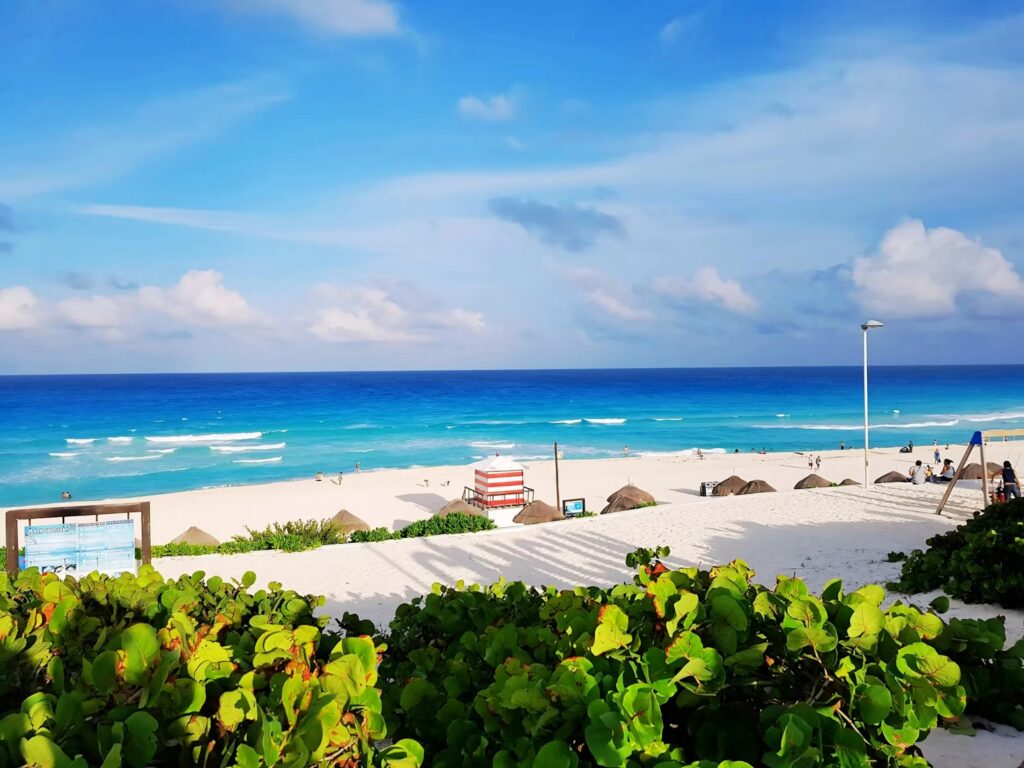
Nearly every major all-inclusive brand operates along this strip, and Playa Delfines, one of the only public beaches with free access inside the zone, gives a good look at the turquoise water without booking a resort day pass. From the Hotel Zone’s ferry docks, Isla Mujeres is a short ride away for a quieter, more low-key beach day, and the Hotel Zone’s shopping centers, like La Isla, anchor most of the nightlife outside the resorts themselves.

4. Playa del Carmen: the walkable alternative

Also in Quintana Roo, Playa del Carmen runs a dedicated Tourist Police unit focused on Quinta Avenida, the pedestrian main strip lined with restaurants and specialty coffee shops. Rather than the resort-bubble feel of Cancún, Playa rewards walking: Quinta Avenida runs for roughly a mile through the town center, packed with open-air dining and boutique shopping, and Mamita’s Beach Club anchors the most popular stretch of sand for day visitors who aren’t staying at a beachfront hotel.

The town’s compact size and steady stream of remote workers have built up a genuine specialty-coffee and co-working scene that’s distinct from anywhere else on this coast, and it sits close enough to Cozumel, Tulum, and the Xcaret eco-parks to work as a central base for day trips.
5. Tulum: the boho-chic jungle escape
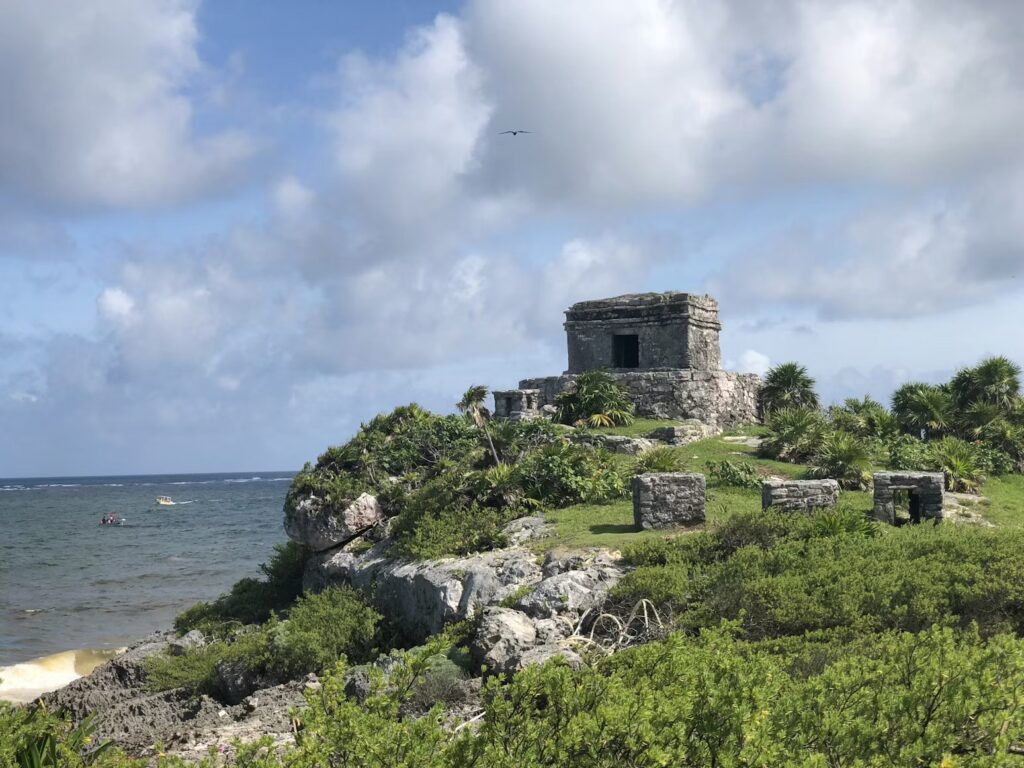
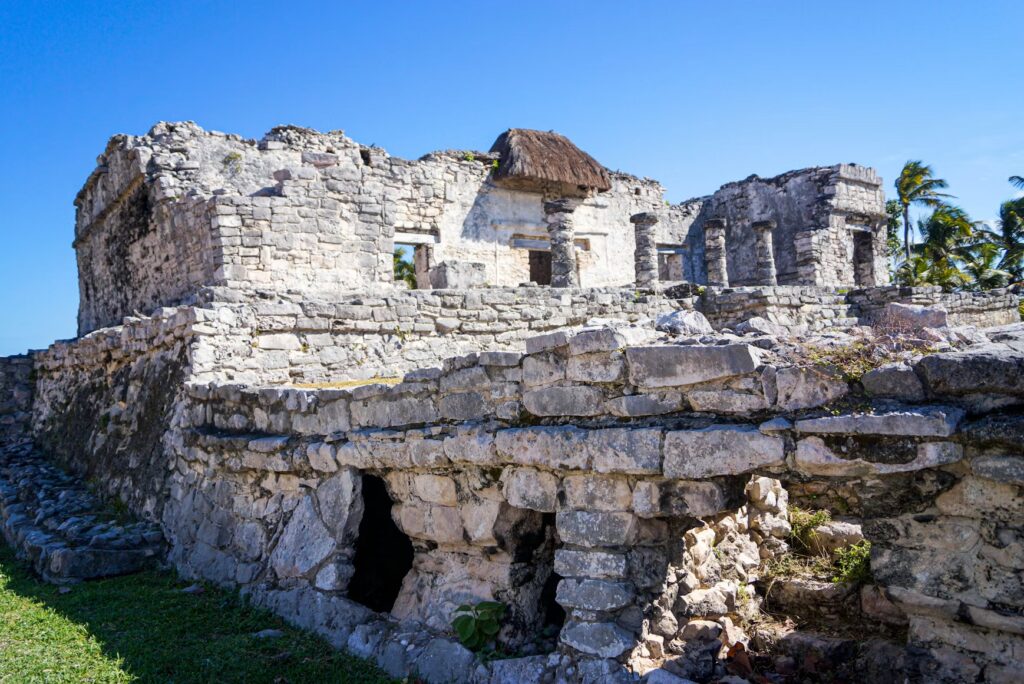
On the question of is Tulum safe, the beach-zone hotels largely lean on their own private security to keep the strip secure, since this stretch sits outside any single municipal patrol zone. Tulum’s signature attraction is its Maya ruins, the only major archaeological site in the country built directly on a Caribbean cliff, with views straight out over the water.

Beyond the ruins, the hotel zone runs along a single sandy road lined with palapa-roofed restaurants and wellness-focused beach clubs, sunrise yoga sessions are a near-daily ritual at several hotels, and the nearby Gran Cenote is one of the most accessible swimming cenotes in the entire region. The town center, a few miles inland from the beach, is considerably more local and budget-friendly than the beach road itself.
The Pacific Coast and Baja Peninsula
6. Los Cabos: the natural fortress
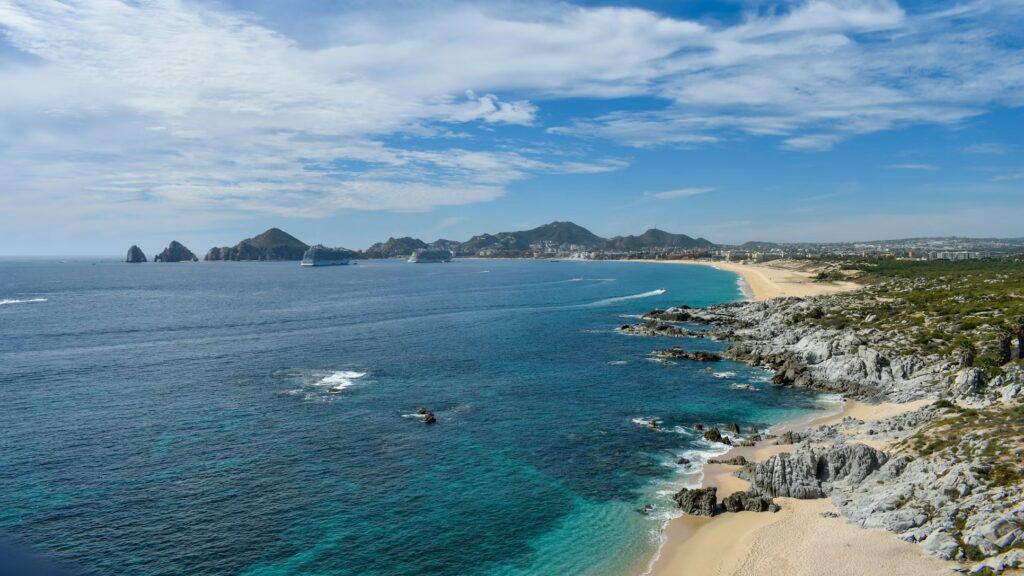

For the thousands of travelers typing is Cabo San Lucas safe, the geography itself helps the answer. Baja California Sur, the state covering both Cabo San Lucas and San José del Cabo, sits at Level 2, and the peninsula’s isolation cuts it off from most of the mainland’s cartel-related routes. It’s worth being precise here: Baja California Sur is a different state from Baja California in the north, which carries a higher Level 3 advisory and is where Tijuana sits, so the two should never be lumped together.
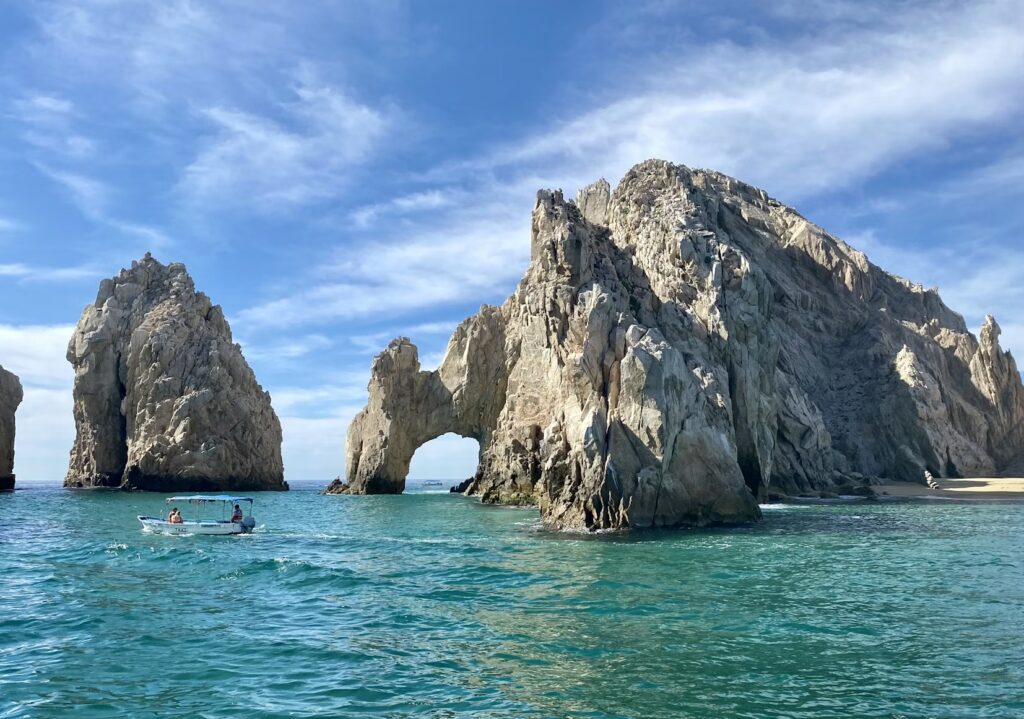
Los Cabos itself stretches along a 20-mile corridor connecting the two towns, with El Arco, a natural rock arch where the Pacific meets the Sea of Cortez, as the area’s most photographed landmark and the starting point for most whale-watching boat tours between December and April. Médano Beach in Cabo San Lucas is the liveliest and most swimmable stretch in town, while San José del Cabo’s historic Art District holds a quieter gallery scene, and the surrounding desert hosts some of the most dramatic cliffside golf courses anywhere in the country.
7. Puerto Vallarta: the Pacific gem
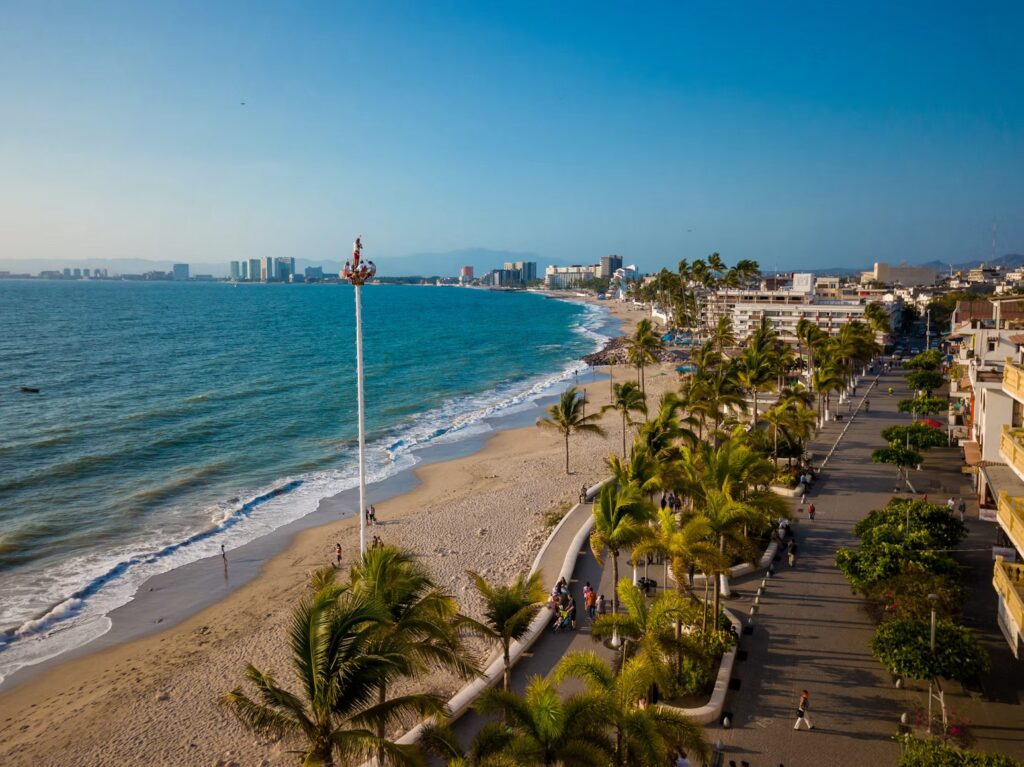
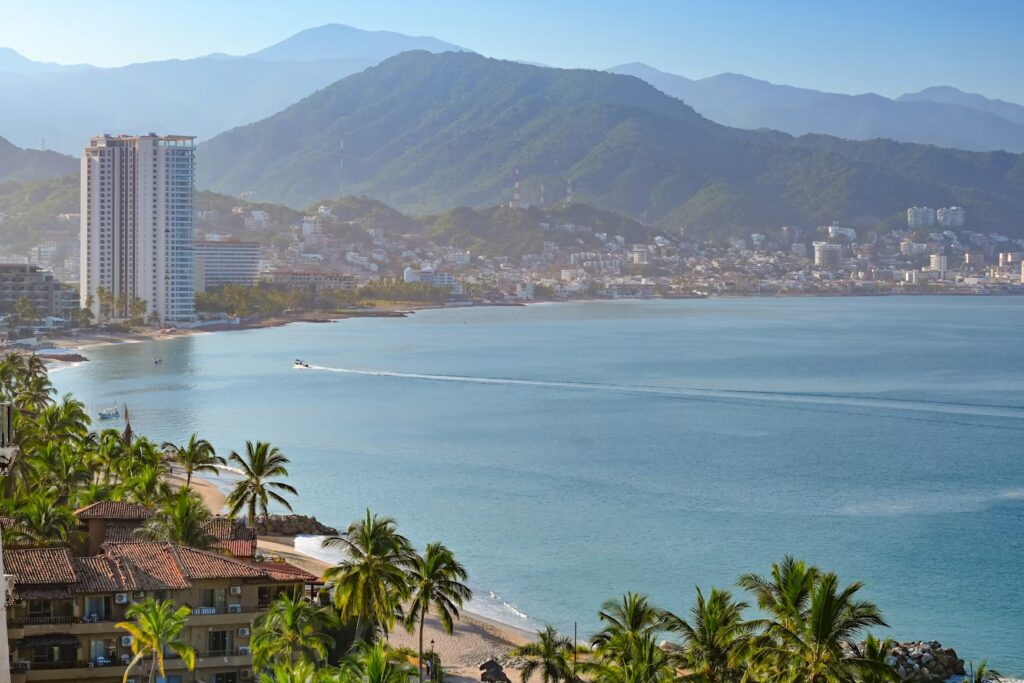
Plenty of travelers get thrown off by the question: is Puerto Vallarta safe once they notice it sits in Jalisco, a Level 3 state. In practice, PV operates as a tourist-zone carve-out: it holds Blue Flag certification for clean, safe beaches, and the cartel-related violence that drives Jalisco’s overall rating is concentrated well inland, not along this stretch of coast.

The Malecón, a long oceanfront boardwalk lined with bronze sculptures, connects the historic downtown to Zona Romántica, the Romantic Zone, which doubles as the liveliest neighborhood in town and one of the most consistently LGBTQ+-friendly destinations on the entire Pacific coast. Los Muertos Beach anchors that neighborhood’s social scene, and the surrounding Sierra Madre foothills give Puerto Vallarta a backdrop most other Mexican beach towns don’t have, with zip-lining and waterfall tours just a short drive from downtown.
Mexico’s Cultural and Expat Capitals
8. Mexico City: the urban renaissance

Is Mexico city safe for Americans? The comparison that actually matters is to other major cities, not to a small town. CDMX is a metropolis of roughly 22 million people sitting at Level 2, and a heavy police presence covers its central districts. Polanco, Roma, and Condesa form the core of the city’s walkable tourist zone, packed with Michelin-recognized restaurants, internationally ranked cocktail bars, and tree-lined streets that feel a world apart from the wider metro area.
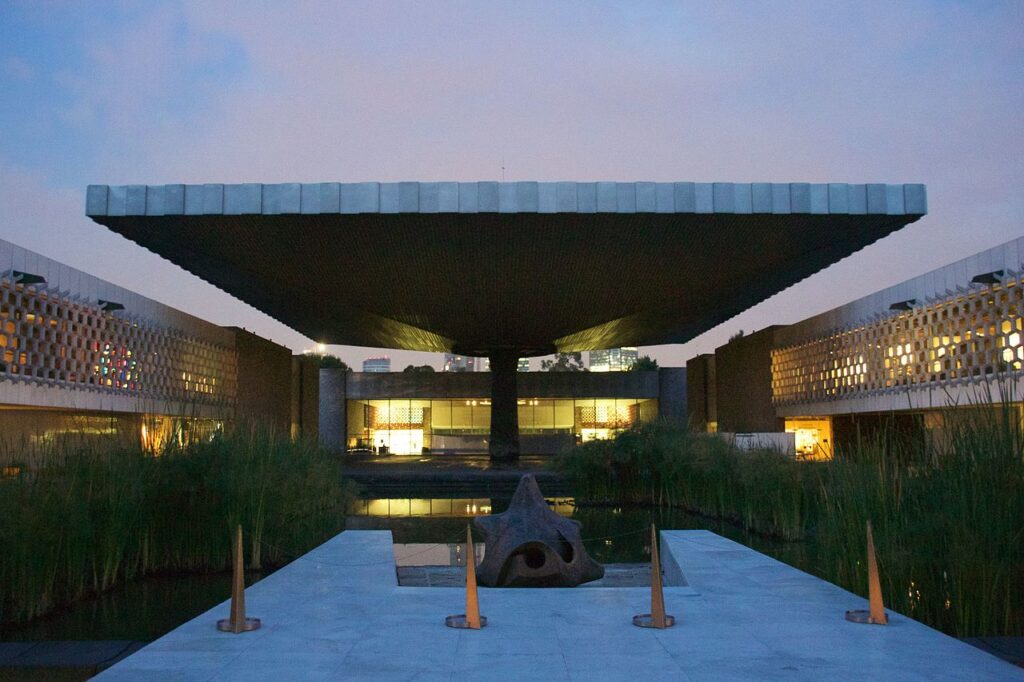
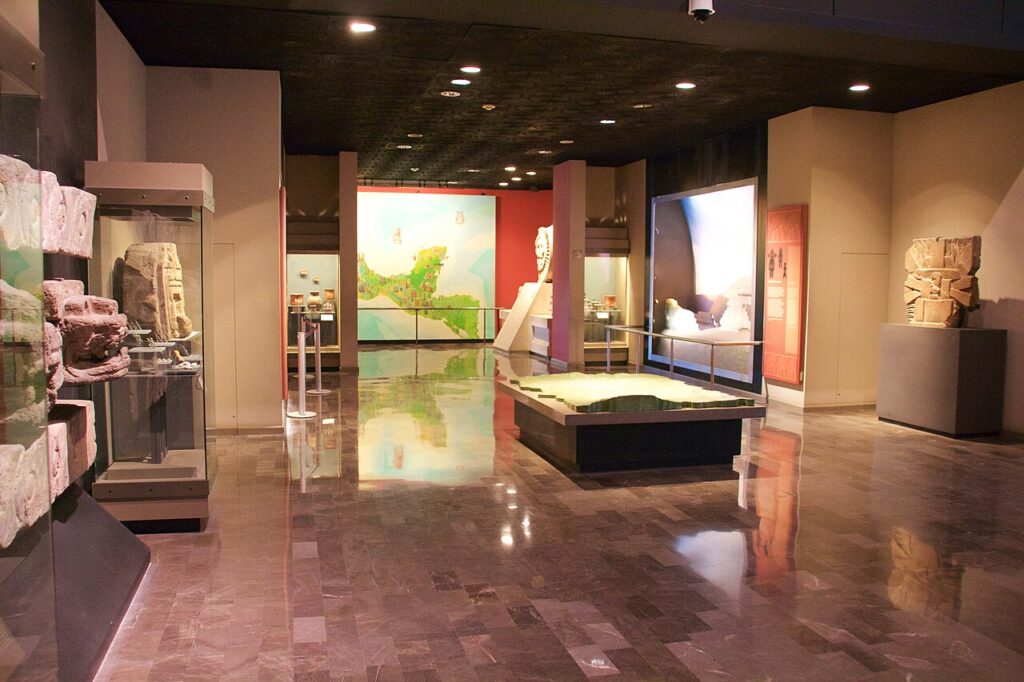
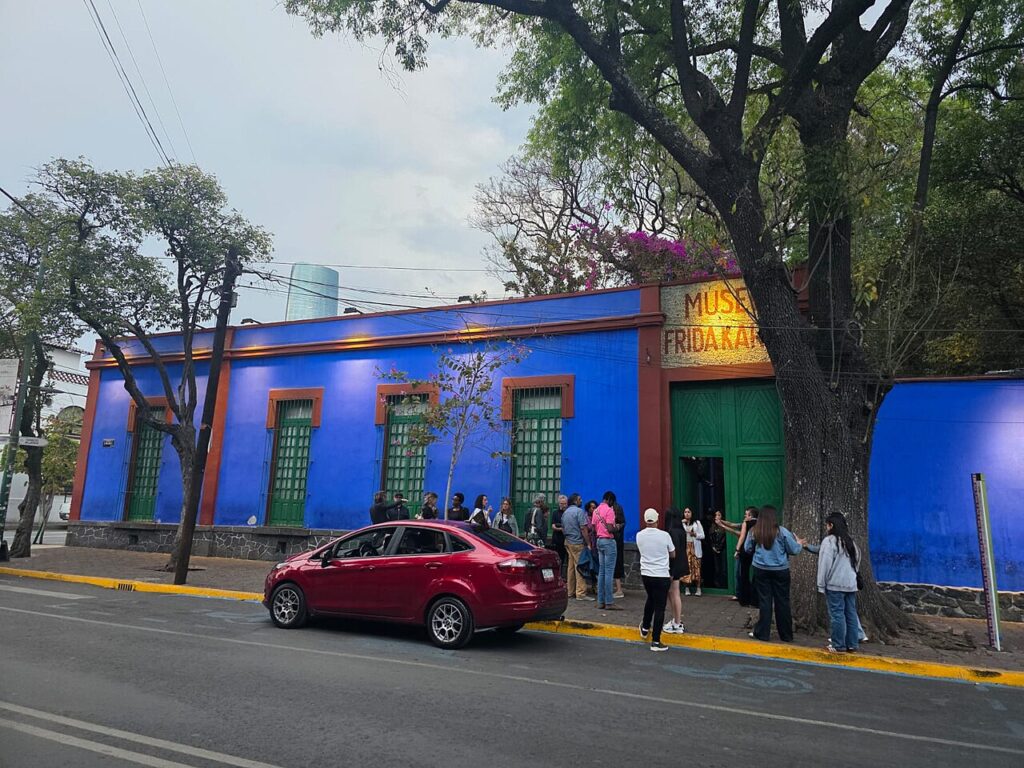
Bosque de Chapultepec, one of the largest city parks in the Western Hemisphere, holds both the Chapultepec Castle and the National Museum of Anthropology, while a short trip south to Coyoacán leads to the Frida Kahlo Museum, set in the house where she was born and lived much of her life. The historic center, anchored by the Zócalo and the Metropolitan Cathedral, rounds out a city that rewards several days of walking rather than a quick stopover.
9. Oaxaca City: the heart of Mexican heritage
Is Oaxaca safe is a fair question given how little international coverage the state gets, and the honest answer is that organized gang violence here is essentially absent. The biggest disruption most visitors encounter is a peaceful local labor protest causing traffic delays.
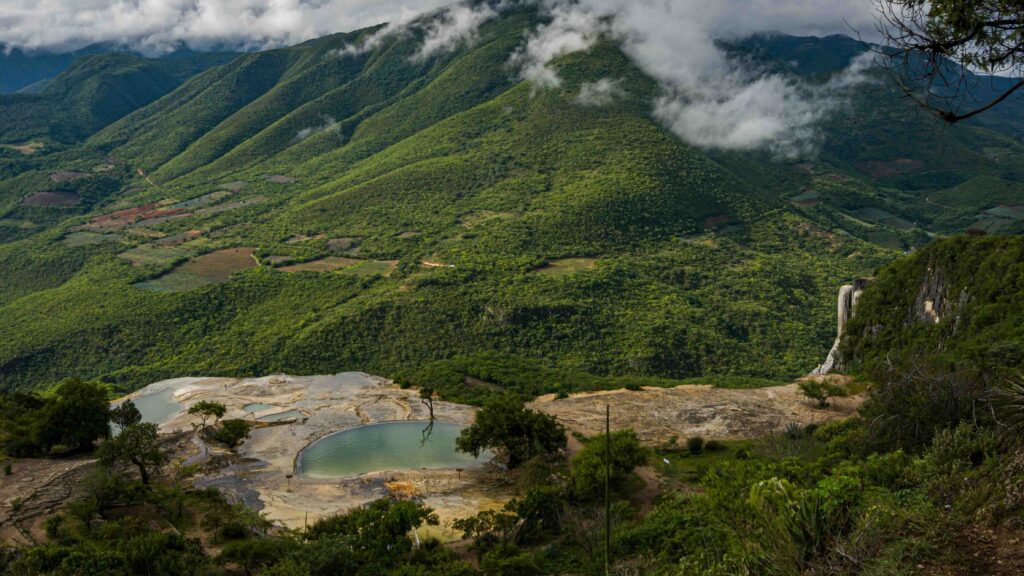
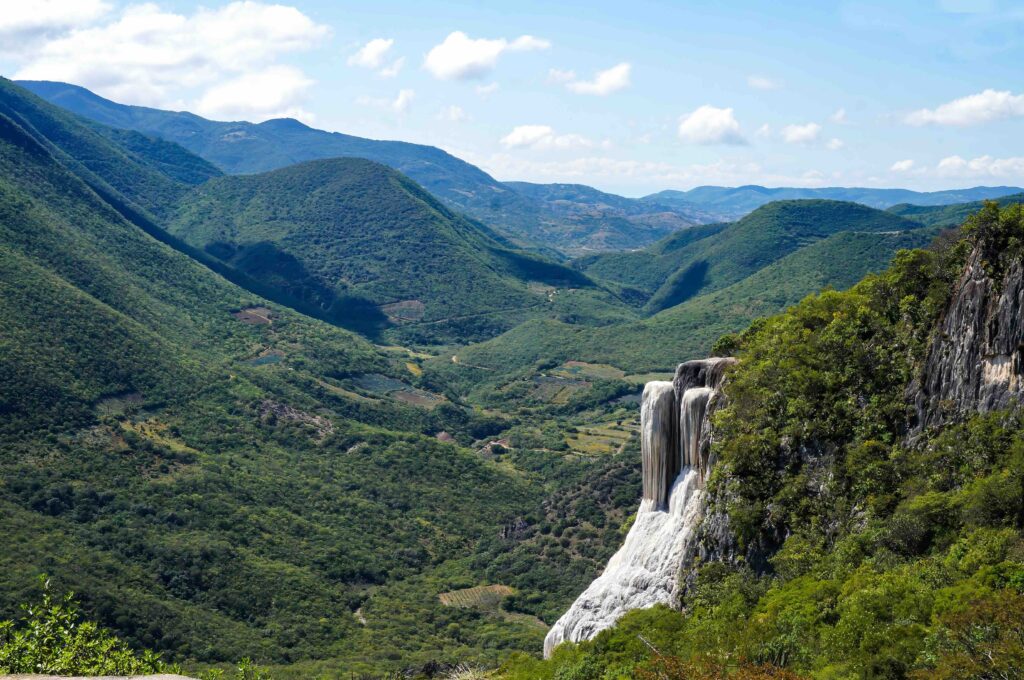
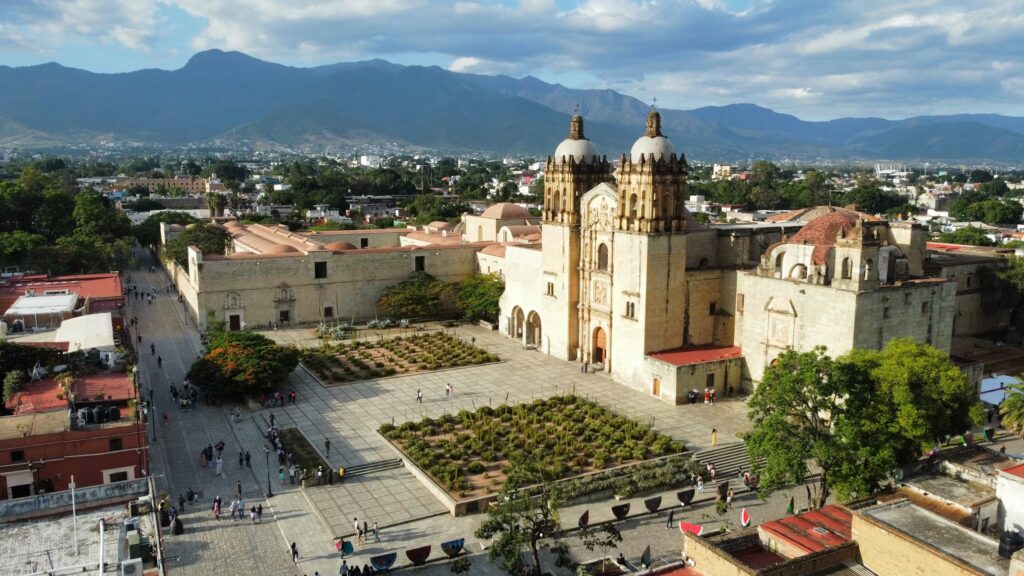
The city’s main plaza, the Zócalo, sits beneath the Santo Domingo de Guzmán church, whose interior is covered floor to ceiling in gold-leafed Baroque ornamentation, and the surrounding streets hold the Mercado Benito Juárez and Mercado 20 de Noviembre, two of the best places in the country to eat tlayudas and try fresh mole straight from the source. Hands-on mezcal distillery tours run throughout the surrounding valleys, and a day trip out to Hierve el Agua, a set of mineral-rock formations that look like petrified waterfalls, is one of the more striking natural sights within range of any Mexican city.
10. San Miguel de Allende: the art retreat

San Miguel sits in Guanajuato, a Level 3 state, but functions as a clear exception to that rating, propped up by a tourism-dependent economy and a long-established expat community of Americans and Canadians numbering in the thousands. El Jardín, the central plaza, sits directly beneath the Parroquia de San Miguel Arcángel, a pink Gothic-Revival church whose spires have become the single most photographed building in the city.
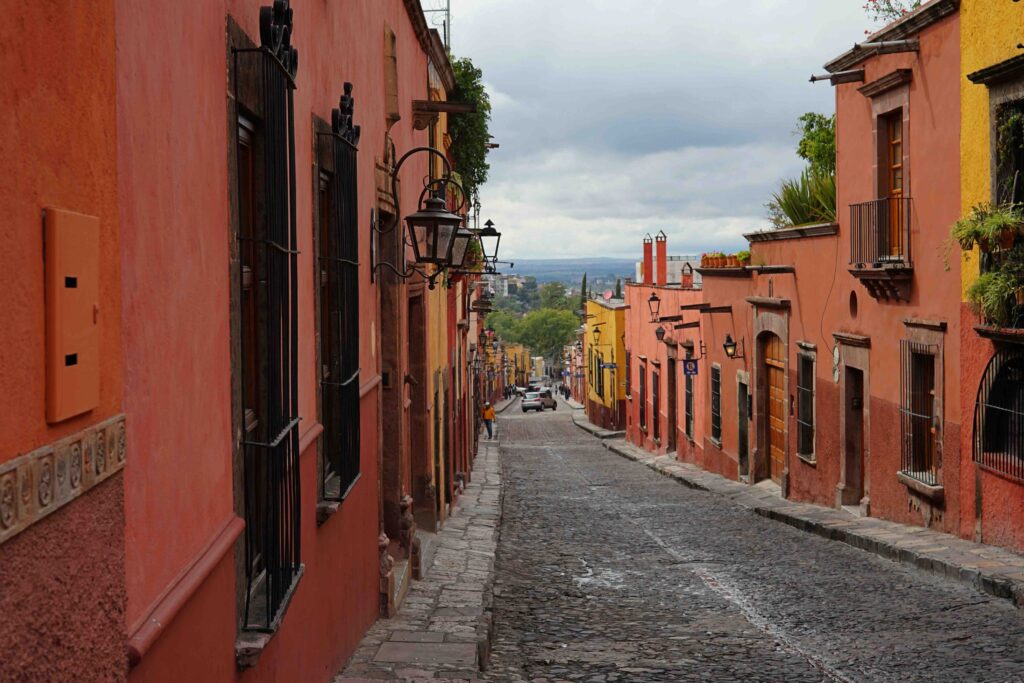
The surrounding cobblestone streets hold dozens of galleries, many of them clustered inside Fábrica La Aurora, a converted textile factory turned art complex, and the mild, mountain-tempered climate year-round has made rooftop dining one of the town’s defining experiences. It’s also a workable base for day trips to nearby Guanajuato City’s colorful hillside streets or the natural hot springs scattered just outside town.
11. Querétaro: the quiet industrial haven
Querétaro holds a stable Level 2 rating, underpinned by heavy industrial and tech investment rather than tourism alone. One detail that surprises most visitors: the city sits outside Mexico’s main seismic risk zones, which is part of why it absorbed a wave of new residents from Mexico City after the 2017 earthquake.
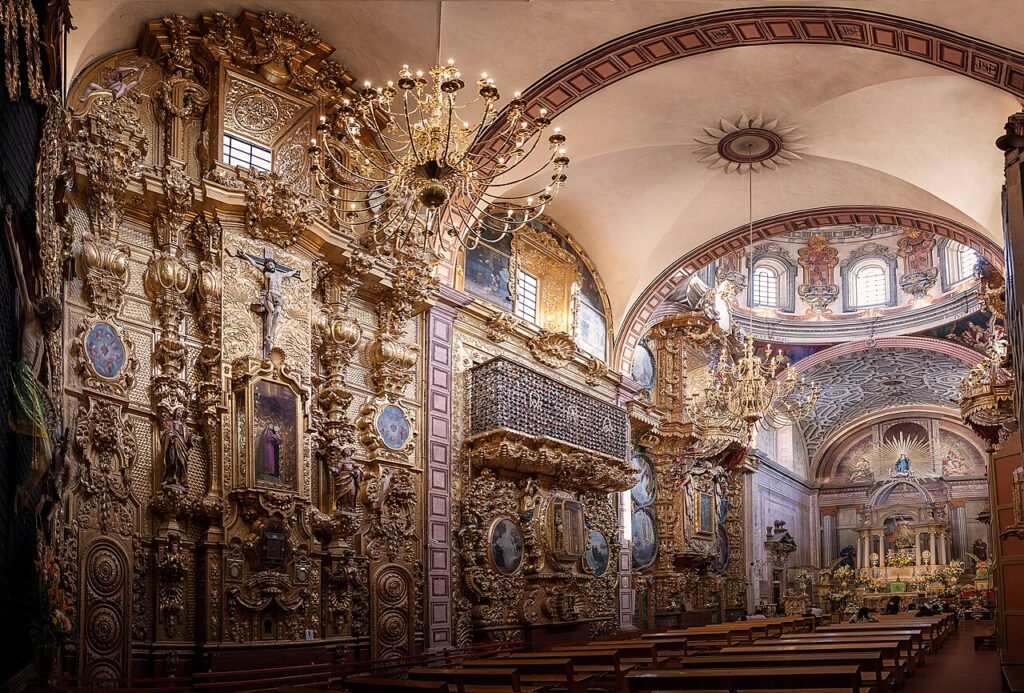
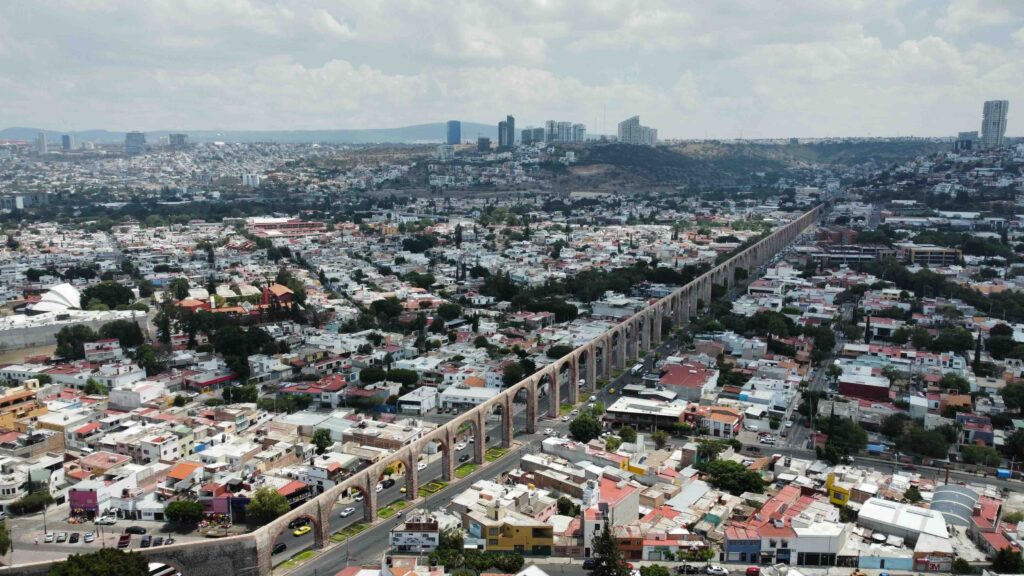
The historic center is anchored by Los Arcos, an 18th-century stone aqueduct stretching well over a mile, and the pedestrian-only streets around Plaza de Armas and the Templo de Santa Rosa de Viterbo are some of the best-preserved baroque architecture in central Mexico. Just outside the city, the Ruta del Queso y Vino winds through the wine country around Tequisquiapan and Ezequiel Montes, where small producers run tastings that feel considerably less commercial than Mexico’s better-known wine regions further north.
Red Alert: 3 Areas to Avoid Completely in 2026
The State Department currently keeps six Mexican states at Level 4, “Do Not Travel,” its highest warning tier. For the ordinary traveler planning a 2026 trip, these break down into three practical groupings worth crossing off the map entirely.
- Sinaloa: home base for some of the country’s largest organized crime networks, including the cartel that takes its name from the state. Armed confrontations can erupt on highways with little warning, putting any vehicle on the road at risk regardless of who’s inside it.
- Zacatecas and Colima: these two states post some of the highest homicide rates per capita in the country, driven by ongoing turf battles between rival cartels contesting smuggling routes.
- Guerrero, Michoacán, and Tamaulipas: the remaining Level 4 states, and the one most likely to catch travelers off guard is Guerrero, home to Acapulco, a city that drew major U.S. tourism for decades before cartel violence pushed it onto the do-not-travel list. Michoacán and Tamaulipas carry similar warnings tied to cartel territory disputes and, in Tamaulipas’s case, the risks that come with proximity to smuggling corridors along the U.S. border.
Essential Safety Tips for Mexico Travel in 2026
Even inside the safest cities on this list, a handful of basic habits make a real difference in how a trip actually goes.
- Use rideshare apps, not street taxis: in cities like CDMX, Mérida, or Cancún, Uber and Didi let you track the route on GPS and lock in a fare in advance, which sidesteps both overcharging and the rare but real risk tied to unlicensed street taxis.
- Travel between cities by day: if flying isn’t an option, ADO’s upscale long-distance buses are a dependable, comfortable alternative to flights like Volaris or Aeroméxico, but intercity travel by road is best kept to daylight hours.
- Withdraw cash carefully: stick to ATMs inside shopping malls, bank branches, or hotel lobbies rather than freestanding machines on dimly lit streets, where card skimming and theft are more common.
- Enroll in STEP before you fly: the free Smart Traveler Enrollment Program registers your trip with the nearest U.S. embassy or consulate, which makes it far easier for them to reach you with security alerts or assist you directly if something goes wrong.
2026 Worry-Free Travel FAQ
Is Cozumel safe?
Yes, by a wide margin. As an island reachable only by ferry and built largely around international cruise traffic, Cozumel keeps a tight security environment, and violent crime against visitors is close to nonexistent there.
Is Monterrey Mexico safe?
Monterrey, in Nuevo León, carries a Level 2 advisory. It’s one of Mexico’s wealthiest economic hubs, and its San Pedro Garza García district is frequently cited as one of the safest municipalities in Latin America. The bulk of the state’s risk sits on the highways connecting Monterrey to the U.S. border, not within the city itself.
Is Tijuana safe, and is that the same thing as Baja California being safe?
This is genuinely one of the most confused questions in Mexico travel planning, because there are two separate Baja states. Baja California Sur, home to Los Cabos, carries a Level 2 advisory. Baja California, the northern state where Tijuana sits, carries a higher Level 3 advisory, “Reconsider Travel,” due to cartel-related violence concentrated in specific non-tourist neighborhoods. For a daytime visit, sticking to well-trafficked areas like Zona Río or Avenida Revolución, using Uber instead of hailing a cab, and heading back across the border before dark is the standard, manageable approach. It isn’t the right call for a first-time solo traveler looking to wander freely after dark.
What’s the safest way to get around as a U.S. traveler?
Inside any city, rideshare apps like Uber or Didi are the standard recommendation over flagging a taxi on the street, mainly to avoid inflated fares or, in rarer cases, express kidnapping schemes tied to unlicensed cabs. Between cities, domestic flights on carriers like Aeroméxico or Volaris, or a daytime trip on an ADO long-distance bus, are both considered safe and dependable.
What is the STEP program, and is it actually worth signing up for?
The Smart Traveler Enrollment Program is a free State Department tool that registers your itinerary with the nearest embassy or consulate before you travel. It’s genuinely worth the five minutes it takes, since it’s the main channel through which the embassy can reach you directly during a security incident, natural disaster, or family emergency back home.
Conclusion: Ready for a Worry-Free Mexican Escape?
Mexico is too large and too varied to sum up in one safety rating, and the violence that dominates headlines is concentrated in a handful of specific states that the average tourist itinerary never touches. The turquoise coastline of Quintana Roo, the quiet pace of Mérida, and the cultural depth of Oaxaca are all genuinely welcoming destinations for 2026. Stick to the cities covered above, follow the basic precautions, and the biggest risk most travelers actually run into is overdoing it on tacos. If the next step is figuring out where to stay, our guides to Mexico’s best ultra-luxury resorts and its most distinctive boutique hotels are good places to keep planning from here.
Related Articles
Do You Need a Passport to Go to Mexico? (2026 US Citizen Rules)
Mexico City Nightlife 2026: Speakeasies, Tacos & Safe Things to Do
10 Best Things to Do in Mexico City: 2026 Art, History & Food Guide
How to Plan the Perfect Beach Vacation in Mexico: Top Destinations, Tips, and Itinerary Ideas
11 Best All-Inclusive Resorts in Mexico (2026 Comparison Guide)